Best Budget Family Tents of 2026
Looking for a family tent that won’t break the bank? You don’t need to spend a fortune to get good quality shelter for your next camping trip. The best budget family tents offer plenty of space, easy setup, and solid weather protection at a price that leaves room for s’mores and gas money. Here are our top picks for affordable tents that keep everyone happy and dry.
1. Coleman Skylodge 8

- Sleeping Capacity: 8+ people
- Floor Area: 114 sq ft (144 x 114 inches)
- Peak Height: 77 inches
- Season Rating: 3-season, freestanding design
The Coleman Skylodge 8-Person Instant Camping Tent is an excellent choice for families and groups heading into the great outdoors. Its most impressive feature is its near-instant setup — the pre-attached fiberglass poles allow the tent to be pitched in roughly one minute, making it ideal for first-time campers or those who prefer to spend less time at the campsite and more time enjoying nature.
With 114 square feet of floor space and a generous 77-inch peak height, this tent offers ample room for eight people to sleep and move comfortably. The polyester canopy, floor, and rainfly provide reliable weather protection across three seasons. While the packed weight of nearly 31 pounds makes it better suited for car camping than backpacking, it’s a solid, dependable shelter for weekend getaways.
- Pros: Ultra-fast 1-minute setup, spacious interior, freestanding design
- Cons: Heavy at ~31 lbs, no footprint included, single door only
2. CAMPROS CP Tent

- Center Height: 72 inches with straight wall design
- Setup Time: ~5 minutes for 2 people
- Rooms: 2-room layout with removable divider
- Material: Polyester with waterproof-coated, sealed seams
The CAMPROS CP Tent is a versatile and practical option for families who want a bit more organization inside their shelter. The straight-wall construction gives it a 72-inch center height, meaning most adults can stand upright without hunching — a small detail that makes a big difference during longer camping trips. The color-coded poles make assembly intuitive, and two people can have the tent fully pitched in about five minutes.
One of its standout features is the room divider, which doubles as a projector screen — a fun bonus for outdoor movie nights. The mesh tent top and doors provide excellent ventilation, keeping the interior cool and fresh. Weather protection is solid, with a high-tech waterproof coating and sealed seams to keep rain at bay. It’s a well-rounded tent that balances comfort, convenience, and value.
- Pros: Great ventilation, dual-room setup, innovative projector screen divider
- Cons: Exact waterproof rating not specified, best for 2-person setup only
3. FanttikOutdoor Camping Tent
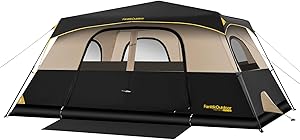
- Dimensions: 168″L x 120″W x 76″H (trapezoidal shape)
- Occupancy: 10 persons
- Water Resistance: 2000mm waterproof rating
- Included: Carry bag, rainfly, and stakes
The FanttikOutdoor 10-Person Camping Tent is a roomy, weather-ready shelter built for larger groups who demand solid protection without sacrificing comfort. Its trapezoidal design makes efficient use of space, and the impressive 2000mm waterproof rating is among the highest in its class, making it a dependable choice even when conditions turn wet and unpredictable. At 27.5 pounds, it’s relatively manageable for a 10-person tent.
The included rainfly adds an extra layer of protection, and the carry bag makes transport and storage straightforward. Its 3-season rating means it handles spring through fall conditions with ease. The 76-inch peak height gives campers plenty of headroom, and the generous floor area ensures everyone has room to spread out. For families or friend groups planning extended car camping trips, this tent offers outstanding value and reliability.
- Pros: High 2000mm waterproof rating, spacious 10-person capacity, includes rainfly
- Cons: Trapezoidal shape may feel less efficient than rectangular layouts
See the FanttikOutdoor Camping Tent
4. Coleman Skydome 8

- Floor Area: 162 sq ft (162 x 144 inches)
- Peak Height: 76 inches
- Special Feature: Dark Room technology blocks 90%+ of sunlight
- Packed Size: 25 x 10.5 x 10.5 inches
The Coleman Skydome 8-Person Screen Room Tent stands out from the crowd thanks to its Dark Room technology, which blocks over 90% of sunlight to keep the interior cooler and darker — ideal for campers who like to sleep in or nap during the heat of the day. With 162 square feet of floor space, it’s one of the roomiest 8-person tents available, and the 76-inch peak height ensures comfortable standing room throughout.
What also impresses is its compact packed size of 25 x 10.5 x 10.5 inches, making storage and transport far more convenient than similarly sized tents. The three fiberglass poles make setup simple, and the freestanding design allows for flexible placement at any campsite. The polyester rainfly delivers reliable 3-season weather protection. If you value shade, space, and smart design, the Skydome 8 is a top contender.
- Pros: Dark Room technology, largest floor area in class, compact pack size
- Cons: Only 3 poles, no footprint included, single door entry
5. UNP Camping Tent

- Dimensions: 216″L x 108″W x 78″H (square shape)
- Occupancy: 10 persons
- Water Resistance: 1000mm rating
- Weight: 21 pounds
The UNP 10-Person Camping Tent is one of the lightest large-group shelters on the market, tipping the scales at just 21 pounds — a significant advantage when loading and unloading at the campsite. Its square floor plan maximizes usable interior space, and the impressive 18-foot floor width gives large families or friend groups plenty of room to stretch out. The 78-inch peak height ensures comfortable standing throughout the tent.
Designed for 3-season use, this tent handles typical spring, summer, and fall conditions reliably. The 1000mm water resistance rating is adequate for light to moderate rain, though campers in wetter climates may want additional weatherproofing. Staking is included for secure anchoring in windy conditions. For those prioritizing weight savings and floor space over premium weather protection, the UNP tent offers an excellent balance of size, comfort, and portability.
- Pros: Lightest 10-person option at 21 lbs, massive floor width, great headroom
- Cons: Lower 1000mm waterproof rating, stakes-only anchoring system
6. Wakeman 10 Person Camping Tent

- Dimensions: 168″L x 120″W x 84″H
- Occupancy: 10 persons
- Peak Height: 84 inches — tallest in this roundup
- Special Feature: Rainproof with general water-resistant treatment
The Wakeman 10-Person Camping Tent earns attention for one standout stat: its 84-inch peak height is the tallest among the tents in this roundup, making it exceptionally comfortable for taller campers who hate crouching. The spacious 168 x 120-inch floor accommodates 10 sleepers with room to spare, and the overall cabin-style design feels more like a room than a traditional tent. It’s a solid choice for car camping families who prioritize headroom.
The tent features a general water-resistant treatment and rainproof construction, offering reliable protection during typical 3-season conditions. Included stakes help secure the structure in moderate wind. At 31.3 pounds, it sits on the heavier end, so it’s best suited for drive-up campsites. While it doesn’t boast the highest waterproof rating, its sheer interior volume and standing height make it a comfortable base camp for weekend adventures.
- Pros: Tallest peak height at 84 inches, roomy 10-person interior, rainproof construction
- Cons: Heavy at 31+ lbs, unspecified waterproof rating, no included rainfly details
See the Wakeman 10 Person Camping Tent
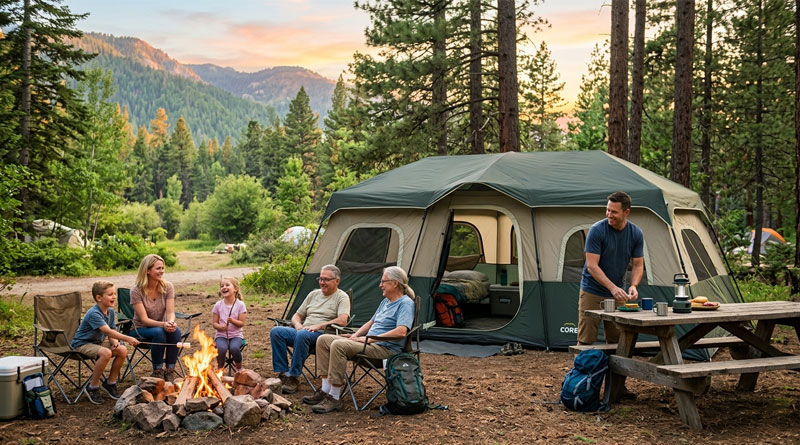
7. CORE Tent for Family Camping

- Floor Width: 10 feet (rectangular shape)
- Occupancy: 10 persons
- Water Resistance: 1200mm rating
- Included: Carry bag, poles, rainfly, room divider, stakes
The CORE 10-Person Family Camping Tent is a feature-packed shelter designed for serious campers who want premium amenities without going over budget. With a 1200mm waterproof rating, full rainfly, and windproof construction, it’s one of the more weather-capable tents in this guide. The included room divider adds privacy for families, making it easy to create separate sleeping zones for adults and kids. Everything needed for setup comes in the box.
Weighing 41 pounds, it’s the heaviest tent in this roundup, so it’s firmly in car-camping territory. However, that weight comes with a payoff: a robust, sturdy build that handles fall conditions as well as the typical spring and summer seasons. The rectangular footprint maximizes usable floor space, and the comprehensive kit — poles, rainfly, divider, stakes, and carry bag — means there’s nothing extra to buy. It’s an all-in-one solution for family camping comfort.
- Pros: Windproof and rainproof, includes room divider, complete kit out of the box
- Cons: Heaviest tent at 41 lbs, not suitable for backpacking or hiking
See the CORE Tent for Family Camping
8. Amazon Basics Instant Camping Tent
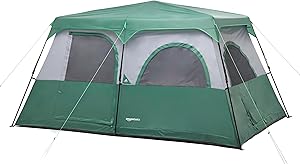
- Setup Time: 60 seconds with pre-attached telescoping frame
- Occupancy: 10 persons
- Ventilation: Mesh windows and ceiling with pre-attached guy lines
- Included: Rainfly, carrying bag, steel stakes, gear loft, storage pocket, electrical cord port
The Amazon Basics 10-Person Instant Camping Tent delivers impressive convenience at a competitive price point. Its pre-attached telescoping steel frame pops up in just 60 seconds — no assembly puzzles, no fumbling with loose poles. This makes it one of the fastest tents to deploy in this roundup, a major advantage after a long drive to the campsite. The spacious 10-person interior is ideal for family camping, hiking trips, and outdoor adventures.
Beyond speed, it’s thoughtfully equipped: mesh windows and ceiling ensure strong airflow, while the removable rainfly and sealed seams provide solid weather protection. The gear loft and storage pocket help keep the interior organized, and the electrical cord port is a practical modern touch for charging devices at powered sites. Guy lines add stability in wind. For families wanting an instant, well-appointed tent without a premium price tag, this is a smart, no-fuss choice.
- Pros: 60-second setup, electrical cord port, gear loft included, excellent ventilation
- Cons: Heavier steel frame limits portability, waterproof rating not explicitly stated
See the Amazon Basics Instant Camping Tent
How to Budget Family Tents Without Sacrificing Comfort
Walking into a camping store — or scrolling through endless online listings — can feel overwhelming when you see family tents ranging from $80 to well over $800. For parents who want to create lasting outdoor memories, the natural question is: how much should you really spend on a family tent? More importantly, how do you budget for one without ending up with a leaky, cramped, or frustrating shelter? This guide walks through every practical step of budgeting for a family tent, from understanding size categories to spotting hidden costs, so you stay dry, comfortable, and financially smart.
Step 1 – Define “Family Tent” in Real Numbers
Before opening your wallet, ignore manufacturer “person ratings” at first. Most brands claim a 6-person tent can sleep six adults, but that usually means six sleeping bags placed edge-to-edge like sardines. For a genuine family camping experience (with gear, movement space, and maybe a restless toddler), apply the “true occupancy rule”: take the stated capacity, divide by 1.5 or even 2. For example, an 8-person tent comfortably fits 4–5 people with extra room for bags, a portable crib, or rainy-day board games. Write down the maximum number of family members who will sleep in the tent, then shop for a tent rated at least 2 persons above that number. This small adjustment saves you from upgrading too soon, which is the first and most effective budgeting move.
Step 2 – Set a Price Bracket Based on Usage Frequency
How often does your family camp? Your answer directly defines your budget ceiling.
- Occasional campers (1–3 trips per year): $120–$250. Look for dark-start tents (polyester with basic coatings), simple fiberglass poles, and taped seams. You don’t need expedition-grade fabrics if you avoid heavy storms.
- Weekend warriors (4–8 trips/year + summer vacations): $250–$450. Prioritize full-coverage rainflies, steel or aluminum poles, and thicker floor materials (150D or 200D oxford). These tents survive moderate wind and repeat setups.
- Frequent / off-grid families (8+ trips or harsh weather): $450–$800+. Look for fully seam-sealed bathtub floors, DAC aluminum poles, and high hydrostatic head ratings (3000mm+). Budget in that range if camping in mountain or coastal areas with sudden downpours.
A key budget rule: never spend more than 12% of your total camping gear budget on the tent alone if you’re just starting. The rest should cover sleeping pads, a tarp, stakes, and a footprint. Stretching too far on the tent leaves you without means to stay warm or dry off the ground.
Where to Find Real Discounts
End-of-summer sales (August–September) and Black Friday offer the deepest discounts on family tents, with many previous-year models marked down 30–50%. Also check REI Co-op Garage Sales, used gear from Geartrade, or Facebook Marketplace — but always set up secondhand tents before buying. A used $600 tent for $150 is a great deal, but only if all zippers work and the seams are intact.
Step 3 – Decode Critical Features That Lower Long-Term Costs
A budget-conscious shopper doesn’t just look at the price tag; they examine features that reduce replacement frequency.
Rainfly Design & Coverage
A partial rainfly (which only covers the top mesh) often leaks through sidewalls. Invest in a full-coverage rainfly that extends to the ground. While cheaper than a full-fly tent might cost $30 less, you’ll pay twice as much afterward on seam sealers, tarps, and frustration. A proper fly adds years to a tent’s lifespan, especially under morning dew or coastal fog.
Floor Material & Protection
Look for a “bathtub floor” where the floor fabric extends a few inches up the walls, then sealed. The floor denier (thickness) matters: 75D is minimal (tears relatively easily), while 150D–210D is family-grade durable. A separate footprint (or a DIY tarp cut to shape) adds another layer of abrasion resistance — a $20 tarp can double the life of a $200 tent floor.
Pole System – Fiberglass vs. Aluminum
Fiberglass poles are cheaper but splinter in high winds. If your camping involves any exposed sites, consider a tent with aluminum poles. They cost more upfront, but you avoid mid-trip pole replacement. For very occasional car camping with calm conditions, fiberglass is acceptable within a strict budget.
Step 4 – Account for Hidden & Recurring Costs
Many first-time family tent buyers forget that the tent is only half the shelter equation. A realistic budget includes:
- Extra stakes and guy lines ($10–$20) – Most tents include minimal stakes that bend on hard ground.
- Waterproofing spray or seam sealer ($10–$15/year).
- A footprint / ground tarp ($15–$30) – Protects the tent floor and keeps it clean.
- Storage bags or repair kit ($8–$15) – Always buy pole splints and fabric patches before you need them.
Add these overhead items to your total tent budget. A $180 tent that needs $45 of extras is actually a $225 investment — still reasonable but important for accurate comparison.
Step 5 – Season Ratings: Do You Need a 4-Season Tent?
Here’s where many families over-budget. Unless you camp in heavy snow or sub-freezing winter winds, buy a 3-season tent. 4-season tents (sometimes called “expedition tents”) are heavier, have less mesh (causing condensation), and can cost twice as much. A 3-season family tent handles spring, summer, fall, and even mild winter days with proper insulation layers. Only upgrade to a 4-season or “winter” tent if you specifically camp with snow loads. By avoiding over-specifying, you free up $150–$300 for other gear like sleeping bags rated for your region.
What About “3+ Season” Tents?
Some brands offer hybrid designs with reinforced poles and lower mesh panels. They’re a reasonable middle path for families who camp in wind-exposed locations (beaches, plains) but not deep winter. The premium is usually 20–30% over a standard 3-season tent. If your budget allows, these provide added confidence without full 4-season pricing.
Step 6 – Compare Setup Complexity & Time Value
Money isn’t the only currency. A tent that requires two adults and 35 minutes of puzzling over pole sleeves might cost less, but it kills evening morale, especially with tired children. Look for “hub” or “instant” systems – some inexpensive brands (Core, Ozark Trail, Coleman’s Instant Cabin line) offer pre-attached poles that fold like an umbrella. Even if such a tent is $40 more than a traditional pole-sleeve design, the saved time and arguments at 8 PM after a long drive are worth that extra money. Factor in your family’s patience as a budget variable.
Step 7 – Where to Wisely Cut Corners
Not every premium feature matters for cheap family camping. You can safely save on:
- LED light integration – buy a $8 lantern instead.
- Brand-name “gear lofts” and pockets – use a hanging shoe organizer from a dollar store.
- High-ratio “dark room” technology – a simple tarp over the tent works similarly and costs far less.
- Pre-attached footprint systems – use a generic tarp cut to shape.
Spend money on structural integrity (pole thickness, rainfly quality, floor toughness) and layout (vertical walls for headroom). Avoid spending on gimmicks that you can replicate for a fraction of the cost.
Step 8 – Real-World Budget Benchmarks (June 2025)
To give you concrete numbers, here’s what fair prices look like for family tents as of this camping season:
- 4-person, occasional cabin-style tent: $100–$160 (e.g., Coleman Sundome). Good for 2 adults + 1 child & gear.
- 6-person, 3-season dome with full fly: $180–$280 (e.g., Core 6 Person Extended Dome). Adds standing height and weather protection.
- 8-person instant cabin tent (steel poles): $220–$350 – ideal for larger families doing car camping.
- 10-person “two-room” tent with divider: $300–$480 – privacy plus shared living space.
- Premium budget-stretch (aluminum poles, taped floor seams, 8-person): $500–$700 – lasts 5–8 years with care.
If a 6-person tent costs less than $90 brand new, treat it with caution: very low-cost tents often use unreinanced stitching, 68D floors that rip on pine needles, and rainflies that don’t reach the lower walls. It might work once, but not as a reliable family shelter.
Step 9 – The 2‑Night Test: Your Best Budget Tool
Before committing to a big purchase, rent or borrow a similar style of tent. Many REI or local outfitters rent family tents for $25–40 per weekend. Use that trial to assess layout, packability, and how well your family sleeps in it. You might discover that a tunnel tent works better than a dome, or that a double-wall design reduces condensation more than you expected. The cost of a rental is negligible compared to buying the wrong tent and replacing it within a season. Factor a one-time rental fee into your research budget – it’s a wise insurance policy.
Step 10 – Long-Term Maintenance Extends Every Dollar
Finally, part of budgeting is protecting your purchase. After each trip, dry the tent completely (even a slightly damp storage will degrade seam tape and create mildew smell). Store loosely in a cool, dry place – never compress it for months. Re-apply DWR spray to the rainfly annually. Replace bent stakes and keep spare pole splints in the bag. A well-maintained $250 tent can last 7–10 years, while a neglected $400 tent may last 2 seasons. So the true budget formula is: total cost divided by years of use. By that measure, spending time on cleaning and storage is like earning money.
Final Summary Table
Use this quick reference when shopping:
| Family size | Recommended tent rating | Budget range (new) | Key must-have |
|---|---|---|---|
| 2 adults + 1 child | 4–5 person | $120–$200 | Full rainfly |
| 2 adults + 2–3 children | 6–7 person | $200–$320 | Bathtub floor + vestibule |
| 4 adults + 2 children | 8–10 person | $280–$480 | Steel/aluminum poles, two doors |
| Large or multi-family | 10+ person (two-room) | $450–$750 | Quick pitch + strong guyouts |
Budgeting for a family tent is not about buying the cheapest option; it’s about aligning a tent’s durability and space to your camping frequency, local weather, and family dynamics. By starting with realistic capacity, avoiding unnecessary “4-season” upgrades, investing in a quality rainfly and floor, and maintaining what you buy, you’ll create years of affordable outdoor memories. The perfect family tent doesn’t drain your savings — it simply opens the door to campfire stories, starlit nights, and mornings where everyone sleeps in. And that’s the only ROI that really matters.