
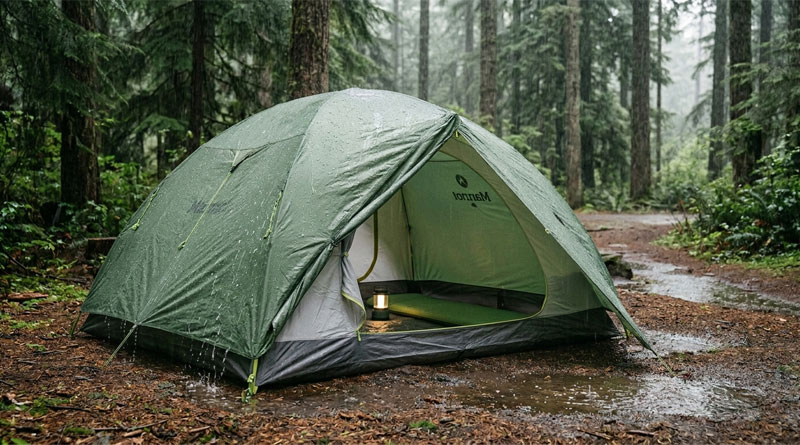
Best 4-Person Tents for Rain of 2026
When camping in the rain, a reliable tent makes all the difference. The best 4-person tents for rain keep you dry with strong waterproof materials, sealed seams, and high bathtub floors that block ground moisture. Good rainflies and ventilation stop condensation, too. Below, we’ve picked top-rated, easy-to-set-up options that handle heavy downpours—so your group stays comfortable and dry no matter the weather.
1. Coleman Skydome 4

- Floor Area: 56 square feet
- Peak Height: 55.2 inches
- Weight: 13 lbs. 2.4 oz.
- Pole Material: Fiberglass
The Coleman Skydome 4 is a reliable choice for campers who value a quick setup and extra interior space. Its pre-attached poles allow for a significantly faster pitch compared to traditional tents. This model features a full-fly vestibule, which is excellent for keeping muddy boots and gear protected from the elements while keeping the main sleeping area clean and organized.
Inside, the near-vertical walls offer 20 percent more headroom than traditional dome tents, making the interior feel much roomier. The construction is solid for three-season use, featuring flame-retardant fabrics and a PFAS-free water-repellent finish. It is a practical, budget-friendly option for small families or groups who prefer spending their time enjoying the outdoors rather than struggling with tent poles.
Pros: Quick setup, spacious headroom, large vestibule storage.
Cons: Relatively heavy for its size, single-door design.
2. Mimajor Camping Tent

- Capacity: 4 Person
- Pole Material: Aluminum
- Installation: Freestanding
- Resistance: Taped Seams / PU Coating
The Mimajor Camping Tent is designed for casual campers looking for a straightforward, square-shaped shelter. One of its standout features is the use of aluminum poles, which generally offer better durability and a higher strength-to-weight ratio than fiberglass alternatives. The green aesthetic blends well into forest environments, providing a classic camping look for weekend trips or backyard adventures.
This tent utilizes polyurethane coating and taped seams to help keep moisture at bay during light rain. As a freestanding design, it can be easily moved around the campsite to find the flattest ground before being staked down. While it lacks the brand recognition of larger names, its combination of aluminum hardware and simple assembly makes it a functional entry-level option for those exploring the outdoors.
Pros: Durable aluminum poles, easy to move, classic design.
Cons: Limited technical data, basic features.
3. REI Co-op Base Camp 4

- Floor Dimensions: 100 x 86 inches
- Peak Height: 63 inches
- Number of Doors: 2 doors
- Pole Material: Aluminum
The REI Co-op Base Camp 4 is a robust, member-favorite shelter built to withstand more varied weather conditions than your average tent. Its heavy-duty architecture uses five aluminum poles to create a stable structure that can handle wind and rain with ease. The 63-inch peak height and generous floor plan make it comfortable for four people to sit up and move around inside.
Ventilation is a priority with this design, featuring no-see-um mesh to keep bugs out while allowing airflow. The two-door configuration is a major convenience, preventing campers from having to climb over each other for late-night exits. With dual vestibules for gear storage and high-quality 75-denier fabrics, this tent is ideal for those who want a long-lasting, high-performance base for car camping trips.
Pros: Excellent stability, dual doors, high-quality materials.
Cons: Very heavy, higher price point.
4. Kelty Wireless 4

- Floor Area: 58.3 square feet
- Peak Height: 57 inches
- Vestibule Area: 25.8 square feet (total)
- Pole Material: Fiberglass
The Kelty Wireless 4 is engineered for maximum convenience and speed. It features Kelty’s proprietary Quick Corners technology, which makes sliding poles into place a breeze even for solo campers. The Shark Mouth duffel bag is another clever addition, ensuring that packing the tent away is frustration-free and doesn’t require precise folding or rolling techniques to fit into the carry case.
Inside, the tent offers a nice balance of space and storage with two doors and two vestibules. This setup provides each side of the tent with its own private gear storage and entry point. The mesh canopy provides excellent views of the stars on clear nights and ensures the tent stays breathable. It is a great middle-ground tent for those who want ease of use without sacrificing essential features.
Pros: Fast setup, easy-pack bag, dual vestibules.
Cons: Fiberglass poles, average weight.
5. UNP 4 Person Tent

- Dimensions: 96 x 84 x 72 inches
- Season Rating: 4 Season
- Weight: 13 Pounds
- Shape: Square
The UNP 4 Person Tent stands out due to its impressive 72-inch peak height, allowing most adults to stand up straight inside. This vertical clearance makes it feel much more like a cabin than a traditional dome tent. It is marketed as a 4-season shelter, featuring seam sealing and a waterproof rainfly to protect against rain and wind throughout various times of the year.
The square floor plan is efficient for laying out sleeping pads, and the 13-pound weight is manageable for car camping or short hikes. While it maintains a simple design, the added height is a significant luxury for families or those who struggle with low-ceiling tents. It is a budget-conscious option for those prioritizing vertical space and vertical wall design during their outdoor stays.
Pros: Tall enough to stand in, 4-season rated, easy setup.
Cons: Unknown long-term durability, basic pole structure.
6. Kelty Discovery Basecamp 4

- Packaged Weight: 8 lbs. 8 oz.
- Floor Area: 53 square feet
- Peak Height: 58 inches
- Pole Material: Fiberglass
The Kelty Discovery Basecamp 4 is the lightest option in this lineup, making it a versatile choice for those who might need to carry their gear a short distance to the campsite. Despite its lower weight, it still offers a respectable 58 inches of peak height. The freestanding design and intuitive pole layout make it a perfect “home away from home” for beginners and seasoned campers alike.
The tent features a large mesh paneling system that ensures excellent airflow during hot summer nights. While it lacks a large vestibule, its compact packed size makes it easy to store in any vehicle. The 68-denier polyester construction provides a good balance between weight savings and durability. It is a straightforward, no-frills tent that delivers Kelty quality at a very competitive weight and price point.
Pros: Very lightweight, compact packed size, easy assembly.
Cons: Smaller floor area, no vestibule space.
See the Kelty Discovery Basecamp 4
7. Coleman Skylodge 4

- Packaged Weight: 19 lbs. 11.2 oz.
- Peak Height: 64 inches
- Setup Time: 1 Minute
- Floor Area: 56.25 square feet
The Coleman Skylodge 4 is the ultimate solution for campers who dread the assembly process. Featuring an instant setup design, the poles are pre-attached to the tent body, allowing you to have your shelter ready in approximately sixty seconds. This makes it ideal for late arrivals at camp or for those who want to maximize their relaxation time rather than wrestling with equipment.
With a 64-inch peak height, it offers a very spacious interior with plenty of room for activities. However, the instant setup mechanism comes with a trade-off: the tent is quite heavy at nearly 20 pounds and has a long packed size. This is strictly a car-camping tent, but for that purpose, it provides unparalleled convenience and a generous amount of living space for a group of four.
Pros: Incredibly fast setup, tall interior, very user-friendly.
Cons: Very heavy, bulky when packed.
8. Kelty Daydreamer 4P

- Rainfly: Twilight Tech coating
- Peak Height: 61 inches
- Water Column: 5,000 mm (fly) / 3,000 mm (floor)
- Vestibule Area: 17.9 square feet
The Kelty Daydreamer 4P is a specialized tent designed for those who value sleep above all else. Its standout feature is the Twilight Tech fabric, which is specifically designed to block out sunlight. This allows campers to sleep in late or take naps in the middle of the day without being bothered by the morning sun, making it perfect for summer festivals or family trips with kids.
Beyond its light-blocking capabilities, the Daydreamer is a high-spec tent with an impressive 5,000 mm water column rating on the rainfly, offering superior rain protection. The single-door design is complemented by a decent-sized vestibule for gear storage. With a tall 61-inch peak height and easy two-pole assembly, it combines comfort with technical performance for a restful outdoor experience in various weather conditions.
Pros: Blocks out sunlight, excellent waterproofing, good height.
Cons: Only one door, slightly heavy.
9. Mountain Summit Gear Everywhere 4

- Peak Height: 66 inches
- Pole Material: Steel
- Floor Area: 56 square feet
- Packaged Weight: 20 lbs. 8 oz.
The Mountain Summit Gear Everywhere 4 is built for maximum durability and interior height. Utilizing steel poles rather than fiberglass or aluminum, this tent is incredibly sturdy and can stand up to heavy usage. It boasts the highest peak height in this comparison at 66 inches, providing a cavernous feel that is perfect for comfort-oriented campers who want a more vertical living space.
A unique eaves system extends the rainfly coverage, providing better protection during storms and helping to shed water away from the tent body. While it is the heaviest tent on the list and features a long 41-inch packed size, its rugged construction makes it a great long-term investment for car camping. It is a “set it and forget it” shelter that emphasizes structural integrity and vertical room.
Pros: Very tall, durable steel poles, great rain protection.
Cons: Heaviest option, very long packed length.
See the Mountain Summit Gear Everywhere 4
10. CAMPROS CP Camping Tent

- Weight: 3.5 Kilograms (approx 7.7 lbs)
- Peak Height: 50 inches
- Water Resistance: 1500mm
- Shape: Dome
The CAMPROS CP Camping Tent is a lightweight and portable dome tent designed for versatility. Weighing in at only 3.5 kilograms, it is suitable for a wide range of activities including backpacking, fishing, and festivals. The dome shape is efficient at shedding wind and rain, while the 1500mm water resistance rating ensures you stay dry during standard three-season weather conditions.
While it has a lower peak height of 50 inches compared to the cabin-style tents, its focus is on portability and ease of transport. The included carry bag, stakes, and simple pole system make it a great choice for those who move locations frequently. It is a budget-friendly, functional shelter that covers the essentials for any camper looking for a lightweight 4-person solution without unnecessary bulk.
Pros: Very lightweight, affordable, versatile for different activities.
Cons: Low ceiling height, basic fiberglass poles.
See the CAMPROS CP Camping Tent
The Ultimate Guide to Selecting and Using 4-Person Tents for Rain
For many outdoor enthusiasts, the sound of rain hitting a tent canopy is a soothing soundtrack to a night in the wilderness. However, that tranquility quickly evaporates if water begins to seep through the seams or pool on the floor. Choosing a 4-person tent specifically designed to handle wet weather is the difference between a memorable adventure and a miserable, damp ordeal. When you are camping with a group of four, the stakes are higher; more people mean more condensation and less room to maneuver away from damp walls. This guide explores the technical features, design elements, and best practices for keeping your group dry during a downpour.
Understanding Waterproof Ratings and Materials
The first line of defense against rain is the fabric itself. Most 4-person tents are constructed from polyester or nylon, but the chemical coating applied to these fabrics determines their waterproof effectiveness. This is measured by the hydrostatic head (HH) rating, usually expressed in millimeters.
Hydrostatic Head (HH) Explained
A rating of 1,500mm means that a column of water 1,500mm tall could sit on the fabric before it starts to leak. For reliable performance in persistent rain, look for a tent with a rainfly rated at least 2,000mm. The tent floor requires an even higher rating—often 3,000mm to 5,000mm—because the weight of four people sitting or sleeping creates pressure that can force groundwater through the material.
Denier and Durability
The thickness of the fabric, measured in denier (D), also plays a role. A higher denier, such as 68D or 75D, is more robust and less likely to suffer micro-tears that allow water to enter. Lightweight “backpacker” style 4-person tents might use 15D or 20D to save weight, but these require much more careful handling and high-quality coatings to remain waterproof over time.
Critical Design Features for Wet Weather
Beyond the fabric, the physical architecture of the tent dictates how well it sheds water and protects the interior during entry and exit.
The Full-Coverage Rainfly
In the world of 4-person tents, you will encounter “roof-only” flies and “full-coverage” flies. For rain protection, a full-coverage fly is non-negotiable. It should extend all the way to the ground, creating a protective envelope around the inner tent body. This prevents wind-driven rain from splashing under the fly and through the breathable mesh of the inner tent.
Taped Seams and Bathtub Floors
Water most commonly enters a tent through the holes created by sewing needles during manufacturing. High-quality rain tents feature factory-taped seams, where a waterproof tape is heat-sealed over every stitch. Additionally, look for a “bathtub floor.” This design uses a single piece of waterproof material for the floor that wraps several inches up the sides of the tent before meeting the wall fabric. This ensures that even if water pools around the tent, there are no seams at ground level for water to penetrate.
Vestibules: The Mudroom of the Outdoors
When four people are sharing a space, a vestibule—an extension of the rainfly beyond the door—is essential. It acts as a staging area where you can strip off wet rain jackets and muddy boots before entering the dry sleeping area. Without a vestibule, every time the door is opened, rain falls directly onto the tent floor.
Managing the Internal Enemy: Condensation
Paradoxically, you can get wet inside a tent even if it isn’t leaking. This is caused by condensation. Four adults can exhale a significant amount of moisture overnight. In a sealed tent during a rainstorm, this moisture hits the cold rainfly, turns into liquid, and drips down onto the occupants.
The Importance of Ventilation
A good rain tent must balance waterproofing with airflow. Look for tents with adjustable “fly vents”—small hooded openings at the top of the rainfly that can be propped open even during rain. This allows warm, moist air to escape while the waterproof fly keeps the rain out. Double-wall construction (a separate inner tent and outer fly) is superior for managing condensation compared to single-wall tents, as it provides a physical gap for air to circulate.
Site Selection and Pitching Techniques
Even the most expensive tent will fail if it is pitched in a depression where water naturally collects. Proper setup is the final piece of the waterproof puzzle.
Finding High Ground
Before unpacking, observe the geography of your campsite. Avoid the bottom of slopes or dried-up creek beds. Look for a slight “crown” in the ground so that water flows away from the tent rather than under it. If you are under trees, be aware of “drip lines”—branches that collect rain and drop large, heavy droplets onto specific spots of your tent for hours.
The Footprint Strategy
Using a footprint (a custom-sized ground cloth) protects your tent floor from abrasions and adds an extra layer of moisture protection. However, it must be smaller than the tent floor. If the footprint extends beyond the edges of the tent, it will catch rain and funnel it directly underneath your floor, creating a literal waterbed effect.
Tension is Everything
A saggy rainfly is a failing rainfly. When the fly touches the inner tent body, moisture can transfer through via capillary action. Use all provided guy-lines to pull the fly taut and away from the inner walls. This not only improves water shedding but also stabilizes the tent against the wind that often accompanies rain.
Post-Rain Care and Maintenance
How you treat your tent after the rain is just as important as how you use it during the storm. Never store a 4-person tent while it is damp. Mold and mildew can destroy the waterproof polyurethane coatings and eat through the fabric in a matter of days.
Drying and Re-proofing
As soon as you return home, pitch the tent in a dry, shaded area until it is bone dry. Over years of use, the Durable Water Repellent (DWR) coating on the outside of the fly—which causes water to bead up and roll off—will wear out. You can tell it’s time to re-proof your tent when the fabric looks “wetted out” (dark and heavy) rather than showing beads of water. Specialized spray-on products can easily restore this finish.
Conclusion
A 4-person tent for rain is an investment in the comfort and safety of your group. By prioritizing a high hydrostatic head rating, factory-taped seams, a full-coverage fly, and superior ventilation, you ensure that your camping trip remains a success regardless of the forecast. Remember that a tent is a system: the fabric keeps the rain out, the design manages the airflow, and your site selection keeps the groundwater at bay. With the right gear and a little preparation, you can turn a rainy weekend into a cozy, dry retreat in the heart of nature.