Best 3-Season Sleeping Pads of 2026
Forget waking up sore and cold on a spring or fall camping trip. The right three-season sleeping pad is your secret weapon for comfort from warm summer nights to crisp autumn mornings. We tested the top models to find the best balance of weight, cushioning, and insulation. Whether you’re a backpacker or a car camper, this guide will help you pick a pad that delivers great sleep without breaking the bank.
1. Therm-a-Rest NeoAir XLite NXT

- R-Value: 4.5
- Weight: 13 oz. (Regular)
- Thickness: 3 inches
- Packed Size: 4.1 x 9 inches
The Therm-a-Rest NeoAir XLite NXT is one of the most versatile ultralight sleeping pads available for backpackers who want comfort without adding bulk to their gear. Its 3-inch thickness provides excellent cushioning for side and back sleepers, while the mummy shape reduces unnecessary weight for long-distance adventures. The pad packs down extremely small, making it easy to fit inside compact backpacks for thru-hiking and fastpacking trips. With an R-value of 4.5, it performs well in cool weather and shoulder-season camping conditions.
Another standout feature is the improved noise reduction compared to earlier NeoAir models. The sleeping surface feels more stable and supportive, helping campers sleep more comfortably on uneven terrain. Despite its ultralight build, the durable construction holds up well for frequent outdoor use. Inflation is simple, and the included repair kit adds peace of mind during extended trips. Backpackers looking for a premium lightweight sleeping pad that balances warmth, packability, and comfort will appreciate how dependable the NeoAir XLite NXT feels in real-world backcountry conditions.
- Pros: Lightweight, compact packed size, warm for 3-season use, comfortable thickness
- Cons: Premium price, mummy shape may feel narrow for some users
See the Therm-a-Rest NeoAir XLite NXT
2. KLYMIT Insulated Static V Lite

- R-Value: 4.4
- Weight: 20 oz.
- Thickness: 2.5 inches
- Dimensions: 72 x 23 inches
The KLYMIT Insulated Static V Lite is designed for campers who want warmth, comfort, and affordability in one compact sleeping pad. Its signature V-Chamber design supports side, back, and stomach sleepers by reducing pressure points while minimizing air movement. This creates a stable sleeping experience that feels supportive throughout the night. The insulation inside the chambers improves cold-weather performance, making it a reliable option for 3-season and light winter camping adventures.
The pad inflates quickly in around 10 to 15 breaths, and the lightweight construction makes it easy to carry on backpacking trips. Dynamic side rails help keep sleepers centered on the mat, which is especially useful for restless sleepers. The rugged polyester fabric feels durable enough for repeated outdoor use while still remaining lightweight. Although slightly heavier than premium ultralight competitors, the added durability and lower price point make it a great value choice. Campers looking for a dependable insulated pad with excellent comfort and simple setup will find the KLYMIT Insulated Static V Lite to be a practical and versatile outdoor sleeping solution.
- Pros: Affordable, supportive chamber design, warm insulation, durable construction
- Cons: Slightly heavier than ultralight models, can feel narrow for larger sleepers
See the KLYMIT Insulated Static V Lite
3. Exped Ultra 3R

- R-Value: 3.2
- Weight: 1 lb. 0.5 oz.
- Thickness: 3 inches
- Shape: Rectangular
The Exped Ultra 3R is an excellent lightweight sleeping pad built for backpackers and bikepackers who prioritize packability and comfort. Its rectangular design offers more sleeping space than traditional mummy-shaped pads, making it especially comfortable for active sleepers who move during the night. The 3-inch thickness provides solid cushioning against rocky or uneven ground, helping campers enjoy more restful sleep during multi-day adventures. With an R-value of 3.2, it works best for spring, summer, and early fall camping trips.
Exped designed this pad with lightweight materials that compress down impressively small without sacrificing durability. The synthetic insulation adds warmth while maintaining low weight, making it suitable for fast-paced outdoor travel. Inflation and deflation are quick and simple, and the included repair kit and stuff sack add convenience for extended backcountry use. The sleeping surface feels supportive and balanced, reducing pressure points effectively. While it may not provide enough warmth for extreme cold conditions, the Exped Ultra 3R performs exceptionally well as a dependable 3-season sleeping pad for hikers seeking a blend of comfort, low weight, and efficient packability.
- Pros: Comfortable rectangular shape, lightweight, compact packed size, good 3-season warmth
- Cons: Not ideal for winter camping, premium price point
4. Therm-a-Rest NeoAir XTherm NXT

- R-Value: 7.3
- Weight: 15.5 oz. (Regular)
- Thickness: 3 inches
- Packed Size: 4.5 x 9 inches
The Therm-a-Rest NeoAir XTherm NXT is built for campers and mountaineers who need maximum warmth without carrying excessive weight. Its impressive R-value of 7.3 makes it one of the warmest ultralight sleeping pads available, suitable for winter backpacking and alpine expeditions. The 3-inch thickness creates a comfortable barrier against frozen ground, while the mummy shape minimizes bulk and improves thermal efficiency. Even in extremely cold environments, the pad provides dependable insulation and comfort for restful sleep.
Despite its outstanding warmth, the XTherm NXT remains surprisingly lightweight and compact when packed. The improved internal construction also reduces the crinkly noise that older models were known for, creating a quieter sleeping experience. Durable materials help the pad withstand rugged backcountry conditions, and the included repair kit adds extra reliability during remote adventures. Inflation is quick, and the pad feels stable throughout the night. Although the premium pricing may not suit casual campers, serious backpackers and winter explorers will appreciate its exceptional warmth-to-weight ratio. The NeoAir XTherm NXT stands out as a high-performance sleeping pad for cold-weather expeditions where comfort and insulation are absolutely essential.
- Pros: Exceptional warmth, ultralight design, compact storage, quieter construction
- Cons: Expensive, mummy shape may not suit all sleepers
See the Therm-a-Rest NeoAir XTherm NXT
5. Gear Doctors ApolloAir
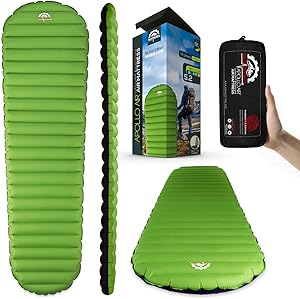
- Weight: 1.06 lbs.
- Thickness: 3.25 inches
- Dimensions: 72.08 x 22 inches
- Material: Nylon
The Gear Doctors ApolloAir sleeping pad is designed for backpackers and campers who want a lightweight but comfortable inflatable sleeping solution. Its 3.25-inch thickness creates impressive cushioning that helps reduce pressure points on uneven ground, making it suitable for side and back sleepers. The included pump sack simplifies inflation while preventing moisture buildup inside the pad, which helps maintain durability over time. Compact packed dimensions also make it easy to carry during hiking, camping, and travel adventures.
Durability is another strong point of the ApolloAir thanks to its rugged nylon construction. The pad feels stable during movement and provides solid support throughout the night. Campers who value portability will appreciate how lightweight it is compared to many traditional camping mattresses. The included repair patch and carry bag add convenience for extended outdoor trips. Although it does not offer self-inflation, the pump sack speeds up setup significantly. Overall, the Gear Doctors ApolloAir is a practical option for outdoor enthusiasts seeking a balance between comfort, portability, and durability at a reasonable price point.
- Pros: Thick cushioning, lightweight design, durable nylon material, includes pump sack
- Cons: Not self-inflating, narrower than some camping pads
See the Gear Doctors ApolloAir
6. Therm-a-Rest Z Lite Sol

- R-Value: 2.0
- Weight: 14 oz. (Regular)
- Thickness: 0.75 inches
- Type: Closed-cell foam
The Therm-a-Rest Z Lite Sol is a dependable closed-cell foam sleeping pad favored by minimalist backpackers and thru-hikers. Unlike inflatable pads, it requires no setup time and eliminates the risk of punctures during remote adventures. Its accordion-style folding design makes packing and unpacking fast and convenient, while the reflective ThermaCapture coating helps retain body heat in cooler conditions. Lightweight construction also makes it easy to strap onto the outside of a backpack for quick access during long-distance hikes.
While the pad is thinner than inflatable models, it still provides decent insulation and reliable ground protection for summer and mild shoulder-season camping. The durable foam construction performs exceptionally well in rugged terrain where inflatable pads may be vulnerable to damage. Campers who prioritize simplicity and reliability will appreciate how maintenance-free the Z Lite Sol feels. It can also serve as an additional insulation layer beneath another sleeping pad during colder trips. Although comfort is more basic compared to thick air pads, its durability, ultralight weight, and hassle-free design make it a trusted option for experienced backpackers.
- Pros: Extremely durable, lightweight, no inflation needed, fast setup
- Cons: Less cushioning, bulky when packed externally
See the Therm-a-Rest Z Lite Sol
7. Sea to Summit Ultralight XR

- R-Value: 3.6
- Weight: 14.6 oz. (Regular)
- Thickness: 2.6 inches
- Packed Size: 3.9 x 7.5 inches
The Sea to Summit Ultralight XR sleeping pad combines lightweight portability with impressive comfort for backpackers seeking reliable 3-season performance. Its Air Sprung Cell design distributes body weight evenly, reducing pressure points and creating a more natural sleeping feel compared to traditional baffled pads. ThermalCore insulation helps reflect body heat for improved warmth during chilly nights, while the compact packed size makes it ideal for minimalist adventures and long-distance trekking.
The mummy-shaped design reduces unnecessary weight without sacrificing comfort, and the sleeping surface remains supportive throughout the night. Inflation and deflation are quick and efficient, making camp setup simple after long hiking days. Despite its ultralight construction, the pad feels durable enough for regular backpacking use. The included repair kit and stuff sack add extra convenience for extended trips. While cold-weather campers may need a pad with a higher R-value, the Ultralight XR excels in balancing comfort, warmth, and portability for most backpacking conditions. Campers wanting premium comfort in a compact ultralight package will appreciate the thoughtful design and performance of this sleeping pad.
- Pros: Compact packed size, lightweight, comfortable Air Sprung Cells, good 3-season warmth
- Cons: Expensive, not ideal for extreme winter camping
See the Sea to Summit Ultralight XR
8. Sea to Summit Ultralight Air

- R-Value: 1.1
- Weight: 13.9 oz. (Regular)
- Thickness: 2 inches
- Packed Size: 3.5 x 7 inches
The Sea to Summit Ultralight Air sleeping pad is built for warm-weather backpacking and fast-moving outdoor adventures where low weight and compact storage are essential. Its lightweight design packs down remarkably small, leaving more room in a backpack for additional gear. The integrated pump system makes inflation simple and hygienic while helping prevent moisture from entering the pad. With its Air Sprung Cell construction, the sleeping surface feels more comfortable and supportive than many basic ultralight air mattresses.
This pad performs best during summer and mild-weather camping due to its lower R-value. The 2-inch thickness still provides adequate cushioning for most sleeping positions while keeping overall weight impressively low. Durable materials help withstand regular backpacking use, and the included repair kit offers extra reassurance on longer trips. Campers focused on shaving weight from their pack without sacrificing too much comfort will appreciate the balance this pad provides. Although it lacks insulation for colder conditions, the Sea to Summit Ultralight Air remains a strong option for ultralight hikers and travelers prioritizing portability and convenience.
- Pros: Extremely lightweight, compact storage, integrated pump system, comfortable design
- Cons: Low insulation, not suitable for cold-weather camping
See the Sea to Summit Ultralight Air
9. NEMO Switchback

- R-Value: 2.0
- Weight: 14.5 oz. (Regular)
- Thickness: 0.9 inches
- Type: Closed-cell foam
The NEMO Switchback sleeping pad is a rugged closed-cell foam option designed for backpackers who prioritize durability and simplicity. Its hexagonal nesting pattern improves comfort and packability compared to traditional foam pads, while the reflective thermal layer helps retain body heat during cool nights outdoors. Because it does not require inflation, the Switchback eliminates concerns about punctures or leaks, making it highly dependable for remote backcountry adventures and thru-hiking trips.
The foam construction provides reliable insulation and ground protection on rough terrain, making it especially useful for minimalist camping setups. Its accordion-style folding design allows for quick deployment and easy attachment to the outside of a backpack. While it lacks the plush cushioning of inflatable sleeping pads, many backpackers appreciate the durability and hassle-free setup it offers. The pad can also be paired with inflatable models for additional insulation in colder conditions. Overall, the NEMO Switchback is an excellent choice for hikers and campers seeking a lightweight, maintenance-free sleeping solution that performs reliably in rugged outdoor environments.
- Pros: Durable foam design, lightweight, quick setup, reliable insulation
- Cons: Limited cushioning, bulky when attached to packs
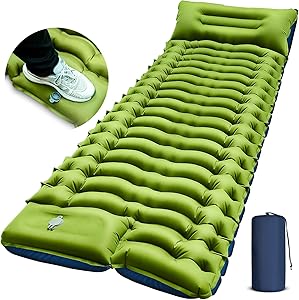
10. FUN PAC Camping Sleeping Pad
- Thickness: 3 inches
- Dimensions: 78 x 27 inches
- Material: 40D Nylon TPU
- Inflation Time: 30-60 seconds
The FUN PAC Camping Sleeping Pad is built for campers who value comfort and convenience during outdoor adventures. Its extra-wide 27-inch sleeping surface and thick 3-inch cushioning provide strong support against uneven terrain, rocky campsites, and hard ground. The ergonomic egg-shaped air cells help distribute body weight evenly, reducing pressure on the back and neck for a more restful night outdoors. The integrated pillow also adds convenience by eliminating the need to carry a separate camping pillow, making packing easier for casual camping trips.
One of the biggest advantages of this sleeping pad is the built-in foot pump that inflates the mattress in less than a minute without requiring mouth inflation or an external pump. The rugged 40D nylon TPU material resists moisture, punctures, and regular outdoor wear while remaining lightweight enough for travel and camping. Side connection buttons allow users to attach multiple pads together to create a larger sleeping space for couples or family camping. Although it is slightly bulkier than premium ultralight backpacking pads, the added comfort, durability, and easy setup make it an excellent value choice for campers looking for a practical and comfortable inflatable sleeping pad.
- Pros: Spacious sleeping area, built-in foot pump, thick cushioning, connectable design
- Cons: Bulkier than ultralight options, limited insulation for winter use
See the FUN PAC Camping Sleeping Pad
The Foundation of Rest: A Comprehensive Guide to 3-Season Sleeping Pads
In the world of outdoor exploration, the sleeping bag often gets all the glory. Adventurers spend weeks researching fill power, temperature ratings, and baffles. However, any seasoned backpacker will tell you that the most expensive sleeping bag in the world is virtually useless without a quality sleeping pad beneath it. When we talk about “3-season” gear, we are referring to equipment designed to handle the variability of spring, summer, and autumn—ranging from balmy July nights to the crisp, frosty mornings of late October.
A 3-season sleeping pad serves two primary purposes: cushioning and insulation. While comfort is subjective, insulation is a matter of thermodynamics. The ground is a massive heat sink; without a barrier, it will conduct warmth away from your body far faster than the air will. This article explores the nuances of selecting, using, and maintaining a 3-season sleeping pad to ensure your nights under the stars are as restorative as possible.
Understanding the Core Mechanics of Sleeping Pads
Before diving into specific models, it is essential to understand the three main categories of pads available on the market today. Each has distinct advantages and trade-offs regarding weight, durability, and packability.
Air Pads
Air pads are the darlings of the ultralight backpacking community. They rely on manual or pump-sack inflation to create a thick cushion of air between you and the earth. Modern 3-season air pads often utilize internal reflective films or synthetic insulation to prevent convective heat loss within the air chambers. Their primary advantage is their weight-to-comfort ratio; they can provide 3 inches of loft while packing down to the size of a water bottle.
Self-Inflating Pads
These pads utilize a combination of open-cell foam and air. When you open the valve, the foam expands, sucking air into the pad automatically. They offer a more “bed-like” feel and are generally more durable than pure air pads because the internal foam provides some insulation even if a small puncture occurs. They are the classic choice for 3-season use, offering a middle ground between comfort and convenience.
Closed-Cell Foam (CCF) Pads
The simplest of all designs, CCF pads are sheets of dense foam filled with tiny, trapped air bubbles. They don’t require inflation and are virtually indestructible. While they are less comfortable and bulkier than air-based options, they are excellent for 3-season use as a standalone pad for budget-conscious hikers or as a protective layer beneath an inflatable pad in colder shoulder-season conditions.
The Critical Metric: R-Value
When selecting a 3-season pad, the “R-value” is the most important specification to consider. R-value measures a material’s resistance to heat flow. The higher the R-value, the better the pad will insulate you from the cold ground.
Defining the 3-Season Range
For true 3-season versatility, you should look for an R-value between 2.0 and 4.0. A pad with an R-value of 2.0 is perfect for summer backpacking where the ground remains warm. However, as you move into the “shoulder seasons” (early spring and late fall), ground temperatures can drop significantly. A pad with an R-value of 3.0 to 4.0 is the “sweet spot,” providing enough warmth for a light frost while remaining breathable enough for summer use.
The ASTM F3340-18 Standard
In the past, R-values were inconsistent across brands. Fortunately, the industry adopted the ASTM F3340-18 standard, which ensures that all pads are tested using the same methodology. When shopping, always check if the R-value is ASTM-rated. This allows you to accurately compare a pad from one manufacturer against another, ensuring you aren’t caught off guard by a “3-season” claim that doesn’t hold up to the cold.
Design Features and Ergonomics
Beyond insulation, the physical design of the pad dictates how well you will sleep. Manufacturers use various techniques to maximize comfort without adding unnecessary weight.
Baffle Patterns
Air pads use different baffle structures—horizontal, vertical, or quilted (dimpled). Horizontal baffles tend to feel more stable for side sleepers, preventing the “teeter-totter” effect. Vertical baffles can sometimes feel like they are rolling you off the edge, but they often pack down smaller. Quilted patterns, often found in high-end 3-season pads, mimic the feel of a traditional mattress and distribute weight very evenly.
Shape and Size
The “mummy” shape is common in 3-season pads to save weight; it tapers at the feet to match the shape of a sleeping bag. However, “wide-regular” pads are becoming increasingly popular. If you are a restless sleeper or a side sleeper, the extra few inches of width can prevent your arms or knees from sliding onto the cold tent floor, which is a common cause of waking up mid-night.
Optimizing Your Sleep System
A sleeping pad does not exist in a vacuum. To get the most out of your 3-season gear, you must consider the entire “sleep system,” which includes your sleeping bag, your clothing, and even your tent site selection.
Site Selection
Even the best pad will struggle if placed on a damp, wind-swept ridge. For 3-season camping, look for “duff”—the soft layer of pine needles or leaves on the forest floor. These natural materials provide a secondary layer of insulation and protection for your pad. Avoid depressions in the ground where cold air or water might pool during the night.
The Role of Clothing
If you find yourself using a 3-season pad in near-freezing temperatures, you can “boost” your R-value by wearing dry, dedicated sleep layers. A pair of wool socks and thermal leggings can bridge the gap if your pad is slightly under-gunned for an unexpectedly cold autumn night. Never sleep in the damp clothes you hiked in, as the moisture will pull heat away from your body regardless of your pad’s R-value.
Care and Maintenance for Longevity
Because 3-season pads (especially air and self-inflating models) are vulnerable to punctures, proper care is paramount. A 3-season pad is an investment that should last for years if handled correctly.
Inflation Best Practices
Avoid using your breath to inflate air pads whenever possible. The moisture in your breath can lead to mold growth inside the pad and can degrade the internal insulation over time. Most high-quality 3-season pads now come with a “pump sack.” These lightweight bags allow you to trap ambient air and squeeze it into the pad, keeping the interior dry and pristine.
Storage and Cleaning
Never store your self-inflating or air pad compressed in its stuff sack for long periods. This can cause the foam to lose its “memory” or the fabric to delaminate at the folds. Instead, store it unrolled with the valve open in a cool, dry place. If the pad gets dirty, use a damp cloth and mild soap. Avoid harsh chemicals that could damage the waterproof coatings.
Field Repairs
Always carry a small repair kit. Most 3-season pads include a couple of adhesive patches. In the field, finding a “slow leak” can be difficult; the best method is to apply a small amount of water or spit to the suspected area and look for bubbles. Once found, dry the area thoroughly before applying the patch. This simple skill can mean the difference between a restful night and sleeping on hard ground.
Conclusion
Selecting the right 3-season sleeping pad is an exercise in balancing weight, comfort, and warmth. By targeting an R-value in the 2.5 to 4.0 range and choosing a construction style that fits your sleeping habits, you unlock the ability to camp comfortably from the first thaw of spring to the final golden leaves of autumn. Remember that the pad is the silent partner of your sleeping bag—the foundation upon which every great outdoor adventure is built. Invest in quality, maintain it with care, and the rewards will be measured in miles hiked and sunrises enjoyed after a perfect night’s sleep.