
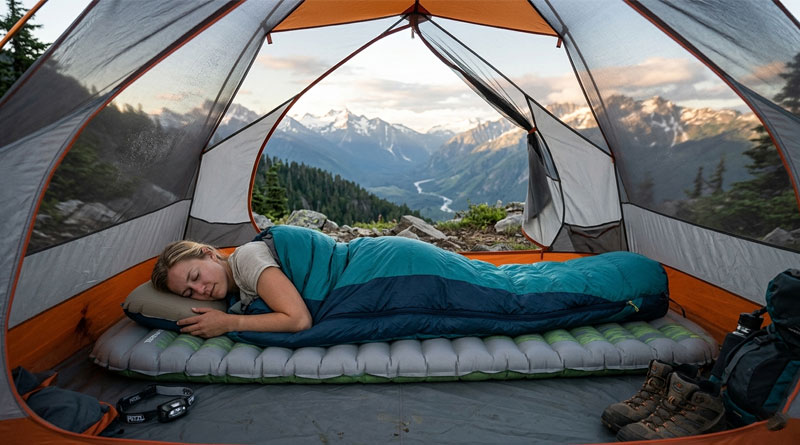
Best Sleeping Pads for Stomach Sleepers of 2026
If you sleep on your stomach, you know that a bad sleeping pad can leave you with a sore back and neck. You need a pad that is firm enough to keep your hips from sinking too deep, yet still soft for comfort. In this guide, we break down the best sleeping pads made just for stomach sleepers, helping you wake up feeling rested and pain-free.
1. Therm-a-Rest NeoAir XLite NXT

- Best Use: Backpacking
- R-Value: 4.5
- Weight (Regular): 13 oz.
- Thickness: 3 inches
The Therm-a-Rest NeoAir XLite NXT is a game-changer for backpackers seeking year-round comfort without the bulk. At just 13 ounces for the regular size and packing down to 4.1 x 9 inches, it offers an incredible warmth-to-weight ratio with an R-value of 4.5. The 3-inch thickness effectively isolates you from cold, uneven ground, while the mummy shape trims excess weight. Whether you’re tackling a summer thru-hike or a shoulder-season adventure, this pad delivers reliable performance and a surprisingly restful sleep.
Setting up camp becomes a joy with this pad’s quick inflation and durable construction. The included repair kit and stuff sack add peace of mind on the trail. Side sleepers will appreciate the generous 20-inch width in the regular version, while the winglock valve makes deflation fast and controlled. It’s undeniably an investment, but for ultralight purists who refuse to sacrifice sleep quality, the NeoAir XLite NXT is worth every penny. It excels in compactness and thermal efficiency.
Pros: Extremely lightweight and packable, excellent R-value for 4-season use.
Cons: Crinkly noise during movement, expensive compared to similar pads.
See the Therm-a-Rest NeoAir XLite NXT
2. KLYMIT Insulated Static V Lite

- R-Value: 4.4
- Weight: 20 oz.
- Inflated Size: 72 x 23 x 2.5 inches
- Packed Size: 8 x 3 inches
The KLYMIT Insulated Static V Lite simplifies camping without skimping on comfort. Its unique V-Chamber design conforms to your body, limiting air movement and cradling side, back, and stomach sleepers alike. With an R-value of 4.4 and Klymalite synthetic insulation, this pad is a true 4-season contender that punches above its weight class. Inflation takes only 10-15 breaths thanks to the easy-to-use valve, getting you off the cold ground and into dreamland faster.
Constructed from durable 30D polyester, the Static V Lite balances ruggedness with a packed size of just 8×3 inches—small enough to stash anywhere. Dynamic side rails provide a secure, restful feel, preventing that annoying roll-off sensation. While 20 ounces isn’t ultralight, the added width (23 inches) and comfort make it a fantastic choice for backpackers who prioritize sleep quality. It’s affordable, reliable, and thoughtfully engineered for real-world use.
Pros: Great warmth-to-weight ratio with R-value 4.4, V-chamber design minimizes air movement.
Cons: Slightly heavier than premium ultralight pads, only 2.5 inches thick.
See the KLYMIT Insulated Static V Lite
3. Exped Ultra 3R

- Best Use: Backpacking, Bikepacking
- R-Value: 3.2 (3-season)
- Weight (Medium): 1 lb. 0.5 oz.
- Thickness: 3 inches
The Exped Ultra 3R is built for speed and efficiency, making it a favorite among fast-packers and bikepackers. Its rectangular shape offers generous sleeping space without unnecessary bulk, while the 3-season synthetic insulation provides a balanced R-value of 3.2. Packed size is impressively small—the medium version compresses to just 4.3 x 9.1 inches—so you can easily strap it to a handlebar or tuck it into a tight backpack. The 3-inch thickness ensures reliable cushioning from roots and rocks.
Durability meets comfort here, with a thoughtful design that includes a repair kit and stuff sack. The pad inflates quickly and maintains loft throughout the night, preventing cold spots. At just over a pound, it’s light enough for long treks but sturdy enough for regular weekend warriors. The medium wide version (25.6 inches) is a dream for restless sleepers who need elbow room. Exped nails the balance between weight, packed size, and genuine backcountry comfort.
Pros: Extremely packable for its size, rectangular shape offers more room, great 3-season R-value.
Cons: Not insulated enough for deep winter, inflation takes a bit of effort.
4. Therm-a-Rest NeoAir XTherm NXT

- R-Value: 7.3
- Weight (Regular): 15.5 oz.
- Thickness: 3 inches
- Packed Size: 4.5 x 9 inches
When extreme cold is on the menu, the Therm-a-Rest NeoAir XTherm NXT is the gold standard. With an astonishing R-value of 7.3, this pad delivers unparalleled warmth for its weight class, making it ideal for winter expeditions and high-altitude climbs. The regular size weighs just 15.5 ounces and packs down to a mere 4.5 x 9 inches—figures that seem impossible given the thermal performance. The 3-inch thickness keeps you elevated above frozen ground, while the mummy shape sheds grams.
Durability is equally impressive, with materials designed to withstand harsh backcountry conditions. The reflective barrier traps radiant heat effectively, yet the pad remains surprisingly quiet compared to older models. Inflation is straightforward, and the winglock valve allows micro-adjustments for perfect firmness. Yes, it’s expensive, but for mountaineers and winter backpackers who need reliable insulation without a weight penalty, the XTherm NXT is simply unbeatable. It’s a true four-season workhorse.
Pros: Incredible R-value of 7.3 for extreme cold, ultralight for its warmth, durable construction.
Cons: Very expensive, overkill for summer camping.
See the Therm-a-Rest NeoAir XTherm NXT
5. Gear Doctors ApolloAir
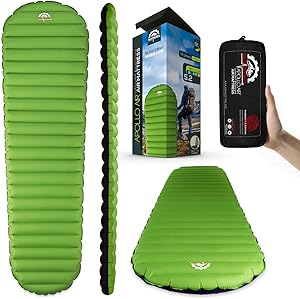
- Weight: 1.06 pounds
- Dimensions: 72.08 x 22 x 3.25 inches
- Includes: Pump sack, repair patch
- Material: Nylon
The Gear Doctors ApolloAir focuses on hassle-free comfort with a clever pump sack included—no more lightheadedness from mouth inflation. Measuring 72 x 22 inches with a thickness of 3.25 inches, it offers above-average cushioning that keeps hips and shoulders off the ground. Weighing just 1.06 pounds, it’s competitive with many premium backpacking pads. The nylon construction feels robust, and the compact carry bag makes transport easy. This pad is designed for campers who want convenience without breaking the bank.
Setting up the ApolloAir is refreshingly simple: attach the pump sack, capture some air, and roll. The pad inflates in under a minute, leaving you more time to enjoy the campsite. While not officially ASTM rated for R-value, user testing suggests adequate 3-season performance. Side sleepers will appreciate the extra thickness, and the included repair patch adds confidence. It won’t match ultra-high-end pads in extreme cold, but for fair-weather backpacking and car camping, it’s a solid, budget-friendly choice that delivers on its promises.
Pros: Comes with pump sack for hygienic inflation, 3.25-inch thickness is very comfortable.
Cons: No official R-value rating, pump sack adds a tiny bit of bulk.
See the Gear Doctors ApolloAir
6. Therm-a-Rest Z Lite Sol

- Type: Closed-cell Foam
- R-Value: 2.0
- Weight (Regular): 14 ounces
- Thickness: 0.75 inches
The Therm-a-Rest Z Lite Sol is the ultimate bombproof sleeping pad, relying on closed-cell foam that never punctures or deflates. Its accordion-style fold makes it incredibly versatile—use it as a seat, a kneeling pad, or emergency insulation. The heat-trapping dimples and reflective ThermaCapture coating boost the R-value to 2.0, offering surprising warmth for such a thin pad. At 14 ounces for the regular size, it’s not the lightest foam option, but it’s among the most durable and packable.
What the Z Lite Sol lacks in plushness, it makes up for in reliability. You can strap it to the outside of your pack without worry, throw it on rocky ground, and never fear a leak. It’s an excellent choice for thru-hikers who pair it with an air pad for extra insulation or for minimalist summer campers. The 0.75-inch thickness is firm, so side sleepers might want a supplement. Still, for sheer durability and simplicity, this pad remains a classic for good reason.
Pros: Indestructible closed-cell foam, never deflates or punctures, doubles as a sit pad.
Cons: Thin at 0.75 inches (firm sleep only), bulky to pack externally.
See the Therm-a-Rest Z Lite Sol
7. Sea to Summit Ultralight XR

- R-Value: 3.6
- Weight (Regular): 14.6 oz.
- Thickness: 2.6 inches
- Packed Size: 3.9 x 7.5 inches
The Sea to Summit Ultralight XR strikes a brilliant balance between warmth and packability. With an R-value of 3.6 and ThermalCore insulation that reflects body heat, it’s a legitimate 3-season pad that compresses to an astonishingly small size—just 3.9 x 7.5 inches for the regular. The 151 Air Sprung Cells create a stable, comfortable sleeping surface that minimizes pressure points, making it suitable for active sleepers. At 14.6 ounces, it earns its “ultralight” badge proudly.
Inflation is efficient thanks to the multi-function valve, and the included repair kit adds confidence on long trips. The mummy shape trims weight while still offering 21.7 inches of width at the shoulders. While 2.6 inches of thickness is slightly less than some competitors, the pad’s thoughtful cell design prevents bottoming out. It’s ideal for weight-conscious backpackers who encounter chilly nights but don’t need deep-winter protection. Sea to Summit delivers premium quality here—compact, warm, and genuinely comfortable.
Pros: Tiny packed size (3.9 x 7.5 inches), excellent R-value of 3.6 for 3-season use.
Cons: Only 2.6 inches thick, narrow for some side sleepers.
See the Sea to Summit Ultralight XR
8. Sea to Summit Ultralight Air

- R-Value: 1.1
- Weight (Regular): 13.9 oz.
- Thickness: 2 inches
- Packed Size: 3.5 x 7 inches
The Sea to Summit Ultralight Air is all about minimalism and packability for warm-weather adventures. With a low R-value of 1.1, this pad is strictly for summer camping or indoor use, but it delivers where it counts: weight and packed size. The regular version weighs just 13.9 ounces and compresses to an incredible 3.5 x 7 inches—smaller than a water bottle. An integrated pump makes inflation simple and hygienic, while the mummy shape sheds every possible gram.
Comfort comes from 2 inches of air support via Air Sprung Cells, but without insulation, you’ll feel cold ground below 50°F. This pad excels for ultralight thru-hikers in hot climates or as a spare for guests. The included repair kit and stuff sack add value. It’s not for winter or even chilly fall nights, but for steamy summer trips where every ounce counts, the Ultralight Air is a fantastic choice. Just pair it with a warm sleeping bag and watch your pack weight drop.
Pros: Extremely small packed size (3.5 x 7 inches), very lightweight at 13.9 oz.
Cons: Low R-value of 1.1 (warm weather only), only 2 inches thick.
See the Sea to Summit Ultralight Air
9. NEMO Switchback

- Type: Closed-cell Foam
- R-Value: 2.0
- Weight (Regular): 14.5 oz.
- Thickness: 0.9 inches
The NEMO Switchback reimagines the classic closed-cell foam pad with a focus on comfort and packability. Its distinctive hexagonal dimples provide better cushioning than many foam pads, measuring 0.9 inches thick—slightly more than the competition. The heat-reflecting film boosts the R-value to 2.0, offering practical warmth for 3-season use. The accordion fold allows the regular size to pack down to 20 x 5.5 x 5 inches, and you can strap it anywhere without fear of damage.
What sets the Switchback apart is its surprisingly comfortable sleep surface. The dimples create air channels that add a bit of springiness, and the pad feels less “brick-like” than other foam options. It’s an excellent choice for thru-hikers who want a puncture-proof backup or for minimalist campers. While 14.5 ounces isn’t ultralight for foam, the durability and versatility justify the weight. Use it alone in summer or pair it with an air pad for winter—the Switchback is a rugged, reliable tool.
Pros: More comfortable than most foam pads (0.9 inches thick), heat-reflecting film adds warmth.
Cons: Bulkier to carry than air pads, not enough cushion for some side sleepers.
10. FUN PAC Camping Sleeping Pad
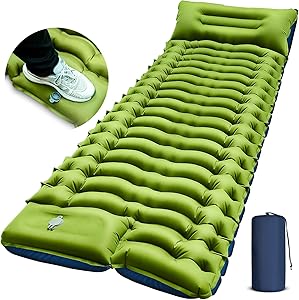
- Size: 78 x 27 x 3 inches
- Built-in Pump: 30-60 sec inflation
- Weight: Water-bottle sized
- Material: 40D Nylon & TPU
The FUN PAC Camping Sleeping Pad focuses on convenience and spacious comfort. At a massive 78 x 27 x 3 inches, it offers exceptional width and length for restless sleepers, plus a built-in pillow that saves packing space. The integrated pump inflates the pad in just 30-60 seconds—no lung power or extra gadgets required. Deflation is a one-second affair. The egg-shaped air cells are designed to relieve pressure on back and neck, making this a great choice for car camping or basecamp use.
Side buttons allow you to connect two pads into a double bed, perfect for couples or families. The 40D nylon and TPU construction feels rugged and easy to clean. While it’s not the lightest or most packable pad for backpacking (it resembles a water bottle in size), it’s a stellar option for campers who prioritize comfort over minimal weight. The self-inflating feature works reliably, and the fashionable two-tone design is a bonus. For family camping trips, the FUN PAC delivers excellent value.
Pros: Extra wide (27 inches) with built-in pillow, fast 30-60 second built-in pump.
Cons: Heavier and bulkier than backpacking pads, not designed for ultralight trekking.
See the FUN PAC Camping Sleeping Pad
The Ultimate Guide to Sleeping Pads for Stomach Sleepers
Stomach sleeping is often cited as one of the rarest and most difficult sleeping positions to accommodate, especially when venturing into the great outdoors. While back and side sleepers have a plethora of gear options designed specifically for their needs, stomach sleepers—often referred to as “front sleepers”—face a unique set of challenges. Finding the right sleeping pad isn’t just about comfort; it’s about spinal alignment, pressure point relief, and ensuring you don’t wake up with a strained neck or a sore lower back. In this comprehensive guide, we will explore the science of stomach sleeping and how to choose the perfect pad for your next backcountry adventure.
Understanding the Mechanics of Stomach Sleeping
Before diving into gear specifications, it is crucial to understand why stomach sleepers are so picky about their surfaces. When you lie on your front, your body naturally wants to sink. If a sleeping pad is too soft, your hips will dip below the rest of your body, creating an unnatural arch in your lower spine (lumbar region). Conversely, if the pad is too hard, it can put excessive pressure on your ribs and knees.
Furthermore, stomach sleepers usually turn their heads to one side, which puts the cervical spine at an angle. A pad that is too thick or bouncy can exacerbate this misalignment. Therefore, the goal for a stomach sleeper is to find a pad that provides “firm loft”—enough cushion to feel soft against the skin, but enough structural integrity to keep the torso level.
Key Features to Look For
Firmness and Support
For stomach sleepers, firmness is your best friend. You need a pad that prevents “bottoming out.” Air pads are popular because they allow you to adjust the internal pressure. By over-inflating the pad slightly, you create a taut surface that keeps your hips elevated. However, avoid pads with large, bouncy baffles that feel like a pool float; these can create a “seesaw” effect every time you move.
Pad Thickness
While side sleepers need 3 to 4 inches of loft to cushion their shoulders and hips, stomach sleepers often do better with a moderate thickness. A pad that is 2 to 2.5 inches thick is usually the “sweet spot.” It provides enough distance from the cold, hard ground without creating the instability associated with ultra-thick air mattresses.
Surface Texture and Noise
Stomach sleepers have more skin-to-pad contact than any other type of sleeper. Your face, chest, and stomach are all pressed against the material. Look for pads with a “brushed” or “soft-touch” fabric. Avoid “crinkly” pads that use loud metallic films for insulation; the noise is amplified when your ear is pressed directly against the pad.
Types of Sleeping Pads for Front Sleepers
Self-Inflating Pads
Self-inflating pads are often considered the gold standard for stomach sleepers. They combine open-cell foam with an airtight shell. Because they have a consistent foam core, they offer a much flatter, more stable surface than air-only pads. The foam provides a dampened feel that mimics a real mattress, preventing the “bouncy” sensation that can lead to back pain.
Closed-Cell Foam (CCF) Pads
While many find them too firm, some stomach sleepers swear by CCF pads. They are indestructible and provide a completely level surface. If you are a “hard-floor” sleeper at home, a CCF pad like the Nemo Switchback or Therm-a-Rest Z Lite might be your most lightweight and reliable option. However, for most, these are best used as a secondary layer underneath an inflatable pad for added protection and firmness.
Air Pads with Internal Structures
If you prefer the packability of an air pad, look for those with “matrix” or “dot-weld” construction rather than long horizontal or vertical baffles. These designs create hundreds of individual air cells that distribute weight more evenly, preventing the hips from sinking in while keeping the chest supported.
The Importance of R-Value
R-value measures a pad’s ability to resist heat loss to the ground. Since stomach sleepers have more surface area in contact with the pad, they can feel the cold more acutely in their core. Even in summer, a pad with an R-value of at least 2.0 is recommended. For three-season camping, look for 3.0 to 4.5. Because you are laying flat, a cold pad will quickly sap heat from your vital organs, leading to a restless night.
The Pillow Dilemma for Stomach Sleepers
The biggest mistake stomach sleepers make is using a standard backpacking pillow. Most camping pillows are designed to be thick to fill the gap for side sleepers. For a stomach sleeper, a thick pillow forces the neck into a painful upward angle.
Low-Profile Options
Many stomach sleepers find that they don’t need a pillow at all, or they prefer a very thin, partially deflated air pillow. Another trick is to use a folded-up fleece jacket. This provides a soft surface for the face without lifting the head too far off the plane of the spine.
Top Product Recommendations
The Stability King: Therm-a-Rest ProLite Plus
This is a self-inflating pad that offers a diagonal-cut foam. It provides a very stable, flat surface that doesn’t “hammock.” It is specifically praised by stomach sleepers for its predictable support and lack of “wobble.”
The Versatile Choice: Sea to Summit Ether Light XT
While it is thick, its “Air Sprung Cells” function like a pocket-sprung mattress. It allows for localized compression, meaning your ribs can sink in slightly while your hips remain supported. It is also exceptionally quiet compared to other lightweight air pads.
The Ultralight Flat: Big Agnes Zoom UL
For the weight-conscious hiker, this pad offers an internal O-beam construction that creates a remarkably flat sleeping surface. It avoids the “large tube” feeling of other ultralight pads, which is vital for maintaining a neutral spine while on your front.
Tips for a Better Night’s Sleep on the Trail
Micro-Adjusting Air Pressure
Don’t just blow the pad up and call it a night. Lie down on your stomach and reach for the valve. Slowly release small bursts of air until you feel your body settle into a level position. You want to be as close to the ground as possible without actually touching it.
The “Leg Kick” Technique
Many stomach sleepers naturally sleep with one knee hiked up (the “half-fetal” position). If you do this, ensure your sleeping pad is wide enough. A standard “Regular” width pad is 20 inches, which often results in your knee hanging off the side onto the cold tent floor. Opting for a “Wide” (25-inch) model can drastically improve comfort for active stomach sleepers.
Final Thoughts
Stomach sleeping in the backcountry doesn’t have to be a recipe for a morning backache. By prioritizing stability over thickness and firmness over plushness, you can find a system that works. Remember that the “best” pad is highly subjective. If possible, visit an outdoor retailer and test pads by lying on your stomach specifically—don’t just sit on them. With the right combination of a stable pad, a low-profile pillow, and proper inflation, you can enjoy the stars and wake up ready for another day of trekking.