
Best Budget Ultralight Sleeping Pads of 2026
Looking for a sleeping pad that’s easy to carry but won’t break the bank? You don’t need to spend big money to get a light, comfy pad for camping or backpacking. In this article, we’ll share the best budget ultralight sleeping pads that pack down small, keep you off the cold ground, and actually help you sleep well—all without draining your wallet.
1. Klymit Insulated Static V Lite

- R-Value: 4.4 (4-season insulation)
- Weight: 20 oz
- Inflated Size: 72 x 23 x 2.5 inches
- Material: 30D Polyester
The Klymit Insulated Static V Lite is a versatile choice for backpackers who need year-round performance without the bulk. Its signature V-Chamber design is engineered to limit air movement and heat loss, providing a stable surface for back, side, and stomach sleepers alike. The integrated Klymalite synthetic insulation ensures a warm barrier against the cold ground during winter excursions.
Beyond warmth, this pad excels in packability, shrinking down to roughly the size of a water bottle. The dynamic side rails are a thoughtful touch, helping to center the sleeper on the pad throughout the night. It offers a generous width and a rugged exterior that balances weight with long-term durability for frequent trail use.
Pros: High R-value for winter use, lightweight design, and body-mapping comfort.
Cons: V-chamber design can feel unusual to some; requires manual inflation.
See the Klymit Insulated Static V Lite
2. Exped Ultra 3R

- R-Value: 3.2 (3-season use)
- Thickness: 3 inches
- Weight: 1 lb 0.5 oz (Medium)
- Insulation: Synthetic Texpedloft
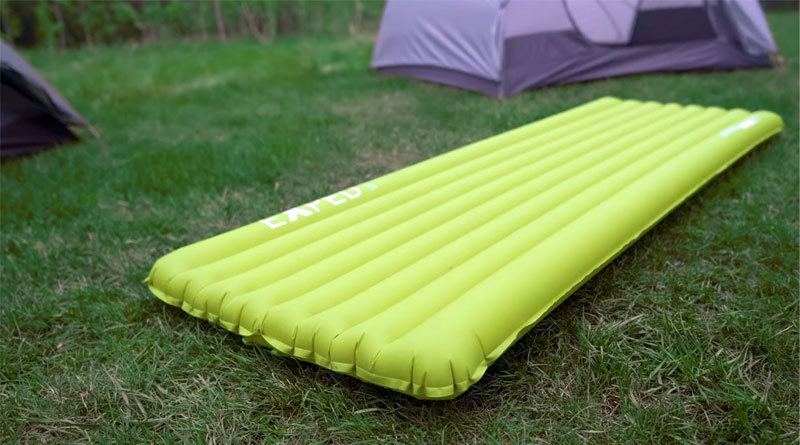
Exped Ultra 3R is purpose-built for human-powered adventures where every gram matters. Designed specifically for backpacking and bikepacking, it provides a plush three inches of loft that smooths out the most uneven terrain. The rectangular shape provides ample room to move, making it a favorite for those who find mummy-shaped pads too restrictive.
This pad utilizes Synmat technology to achieve its 3.2 R-value, making it ideal for spring through fall. It comes with a repair kit and a stuff sack, ensuring you are prepared for maintenance in the field. The Ultra 3R balances a lightweight profile with a surprisingly comfortable sleep surface that caters to fast-paced trekkers.
Pros: Exceptional thickness for side sleepers, multiple size options, and very packable.
Cons: Lower R-value than dedicated winter pads; fabric prioritizes weight over maximum puncture resistance.
3. Gear Doctors ApolloAir
- Weight: 1.06 lbs
- Dimensions: 72.08 x 22 x 3.25 inches
- Material: Durable Nylon
- Inflation: Included Pump Sack
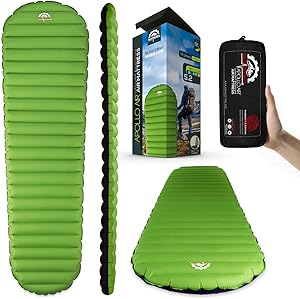
The Gear Doctors ApolloAir is a comfort-focused sleeping pad designed for the modern camper. With a thickness of 3.25 inches, it offers one of the deepest sleep surfaces in its class, ensuring that your hips and shoulders never touch the hard ground. It is constructed from high-quality nylon to withstand the rigors of outdoor use while remaining lightweight.
One of its standout features is the included pump sack, which allows for quick inflation without the moisture buildup from breath. This system keeps the internal insulation dry and increases the longevity of the pad. The compact packed size makes it easy to slide into any pack, offering a premium sleep experience for hikers of all levels.
Pros: Very thick and comfortable, pump sack included, and lightweight.
Cons: Not self-inflating; insulation rating is not as specific as some competitors.
See the Gear Doctors ApolloAir
4. Therm-a-Rest Z Lite Sol

- R-Value: 2.0
- Weight: 14 oz (Regular)
- Type: Closed-cell Foam
- Packed Size: 20 x 5.5 x 5 inches
The Therm-a-Rest Z Lite Sol remains a staple for minimalist backpackers and thru-hikers due to its indestructible nature. Unlike air pads, it cannot pop or leak, making it a reliable choice for rocky terrain or as a supplemental layer for winter camping. The accordion-style folding design allows for lightning-fast setup and pack-down times at camp.
This pad features a heat-trapping dimpled surface and a ThermaCapture coating that reflects radiant heat back to your body. While it is thinner than air mattresses, its reliability and dual-purpose use as a camp seat make it incredibly versatile. It is one of the lightest options available for those who value speed and simplicity over plush cushioning.
Pros: Virtually indestructible, extremely lightweight, and multi-functional.
Cons: Lower comfort level than air pads; bulky when strapped to the outside of a pack.
See the Therm-a-Rest Z Lite Sol
5. Sea to Summit Ultralight XR

- R-Value: 3.6
- Weight: 14.6 oz (Regular)
- Thickness: 2.6 inches
- Design: 151 Air Sprung Cells
Sea to Summit’s Ultralight XR is engineered for those who refuse to sacrifice comfort for weight. Utilizing 151 individual Air Sprung Cells, the pad mimics the feel of a pocket-sprung mattress by distributing your weight evenly across the surface. This technology significantly reduces pressure points, ensuring a restful night regardless of your sleeping position.
The XR model features ThermalCore insulation and a reflective layer to achieve a 3.6 R-value, suitable for cool autumn nights and early spring treks. Its mummy shape helps keep the weight down to a mere 14.6 ounces, making it a top-tier choice for ultralight enthusiasts. The fabric is quiet and soft, avoiding the “crinkly” sound often found in similar pads.
Pros: Excellent weight-to-warmth ratio, superior comfort through Air Sprung Cells, and quiet fabric.
Cons: Mummy shape may be too narrow for active sleepers; premium price point.
See the Sea to Summit Ultralight XR
6. Sea to Summit Ultralight Air

- R-Value: 1.1
- Weight: 13.9 oz (Regular)
- Thickness: 2 inches
- Shape: Mummy
The Sea to Summit Ultralight Air Mat is the ultimate solution for warm-weather backpacking where speed and low volume are the primary goals. It focuses on maximum breathability and minimal weight, utilizing a single layer of Air Sprung Cells to provide a stable and supportive surface. It is one of the most compact pads on the market when deflated.
This model includes an integrated pump system, making it incredibly easy to inflate without a separate accessory. While it lacks heavy insulation, its simplicity makes it a favorite for summer peak-bagging or desert camping. The lightweight construction ensures it stays unnoticed in your pack until it is time to set up camp for the evening.
Pros: Extremely packable and light, very easy to inflate, and stable surface.
Cons: Not suitable for cold weather; thinner than the XR version.
See the Sea to Summit Ultralight Air
7. NEMO Switchback

- R-Value: 2
- Thickness: 0.9 inches
- Weight: 14.5 oz (Regular)
- Type: Closed-cell Foam
The NEMO Switchback offers a modern take on the classic foam sleeping pad. It uses a specialized hexagonal pattern and dual-density foam to provide more loft and comfort than traditional flat foam mats. The metalized film on the bottom reflects body heat, helping to maintain a comfortable temperature throughout the night despite its thin profile.
This pad is built for durability and convenience, requiring zero inflation time and being entirely immune to punctures. It is an excellent choice for backpackers who prioritize reliability in harsh environments or those who need a durable mat for dog-friendly camping. The folding design makes it easy to deploy for quick trail breaks or long nights.
Pros: Thicker than standard foam pads, zero maintenance required, and very affordable.
Cons: Limited cushioning for side sleepers; takes up significant external pack space.
8. FUN PAC Camping Sleeping Pad
- Thickness: 3 inches (with built-in pillow)
- Dimensions: 78 x 27 x 3 inches
- Weight: Approx. 1.8 lbs
- Material: 40D Nylon & TPU
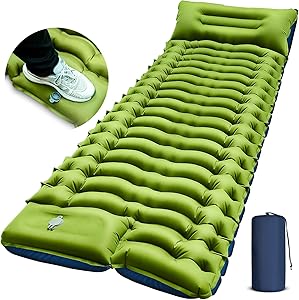
The FUN PAC Camping Sleeping Pad is designed for those who want a home-like sleep experience in the outdoors. It stands out with its extra-wide dimensions and integrated pillow, which eliminates the need to carry extra gear. The egg-shaped air cells provide a unique pressure-relief system that supports the neck and back for all types of sleepers.
One of its most convenient features is the built-in foot pump, which allows for full inflation in under a minute without using your lungs. It also features side buttons that allow you to connect two pads together to form a double bed, making it a great choice for couples or families. The 40D nylon construction is rugged enough for various terrains.
Pros: Built-in foot pump and pillow, extra wide for comfort, and connectable design.
Cons: Heavier than ultralight alternatives; bulkier when packed.
See the FUN PAC Camping Sleeping Pad
How to Choose a Budget Ultralight Sleeping Pad?
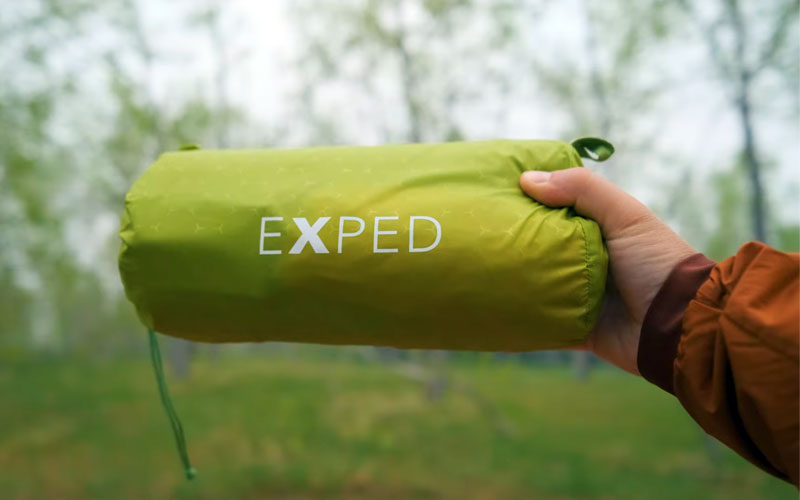
Choosing the right sleeping pad for your backpacking trip is an essential part of ensuring a comfortable night’s sleep in the outdoors. While ultralight sleeping pads are popular for their portability and ease of use, finding a budget-friendly option that still offers the necessary support and comfort can be tricky. In this article, we’ll guide you through the key factors to consider when selecting a sleeping pad.
What is an Ultralight Sleeping Pad?
An ultralight sleeping pad is a compact, lightweight piece of gear that provides insulation and cushioning during outdoor activities like backpacking or camping. These pads help you stay comfortable while resting on uneven or hard surfaces, such as rocky ground or dirt. Ultralight sleeping pads are designed to be lighter and more portable than standard sleeping pads, making them an ideal choice for those who want to minimize the weight of their gear.
Why Go for a Budget Option?
Budget pads are a good choice for anyone looking to save money without compromising on too much comfort or quality. While premium models offer extra features such as advanced materials and extra insulation, an inexpensive option can still provide enough comfort for a decent night’s sleep. If you’re new to backpacking or don’t plan on using the pad frequently, opting for an affordable version can help you cut down on costs while still getting the job done.
Key Features to Consider
When looking for a sleeping pad, there are several important factors to keep in mind. These features can affect both comfort and performance.
Weight
One of the main reasons people choose ultralight sleeping pads is to reduce the weight of their backpacking gear. A lighter pad means less weight to carry on long treks. Most ultralight sleeping pads weigh between 0.5 and 2 pounds. If you’re on a tight budget, try to find a pad that’s as light as possible without sacrificing comfort.
Insulation
Sleeping pads provide more than just comfort; they also help keep you warm. Many budget options are made with materials that offer basic insulation. Look for options with foam or inflatable designs that provide some thermal resistance. The R-value of a sleeping pad measures its ability to insulate against the cold ground. A higher R-value indicates better insulation. While budget pads may not have the highest R-values, you should aim for one with a rating of at least 2.0 for basic warmth in moderate conditions.
Size
Sleeping pads come in different sizes to match your body shape and the type of tent you’re using. The most common size is a standard rectangular design, but there are also narrower and shorter versions that can reduce weight even further. If you’re looking to save weight and space, consider getting a shorter sleeping pad, which will still offer support for your torso but leave your feet exposed. However, if you need extra comfort and space, a full-length pad might be better.
Durability
When choosing a cheap lightweight sleeping pad, it’s important to consider how durable it will be. Cheaper pads might use lighter materials, which can wear out more quickly or puncture easily. Look for a sleeping pad made of durable materials such as high-denier nylon or polyester. While these materials may not be as robust as those found in higher-end models, they should still provide enough durability for light use in backpacking and camping trips.
Inflation and Setup
Inflatable sleeping pads typically provide the best comfort-to-weight ratio, but they can be a hassle to inflate and deflate. Budget options may not have built-in pumps or easy-to-use valves, so be prepared to do the work manually. Some pads use foam or air cores, which require less effort to inflate but can be bulkier. If you don’t mind spending extra time setting up your pad, an inflatable option might be a good choice. However, if you want something more straightforward, a self-inflating foam pad could be a better alternative.
Popular Sleeping Pads
Several well-known brands offer ultralight sleeping pads with a balance of comfort and affordability. Though they may not have all the high-end features of premium models, these pads still meet basic needs and provide good value for money. Some popular options include the Therm-a-Rest Z Lite Sol, the Klymit Static V, and the Coleman Self-Inflating Sleeping Pad. These pads are widely available and generally receive positive reviews for being comfortable, affordable, and functional.
How to Maximize Comfort on a Budget?
While the cheapest options might not offer the same luxury as higher-end models, there are a few tricks you can use to improve comfort without spending extra money. First, make sure the pad is fully inflated or properly adjusted to your desired firmness level. You can also add a layer of foam or a lightweight blanket underneath the pad for extra cushioning and insulation. Additionally, consider using a sleeping bag liner or sleeping pad cover to protect your pad and enhance its comfort.
When to Consider Upgrading
Budget sleeping pads are perfect for beginner backpackers or those who only go on short trips occasionally. However, if you find yourself backpacking frequently or in extreme conditions, you might eventually want to upgrade to a higher-end sleeping pad. Upgrading can give you better comfort, increased durability, and more advanced insulation. Additionally, more expensive pads often come with added features such as a thicker design, quieter materials, and built-in pumps for easier inflation.
Conclusion
Choosing the right sleeping pad requires balancing comfort, weight, insulation, and durability while keeping costs low. By considering the factors outlined in this article, you can find a sleeping pad that suits your needs without breaking the bank. Remember, even a budget pad can provide a comfortable night’s rest if you take the time to choose wisely. Whether you’re new to backpacking or looking for a reliable option for occasional trips, a sleeping pad can make all the difference in ensuring a good night’s sleep on the trail.