Best Hiking Boots for Crampons of 2026
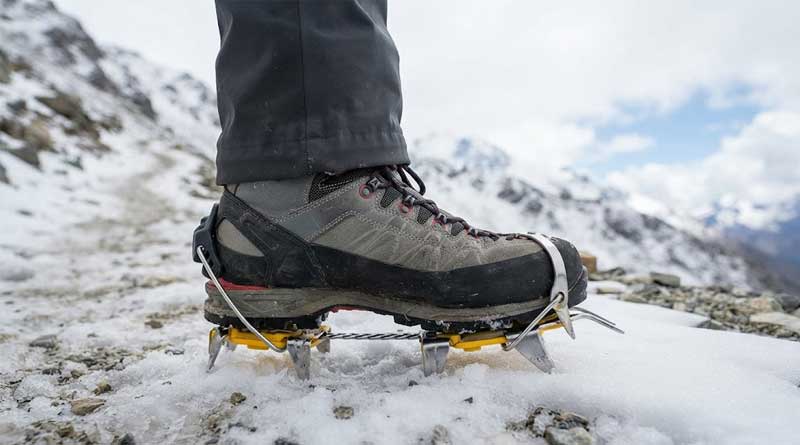
When you’re heading into icy or snowy terrain, having the right boots is just as important as your crampons. Not every hiking boot works well with them—you need a sturdy sole and good ankle support to stay safe. This guide breaks down the best hiking boots for crampons, so you can choose a pair that fits securely and keeps you steady on slippery trails. We’ll help you find the perfect match for your winter adventures.
1. Merrell Coldpack 3 Thermo Mid

- Waterproofing: Waterproof/breathable membrane with full-grain leather upper
- Insulation: 200 g recycled fleece lining
- Outsole: Vibram Arctic Grip with Vibram XS Trek Evo
- Weight: 2 lbs. 7.5 oz. per pair
The Merrell Coldpack 3 Thermo Mid is built for hikers who refuse to let cold, wet trails slow them down. Its full-grain waterproof leather upper pairs with a breathable membrane to keep moisture out while letting your feet breathe, and the recycled fleece lining adds a cozy layer of warmth without excess bulk.
Underfoot, the molded nylon arch shanks provide steady support on uneven terrain, while the Vibram Arctic Grip outsole bites into icy or slick surfaces with confidence. It’s a dependable choice for winter day hikes and snowy commutes alike, striking a solid balance between warmth, traction, and weight.
Pros:
- Reliable traction on ice and snow
- Warm, breathable fleece lining
- Durable full-grain leather construction
Cons:
- Slightly heavier than non-insulated boots
- Mid-height offers less ankle protection than taller boots
See the Merrell Coldpack 3 Thermo Mid
2. KEEN Revel IV High Polar

- Comfort Range: Rated to -40°F
- Waterproofing: KEEN.DRY waterproof breathable membrane
- Insulation: KEEN.WARM recycled PET fibers
- Upper: Leather and performance mesh
When temperatures plunge, the KEEN Revel IV High Polar is designed to keep up. Rated down to a staggering -40°F, this mid-calf boot combines a leather and performance mesh upper with KEEN.WARM recycled PET insulation, delivering serious cold-weather protection without feeling stiff or overbuilt.
The KEEN.DRY membrane keeps water out on slushy or wet trails, and the stability shank adds confidence on rough ground. It’s an excellent option for extreme winter conditions, from backcountry snowshoeing to standing around at outdoor events, where warmth matters more than agility.
Pros:
- Extreme cold-weather rating
- Tall mid-calf height for added coverage
- Sustainable recycled insulation materials
Cons:
- Bulkier profile than standard hiking boots
- Overkill for mild winter conditions
See the KEEN Revel IV High Polar
3. Oboz Bridger 7″ Insulated – Women’s

- Waterproofing: B-DRY waterproof/breathable membrane
- Insulation: 200 g synthetic fibers
- Outsole: Winterized rubber for cold-weather grip
- Weight: 2 lbs. 9 oz. per pair
The Oboz Bridger 7″ Insulated takes the brand’s beloved precision fit and adapts it for winter conditions. A waterproof nubuck leather upper and B-DRY membrane keep feet dry, while 200 g synthetic insulation and a wool-topped footbed trap warmth on frosty mornings.
Its dual-density EVA midsole and thermoplastic urethane chassis provide stability over icy or uneven trails, and the winterized rubber outsole is specifically formulated to stay grippy in cold temperatures. This boot suits women who want a snug, supportive fit for snowy hikes and everyday winter errands alike.
Pros:
- Precision, supportive fit
- Cold-specific winterized rubber outsole
- Comfortable wool-topped footbed
Cons:
- No listed low-temperature comfort rating
- Runs slightly narrow for wide feet
See the Oboz Bridger 7″ Insulated
4. The North Face Chilkat V 400 – Women’s

- Waterproofing: Seam-sealed waterproof construction
- Insulation: 400 g Heatseeker Eco
- Upper: Full-grain leather and suede
- Weight: 2 lbs. 14 oz. per pair
Built for serious cold, The North Face Chilkat V 400 packs a generous 400 g of Heatseeker Eco insulation beneath a full-grain leather and suede upper. Seam-sealed waterproof construction ensures moisture stays out during slushy commutes or deep-snow adventures.
The EVA midsole cushions every step, while the Surface Control rubber outsole grips confidently on ice and packed snow. Though on the heavier side, this mid-calf boot rewards wearers with all-day warmth, making it a strong pick for extended outdoor exposure in frigid climates.
Pros:
- Heavy-duty 400 g insulation
- Excellent traction on ice and snow
- Durable leather and suede build
Cons:
- Heaviest option in this lineup
- Less breathable in milder weather
See the North Face Chilkat V 400
5. KEEN Revel IV High Polar – Women’s

- Comfort Range: Rated to -40°F
- Waterproofing: KEEN.DRY waterproof/breathable membrane
- Insulation: KEEN.WARM recycled PET fibers
- Outsole: KEEN.Polar Traction rubber
The women’s KEEN Revel IV High Polar brings extreme-cold performance in a fit tailored for women. Rated to -40°F, it combines a waterproof leather and performance mesh upper with KEEN.WARM recycled insulation to lock in warmth through the harshest winter conditions.
The KEEN.Polar Traction outsole is engineered specifically for icy surfaces, giving confident footing on frozen trails or sidewalks. At just under 2 lbs. 7 oz. per pair, it stays relatively lightweight for a boot with this level of insulation, making it a versatile choice for winter hikers and commuters alike.
Pros:
- Extreme cold-weather rating
- Specialized ice-gripping outsole
- Relatively lightweight for its warmth
Cons:
- Tall shaft may not suit narrower calves
- Bulkier than non-insulated hiking boots
See the KEEN Revel IV High Polar
How to Choose Hiking Boots for Crampons
Mountaineering and winter alpine climbing open up a world of breathtaking vistas and thrilling vertical challenges. However, conquering snowy couloirs, icy glaciers, and mixed rock-and-ice routes requires equipment that works together seamlessly as a complete system. Among the most critical pieces of gear in your mountaineering arsenal are your boots and crampons. Choosing the wrong pair of boots for your crampons can result in loose attachments, boot flex that pops crampons off mid-climb, or agonizing blisters that cut your expedition short. Understanding how to select hiking boots specifically designed to accommodate crampons is essential for safety, performance, and comfort in cold alpine environments.
When venturing into terrain where crampons are necessary, standard three-season backpacking boots will simply not suffice. The interaction between footwear and traction devices demands a careful evaluation of boot rigidity, sole stiffness, welt compatibility, and overall warmth. This comprehensive guide will walk you through everything you need to know to make an informed decision when pairing your hiking boots with crampons.
Understanding Crampon Compatibility Ratings
Crampons and mountaineering boots are classified using a standardized rating system that indicates how stiff a boot must be to securely hold a specific type of crampon. Crampon attachment systems generally fall into three categories: strap-on (universal), hybrid (semi-step-in), and step-in (automatic). Consequently, boots are rated by their sole rigidity to match these systems.
Boot rigidity is typically categorized into three main levels:
- B1 Boots: Flexible or semi-rigid boots designed for general winter walking and low-angle mountaineering. They possess some flex in the forefoot and are best paired with strap-on crampons.
- B2 Boots: Stiff boots featuring a heel welt, designed for general mountaineering, glacier travel, and moderate alpine climbing. They work exceptionally well with hybrid/semi-step-in crampons.
- B3 Boots: Fully rigid boots featuring both toe and heel welts, engineered for technical ice climbing, mixed climbing, and high-altitude mountaineering. These require step-in automatic crampons.
Matching your boots to the correct crampon category prevents dangerous slippage. A flexible boot worn with a rigid step-in crampon will flex as you walk, causing the toe or heel bail to pop out of place, potentially leaving you without traction on a steep slope.
Key Factors to Consider When Selecting Boots
Choosing the right boot goes beyond simply looking at crampon compatibility. You must also evaluate how the boot performs in terms of rigidity, warmth, materials, and fit.
Sole Rigidity and Flex Index
The stiffness of a boot sole dictates how well it can support the weight of a crampon and maintain edge hold on hard ice. As you transition from hiking to kicking steps into steep snow or front-pointing on vertical ice, a flexible sole will cause foot fatigue and instability. B2 and B3 boots incorporate full-length nylon, carbon fiber, or fiberglass shanks embedded in the midsole to eliminate flex.
Insulation and Thermal Protection
Winter alpine environments expose your feet to extreme cold, wind, and moisture. Hiking boots designed for crampons must offer adequate thermal insulation. Traditional leather mountaineering boots use thick, high-grade leather treated for water resistance, often lined with Gore-Tex or Thinsulate. Modern high-altitude boots often feature integrated synthetic gaiters and removable inner booties to trap body heat and dry quickly.
Materials and Durability
The upper materials of your boots must withstand sharp crampon points, abrasive rocks, and constant moisture. Full-grain leather offers incredible durability and natural water resistance when properly conditioned. Synthetic fabrics mixed with rubber rands provide a lighter weight option with superior abrasion resistance, though they may have a shorter overall lifespan than heavy-duty leather.
Crampon Attachment Systems Breakdown
To fully understand boot requirements, you must understand how crampons attach to footwear. The following table outlines the three primary crampon types, their matching boot compatibility, and their ideal use cases.
| Crampon Type | Compatible Boot Rating | Attachment Mechanism | Best Use Cases |
|---|---|---|---|
| Strap-On (Universal) | B1, B2, or Stiff Backpacking Boots | Plastic straps and nylon webbing over toe and heel | General winter hiking, snowshoeing, easy glacier travel |
| Hybrid (Semi-Step-In) | B2 or B3 Boots (Requires Heel Welt) | Plastic heel lever with a nylon toe strap | General mountaineering, classic alpine routes, moderate ice |
| Step-In (Automatic) | B3 Boots (Requires Toe and Heel Welts) | Metal wire toe bail and plastic heel lever | Technical ice climbing, steep mixed routes, high-altitude expeditions |
Fit, Sizing, and Socks
Even the most advanced B3 mountaineering boot will cause misery if it does not fit your foot shape properly. When trying on boots for crampon use, keep several critical fitting principles in mind.
The Importance of Volume and Width
Mountaineering boots tend to have a stiffer, more structured last than standard hiking boots. They do not break in significantly over time. Ensure your toes have enough wiggle room in the toe box to prevent restricted blood circulation, which accelerates cold feet. Simultaneously, your heel must remain locked in place to prevent friction blisters during steep ascents.
Socks and Thermal Layering
Always try on your winter mountaineering boots wearing the exact socks you plan to use on the mountain. Typically, this involves a moisture-wicking liner sock paired with a thick, high-density merino wool mountaineering sock. Remember that adding too thick of a sock can compress your foot inside a rigid boot, cutting off circulation and making your feet colder.
Trying Before You Buy: Testing Compatibility
Before committing to a pair of boots and crampons, test them together in person if possible. Bring your boots to an outdoor specialty retailer or test them at home with your crampons attached. Check the following elements:
- Ensure the toe bail or straps sit securely in the boot’s welt groove without shifting or sliding off.
- Verify that the heel lever snaps firmly into place with a secure, audible click and that the safety strap is properly threaded.
- Flex your foot while wearing the boots and crampons to ensure the connection remains rigid and tight.
- Walk on an incline or ramp to check for heel lift or toe bang.
Conclusion
Choosing the right hiking boots for crampons is a vital investment in your alpine safety and enjoyment. By carefully evaluating boot rigidity ratings (B1, B2, or B3), matching them correctly with strap-on, hybrid, or step-in crampons, and prioritizing fit, insulation, and durability, you set yourself up for success in the mountains. Take your time, assess your specific climbing goals, and never compromise on proper equipment when heading into winter alpine terrain.