Best Extreme Cold-Weather Sleeping Bags of 2026
When temperatures plunge, a regular sleeping bag just won’t cut it. You need gear that traps heat and blocks biting winds to keep you safe and warm. The best extreme cold-weather bags are built for the harshest conditions, using premium fills and clever designs to fight frostbite. This guide breaks down the top performers, comparing their warmth, weight, and features so you can choose the right one for your next winter adventure and sleep soundly, even in a deep freeze.
1. NEMO Sonic 0

- Temperature Rating: 0 degrees F, tested lower limit 0 degrees F
- Insulation: 800-fill-power water-resistant down
- Weight: 3 lbs. 4 oz. (Regular, Left Zip)
- Shell: Recycled nylon with recycled polyester lining
The NEMO Sonic 0 is built for mountaineers who need dependable warmth across a wide range of freezing conditions. Its 800-fill-power down keeps the bag light without sacrificing loft, and the recycled nylon shell adds a touch of environmental responsibility without compromising durability. The mummy shape traps heat efficiently while still leaving room to shift positions during long nights in the backcountry.
What stands out most is the tuneability NEMO built into this bag, allowing sleepers to fine tune warmth and comfort depending on conditions. It compresses down reasonably well for a bag this warm, though it is not the lightest option on this list. Overall, it is a strong choice for serious cold weather trips.
Pros:
- Excellent warmth to weight ratio
- High quality water-resistant down
- Eco-conscious recycled materials
Cons:
- Higher price point
- Bulkier than some down competitors
See the NEMO Sonic 0 See the NEMO Sonic -20
2. Kelty Cosmic Synthetic 0

- Temperature Rating: 0 degrees F
- Insulation: Cirroloft synthetic fill, 55 oz. fill weight
- Weight: 4 lbs. 6 oz. total (Regular)
- Fit: Fits sleepers up to 6 ft, spacious footbox
The Kelty Cosmic Synthetic 0 delivers reliable cold weather performance without the price tag typically attached to down bags. The Cirroloft synthetic insulation resists damp conditions well and maintains consistent loft, so cold spots are rarely an issue. An integrated compression stuff sack helps this bag pack down close to what you would expect from pricier synthetic options.
The tailored fit and roomy footbox make it comfortable for side sleepers and those who like extra wiggle room. A handy exterior stash pocket adds convenience for essentials at camp. It runs heavier than down alternatives, but for budget conscious campers who value moisture resistance, it is a dependable pick.
Pros:
- Affordable price
- Performs well in damp conditions
- Roomy, comfortable fit
Cons:
- Heavier than down bags
- Bulkier packed size
See the Kelty Cosmic Synthetic 0
3. Coleman North Rim 0
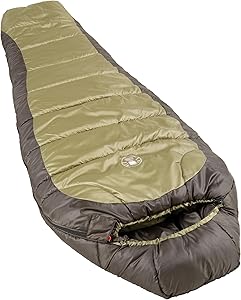
- Temperature Rating: As low as 0 degrees F
- Insulation: Coletherm hollow polyester fill
- Fit: Big and tall design, fits up to 6 ft. 2 in.
- Dimensions: 82 x 32 inches
The Coleman North Rim 0 is designed with larger campers in mind, offering extra length and width without adding excessive bulk. Its Thermolock draft tube prevents body heat from escaping through the zipper, while the Coletherm insulation keeps warmth consistent throughout the night. An adjustable hood lets sleepers dial in ventilation depending on conditions.
Practical touches like a no-snag zipper and machine washable construction make this bag easy to live with over repeated trips. It is not the lightest or most packable option here, but for car camping or casual cold weather outings where size and value matter more than ounces, the North Rim earns its place.
Pros:
- Generous big and tall sizing
- Budget friendly
- Machine washable
Cons:
- Heavier, less packable
- Not ideal for backpacking
4. Teton Celsius 0
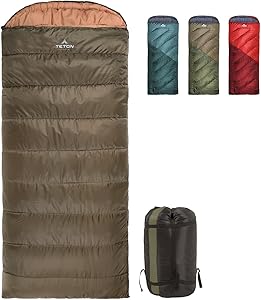
- Lining: Soft poly-flannel interior
- Insulation: Innovative fiber fill, double-layer construction
- Hood: Half-circle mummy-style hood
- Packing: Durable stuff sack with compression straps
The Teton Celsius 0 focuses on comfort as much as warmth, wrapping sleepers in a soft poly-flannel lining that feels closer to a bed than typical camping gear. Double-layer construction paired with draft tubes helps seal in heat, while the half-circle hood keeps both your head and pillow protected from the cold.
Packing it away is straightforward thanks to the included stuff sack and heavy-duty compression straps, eliminating the hassle of rolling. This bag leans toward car camping rather than backcountry travel given its bulk, but for anyone prioritizing a cozy, home-like sleep experience outdoors, the flannel lining is a genuine standout feature.
Pros:
- Exceptionally soft flannel lining
- Easy compression packing system
- Affordable
Cons:
- Bulky for backpacking
- Heavier than technical options
5. Sea to Summit Trek 0

- Temperature Rating: 0 degrees F, tested lower limit 0 degrees F
- Insulation: 650+ fill-power water-resistant duck down
- Weight: 4 lbs. 2.8 oz. (Regular)
- Shape: Semirectangular with Free-Flow Zip System
The Sea to Summit Trek 0F stands out for its versatility, thanks to the Free-Flow Zip System that lets it function as a traditional bag, a quilt, or even a wearable layer around camp. This flexibility makes it appealing for backpackers who want one piece of gear to handle multiple roles on the trail.
Its semirectangular shape provides more room to move than a strict mummy cut, which many side sleepers will appreciate. The 650+ fill-power down keeps weight reasonable, though it is heavier than some higher fill-power competitors. For backpackers who value adaptability over ultralight specs, the Trek 0F is a smart, comfortable pick.
Pros:
- Versatile quilt/wearable zip system
- Roomy semirectangular shape
- Water-resistant down fill
Cons:
- Heavier than mummy-style bags
- Lower fill-power than premium options
6. Mountain Hardwear Bishop Pass 0

- Temperature Rating: 0 degrees F, tested lower limit 0 degrees F
- Insulation: 650-fill-power fluorine-free down (80/20 blend)
- Weight: 3 lbs. 2.1 oz. (Regular, Left Zip)
- Shell: 20-denier ripstop nylon
The Mountain Hardwear Bishop Pass 0 is built for backpackers who move quickly between camp and technical objectives, thanks to its compact packed size and reasonably low weight. The fluorine-free down blend keeps the environmental footprint smaller while still delivering solid warmth for near-freezing and below conditions.
Its 20-denier ripstop shell keeps overall weight in check without feeling flimsy, and the mummy shape holds heat efficiently through cold nights. Compression volume is impressively small for a 0-degree bag, making it easy to fit into a pack alongside other gear. It is a well-rounded choice for alpine-minded backpackers.
Pros:
- Compact compressed volume
- Fluorine-free, responsibly sourced down
- Lightweight for its warmth rating
Cons:
- Lower fill-power than premium bags
- Narrow hip girth may feel snug
See the Bishop Pass 0 See the Women’s Bishop Pass 0
7. Big Agnes Torchlight EXP 0

- Temperature Rating: 0 degrees F, tested lower limit 6 degrees F
- Insulation: 650-fill-power Downtek PFC-free down
- Weight: 3 lbs. 10 oz. (Regular, Left Zip)
- Shell: Recycled 20-denier ripstop polyester, water-repellent
The Big Agnes Torchlight EXP 0 is designed around adjustability, letting sleepers customize the fit to match their body shape and preferred sleep style. This is particularly useful for side and stomach sleepers who often struggle to get comfortable in a traditional tapered mummy bag.
PFC-free Downtek insulation adds water resistance without added chemicals of concern, and the recycled polyester shell keeps the environmental footprint down. Girth measurements flex within a range rather than being fixed, giving it more adaptability than most bags on this list. It is a strong option for backpackers who prioritize customizable comfort.
Pros:
- Adjustable, customizable fit
- PFC-free water-repellent materials
- Comfortable for varied sleep positions
Cons:
- Tested comfort rating runs warmer than 0 degrees
- Moderate weight for backpacking
See the Big Agnes Torchlight EXP 0
8. Mountain Hardwear Lamina -20

- Temperature Rating: -20 degrees F
- Insulation: Temperlite synthetic fill
- Weight: 5 lbs. 1.13 oz. (Regular, Left Zip)
- Shell: 20-denier polyester ripstop
For campers facing genuinely brutal cold, the Mountain Hardwear Lamina -20 delivers serious warmth through its seamless Temperlite synthetic construction. The Lamina build eliminates cold spots that can occur with sewn-through baffles, making it a reliable choice for deep winter trips where down’s moisture sensitivity becomes a liability.
Its mummy cut is efficient at trapping heat, and the synthetic fill continues insulating even if it gets damp, a major advantage in wet winter conditions. The tradeoff is weight, since this bag is noticeably heavier than the down options on this list. Still, for extreme cold reliability, it delivers.
Pros:
- Handles extreme cold down to -20 F
- Synthetic fill performs well when damp
- No cold spots with seamless construction
Cons:
- Heaviest bag on this list
- Bulky compressed volume
See the Mountain Hardwear Lamina -20
9. Western Mountaineering Kodiak 0

- Temperature Rating: 0 degrees F, tested lower limit -1 degrees F
- Insulation: 850+ fill-power goose down
- Weight: 2 lbs. 12 oz. (6 ft, Left Zip)
- Shoulder Girth: 66 inches
The Western Mountaineering Kodiak 0 proves that a roomy fit and an ultralight build are not mutually exclusive. With a generous 66 inches of shoulder girth and 41 inches of foot girth, it comfortably accommodates larger sleepers while still weighing under 3 pounds thanks to premium 850+ fill-power goose down.
This combination of warmth, low weight, and spaciousness makes it one of the most impressive bags on this list for backpackers who refuse to compromise on comfort or pack weight. The premium down fill does come at a higher price point, but the craftsmanship and performance justify the investment for serious adventurers.
Pros:
- Extremely lightweight for a 0-degree bag
- Roomy shoulder and foot girth
- Premium 850+ fill-power down
Cons:
- Premium price
- No water-resistant down treatment mentioned
See the Western Mountaineering Kodiak 0
10. Big Agnes Lost Ranger 3N1 0

- Temperature Rating: 0 degrees F, tested lower limit -1 degrees F
- Insulation: 650-fill-power PFC-free Downtek down
- Weight: 3 lbs. 12 oz. (Regular, Left Zip)
- Configuration: Inner and outer bags, 3 setups
The Big Agnes Lost Ranger 3N1 0 takes a modular approach to warmth by combining separate inner and outer bags that can be configured three different ways. This lets you adapt the bag to the season, using just one layer on warmer nights and both together when temperatures drop toward zero.
The rectangular shape with dual left/right zip access adds convenience and airflow options rarely found in mummy-style bags. This versatility does add some complexity and weight compared to single-layer bags, but for campers who want one system to cover three seasons, the flexibility is hard to beat.
Pros:
- Three-way configurable warmth system
- Left/right zip flexibility
- Adapts across seasons
Cons:
- More complex than single-layer bags
- Heavier when both layers are combined
See the Big Agnes Lost Ranger 3N1 0
How to Choose Extreme Cold-Weather Sleeping Bags
Venturing into sub-zero temperatures is not just an adventure—it’s a serious test of your gear. When the mercury plummets and the wind howls, your sleeping bag becomes your lifeline. Choosing the wrong one can lead to sleepless nights, hypothermia, or even life-threatening situations. This guide walks you through every crucial factor—from temperature ratings to materials and features—so you can make an informed decision and stay safe in the harshest conditions on Earth.
Understanding Temperature Ratings
The single most important specification on any cold-weather bag is its temperature rating. However, these numbers are often misunderstood. In the industry, most bags follow the EN (European Norm) or ISO (International Organization for Standardization) testing standards. These tests provide three key numbers:
- Comfort Rating: The lowest temperature at which a “standard” woman can sleep comfortably in a relaxed position.
- Lower Limit Rating: The lowest temperature at which a “standard” man can sleep in a curled-up position without waking from cold. This is usually the number you see advertised.
- Extreme Rating: A survival-only temperature for six hours. This is not a comfort zone—it’s a warning zone.
For true extreme cold (below -20°F/-29°C), never rely on the extreme rating. Always choose a bag rated at least 10–15°F lower than the coldest temperature you expect to encounter. Remember that factors like fatigue, nutrition, and hydration can lower your cold tolerance significantly. Always err on the side of a warmer bag—you can always unzip it to cool down, but you can’t add insulation you don’t have.
Insulation Types: Down vs. Synthetic
The battle between down and synthetic fills is ancient, but in extreme cold, the stakes are higher. Each has distinct advantages and drawbacks that can make or break your trip.
Down Insulation
Down—typically goose or duck plumage—offers the best warmth-to-weight ratio on the market. It is exceptionally compressible, meaning your pack size shrinks dramatically. High-quality down with a fill power of 800 or above traps more heat per ounce than any synthetic. However, down’s achilles heel is moisture. Once wet, it clumps together, loses nearly all insulating properties, and takes forever to dry. In extreme cold, where sweat and condensation are inevitable, this can be a fatal flaw unless you opt for water-resistant treated down (like DWR-coated goose down).
Synthetic Insulation
Modern synthetic fills—such as Polarguard, Climashield, or Primaloft—are made from polyester fibers that mimic down’s loft. They are heavier and less compressible than down, but they win the moisture battle. Synthetic fibers retain warmth even when damp, and they dry much faster. For expeditions in wet, humid, or maritime cold climates (think coastal Arctic), synthetic is often the smarter, safer choice. The trade-off is bulk and weight, which matters if you’re hauling your bag over long distances.
Here is a quick comparison to help you decide:
| Feature | Down | Synthetic |
|---|---|---|
| Warmth per weight | Excellent | Good |
| Compressed pack size | Very small | Bulky |
| Performance when wet | Poor (unless treated) | Good |
| Drying time | Slow | Fast |
| Durability over years | High (with care) | Moderate (loses loft faster) |
| Best for | Dry, frigid climates | Wet or humid cold |
Shape and Fit: Mummy vs. Rectangular vs. Semi-Rectangular
Your sleeping bag’s shape directly affects both warmth and comfort. In extreme cold, heat loss through empty space is your enemy.
- Mummy Bags: These are the gold standard for extreme cold. They taper from the shoulders to the feet, reducing dead air space that your body would otherwise need to heat. The snug fit maximizes thermal efficiency. Most include a cinchable hood that wraps around your head, leaving only a small opening for your face. This design cuts weight and bulk while boosting warmth—ideal for mountaineering and polar expeditions.
- Rectangular Bags: These offer plenty of room to sprawl but are terrible for cold weather. The extra interior volume means more air to warm, and you’ll likely wake up with cold spots. They are heavy and inefficient. Avoid these for anything below freezing.
- Semi-Rectangular (Barrel) Bags: A compromise between comfort and efficiency. They give you a bit more elbow and knee room than a mummy but still reduce dead space. Good for car camping in cold weather, but for extreme temperatures, stick with a true mummy cut.
Also, pay close attention to the draft collar—an insulated tube that wraps around your neck inside the bag—and the draft tubes that run along the zipper. These simple features prevent warm air from escaping and cold air from seeping in. In extreme cold, a bag without these is a recipe for a miserable night.
Shell and Lining Fabrics
Your bag’s outer fabric (shell) must be tough, windproof, and water-resistant. Look for materials like ripstop nylon or polyester with a DWR (durable water-repellent) finish. Denier (fabric thickness) matters too—a 20-denier fabric is lightweight but less durable, while 40-denier is rugged but heavier. For extreme expeditions where you might drag your bag across ice or rock, a higher denier shell is worth the weight penalty.
The inner lining (taffeta, polyester, or silk-blend) affects comfort and moisture management. A smooth, breathable lining wicks sweat away from your skin and feels cozy against your face. Some premium bags use moisture-wicking liners that actively pull vapor through the insulation—a huge plus when you’re in a bag for 12+ hours.
Zipper Systems and Draft Management
In sub-zero conditions, the zipper is a potential weak spot. A full-length zipper offers versatility—you can open it for ventilation on warmer nights—but creates a long seam that can leak heat. Many extreme bags use a half-length or three-quarter zipper to minimize heat loss. Some even feature a “no-draft” zipper design with overlapping insulation layers.
Always check for an anti-snag zipper track to prevent fabric jams—fumbling with a stuck zipper in the dark at -30°F is not fun. And never forget the draft tube: a thick, insulated baffle that sits behind the zipper. It should be wide enough to completely block cold air from seeping through the teeth.
Weight, Packability, and Intended Use
Extreme cold bags are not lightweight—expect them to weigh anywhere from 4 to 8 pounds (1.8–3.6 kg) or more. The trade-off between weight and warmth is a personal one. If you’re ski-touring or hauling a sled for days, every ounce counts. A 800-fill down bag might save you two pounds compared to synthetic, but at a higher cost and with moisture risks. If you’re base camping or using snowmobiles, weight is less critical, and you can prioritize durability and moisture resistance.
Compression sack size matters too. A bag that compresses to 10 liters is easier to pack than one that only squishes to 20 liters. However, over-compressing down can damage the loft over time. When storing your bag at home, always keep it in a large mesh or cotton storage sack to preserve the insulation’s life.
Additional Features to Consider
Beyond the basics, several extra features can elevate your cold-weather experience:
- Internal stash pockets: Great for keeping your phone battery or water filter from freezing overnight.
- Sleeping pad attachment loops: These let you strap your bag to your sleeping pad, preventing you from rolling off and losing ground insulation.
- Two-way zippers: Allow you to unzip from the bottom for ventilation without letting in a rush of cold air.
- Water-resistant footbox: The foot area often gets damp from tent condensation—a water-resistant panel helps keep your toes dry.
Maintenance and Longevity
An extreme cold-weather sleeping bag is a significant investment—often costing $500 to over $1,000. To protect that investment:
- Air out your bag every morning to let moisture evaporate.
- Use a waterproof stuff sack or pack liner during travel.
- Wash it sparingly with specialized down or synthetic cleaner, following manufacturer instructions.
- Store it uncompressed in a cool, dry place—never leave it stuffed in a compression sack for weeks.
Final Thoughts: The Golden Rule
Choosing the right extreme cold-weather sleeping bag boils down to honestly assessing your needs. Where are you going? How will you travel? What’s your budget? And most importantly—how much risk are you willing to take with moisture? There is no single “best” bag for everyone. A mountaineer in the dry Rockies might love a 900-fill down mummy, while a sea-kayaker in Greenland will prefer a rugged synthetic bag that laughs at dampness.
Always test your setup before a major expedition. Spend a night in your backyard or a local winter campground to learn how your bag performs. Pair it with a high-R-value sleeping pad—because ground insulation is just as critical as lofted insulation. Remember, your sleeping bag is half of a system; your pad is the other half.
With the right bag, you can transform a brutal, freezing night into a cozy, restful sleep under the stars. Choose wisely, stay dry, and embrace the cold with confidence.