

Best Winter Camping Sleeping Pads of 2027
A cold night in a tent can be miserable when the frozen ground pulls heat away from your body. A good sleeping pad solves that problem better than a thicker sleeping bag. In this guide, we compare eight popular pads for winter trips, from ultralight inflatable models to foam-filled car camping mattresses. We look at insulation, thickness, weight, durability and ease of setup, so you can match the right pad to your adventure and sleep much warmer when temperatures drop.
1. Elegear 9 R-Value Pad

- R-Value: 9 (ASTM F3340-22)
- Thickness: 4 inches
- Weight: 2.2 lbs
- Fabric: 20D nylon with TPU
The Elegear CumbreX is the warmest backpacking pad in this lineup on paper. Its R-value of 9 is ASTM certified, and the maker rates it for extreme cold down to -40°C. That makes it a serious option for snow camping, frozen ground and long winter nights where a thin pad would leave you shivering.
At 4 inches thick, it keeps your hips and shoulders well off the ground, and the mummy shape saves weight. The 20D nylon with a TPU layer is waterproof, but it is thinner than some rivals, so clear sharp sticks from the tent floor. The pump sack inflates the pad in four to six pumps, which also keeps moist breath out of the insulation.
Pros
- Very high R-value
- Thick and light
Cons
- Thinner 20D fabric
- Pump sack needed
2. Trekology UL R7 Pad

- R-Value: 7.2
- Thickness: 4 inches
- Weight: 2 lbs
- Size: 70.8 x 24 inches
The Trekology UL R7 offers strong insulation at a weight that backpackers will appreciate. An R-value of 7.2 handles most winter camping in cold, non-extreme conditions, and the 4-inch thickness stops you from bottoming out when you roll onto your side. It packs down to about the size of a water bottle.
The 40D ripstop nylon with a TPU coating is tougher than the fabric on many ultralight pads, and the anti-leak valve inflates and deflates quickly. There is no built-in pump, so you inflate it by mouth or with a separate pump bag that is not included. Taller sleepers should note that it suits people up to 5 feet 11 inches.
Pros
- Durable 40D fabric
- Light and compact
Cons
- Pump bag not included
- Not for tall sleepers
3. OGERY Memory Foam Pad

- Type: Self-inflating foam and air
- Thickness: 3 inches
- Size: 77 x 27 inches
- Pump: Built-in foot pump
The OGERY pad is built for comfort rather than extreme cold. Its hybrid foam and air structure feels less bouncy than a standard air pad, and it spreads pressure nicely under the shoulders and hips of side sleepers. The foam also muffles the crinkly noise that air-only pads make during the night.
The foam layer reduces heat loss on cool nights, but the listing gives no R-value, so we would not trust it alone in deep winter. It works well for car camping and for cool shoulder-season trips, especially when paired with a closed-cell foam pad underneath. The textured base grips tent floors, and the foot pump lets you fine-tune firmness.
Pros
- Quiet and stable
- Adjustable firmness
Cons
- No listed R-value
- Bulkier than air pads
4. Hikenture R6.2 Pad

- R-Value: 6.2 (ASTM F3340-22)
- Thickness: 3.2 inches
- Weight: 1.53 lbs
- Inflation: 40L pump sack, 3 pumps
The Hikenture R6.2 is the lightest pad in this group, at only 1.53 pounds. An aluminum film layer reflects body heat back toward you, giving it a solid 6.2 R-value that suits cold-weather backpacking. It is a smart pick if you count every ounce but still want real winter insulation.
The storage bag doubles as a 40-liter pump sack, and three pumps are enough to inflate the pad. The airbag structure spreads pressure well, so you should not feel the ground when sitting up or lying down. Two repair patches come in the box. At 3.2 inches thick, it is slightly slimmer than the 4-inch options.
Pros
- Lightest in the lineup
- Includes repair patches
Cons
- Thinner than 4-inch pads
- Lower R-value than top picks
5. Gear Doctors ApolloAir Pad

- R-Value: 5.2
- Weight: 22 oz
- Thickness: 3.2 inches
- Size: 72.8 x 22 inches
The ApolloAir sits at the lighter end of winter-capable pads. Its R-value of 5.2 suits cold snaps and light frost, and it works best in late autumn or early spring rather than deep freeze. The pad packs small, and the included pump sack inflates it in under two minutes without using your lungs.
The 40D nylon fabric with an E-LAST coating is claimed to be 2.5 times stronger than market standards, which adds confidence on rough ground. The kit includes four repair patches, and the valve accepts an electric pump adapter. The tapered shape saves weight, but it feels narrow at the foot end, so restless sleepers may prefer a wider pad.
Pros
- Compact and light
- Tough 40D fabric
Cons
- Only moderate R-value
- Narrow tapered shape
6. FUN PAC Pad with Pillow
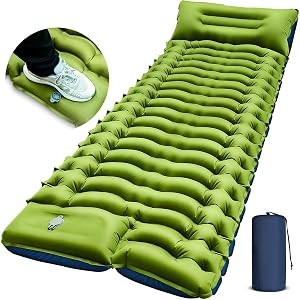
- Thickness: 3 inches
- Inflation: Built-in foot pump
- Fabric: 40D nylon with TPU
- Extra: Built-in pillow, linkable
The FUN PAC pad is all about convenience. A built-in foot pump inflates it in about 30 to 60 seconds, and the double-layer valve lets you deflate it in a second. The integrated pillow means one less item to pack, and side buttons let you connect two pads into a double bed for family trips.
The listing does not state an R-value, so treat it as a comfort pad for mild to cool conditions rather than a true winter pad. The egg-shaped air cells and 3-inch thickness cushion well on uneven ground. Pair it with a foam pad underneath if you plan to use it on frozen ground or snow.
Pros
- Fast inflation and deflation
- Pillow included
Cons
- No listed R-value
- Limited winter warmth
7. Coleman Self-Inflating Pad

- Thickness: 2.5 inches
- Size: 76 x 25 inches
- Inflation: Self-inflating, no pump
- Warranty: 1-year limited
The Coleman pad is a simple, budget-friendly option for casual camping. It inflates without a pump, includes a pillow, and uses compression straps to force out air when you pack up. It adds a layer of padding between your sleeping bag and the ground, which is helpful on cool nights.
It is the thinnest pad in this review at 2.5 inches, and no R-value is listed, so it is not suited to serious winter camping on its own. Note that the product listing also mentions grilling BTUs, which appears to be a listing error. Use it as a bonus layer on top of a foam pad, or save it for mild-weather car camping.
Pros
- Easy setup, no pump
- Pillow included
Cons
- Thinnest pad here
- No R-value listed
8. Elegear 26D Foam Pad

- R-Value: 9.5
- Thickness: 3.15 inches
- Weight: 8.1 lbs
- Size: 77 x 27 inches
This Elegear foam pad is the best choice here for winter car camping. Its R-value of 9.5 is the highest on the list, and the dense 26D memory foam delivers a plush, hotel-like feel. It self-inflates in about 20 seconds once it has fully expanded, with no pumping needed.
The trade-off is weight. At 8.1 pounds, it is far too heavy for backpacking, and it packs bulky. The first inflation can take up to 20 minutes because the pad ships vacuum packed. The quiet 50D stretch-knit surface feels soft against the skin, and the pad is rated to hold 800 pounds, so it suits couples sharing space or guests at home.
Pros
- Highest R-value
- Very comfortable and quiet
Cons
- Heavy at 8.1 lbs
- Bulky to pack
How to Choose a Winter Sleeping Pad
Picking a winter sleeping pad is mostly about balancing warmth, weight and comfort. The ground steals heat far faster than cold air does, so your pad matters as much as your sleeping bag. Use the guidance below to narrow down the eight pads we reviewed and find the one that fits your trips.
Start With R-Value
R-value measures how well a pad resists heat flow. A higher number means more warmth. Look for pads tested to the ASTM F3340 standard, because it allows fair comparisons between brands. Some listings do not state an R-value at all, which makes them hard to trust in the cold.
| R-Value | Typical Use |
|---|---|
| Below 2 | Summer camping |
| 2 to 4 | Three-season camping |
| 4 to 5.5 | Cool nights and light frost |
| 5.5 to 7 | Cold winter camping |
| Above 7 | Snow and deep freeze |
These ranges are general guidelines. Your sleeping bag, clothing and personal tolerance for cold all change the result. If you sleep cold, move up one range.
Consider Thickness and Comfort
Thick Pads
Pads that are 3 to 4 inches thick keep you off the ground and stop you from bottoming out. The Elegear CumbreX and Trekology UL R7 both reach 4 inches, which helps side sleepers.
Thin Pads
Pads under 3 inches, like the Coleman, save space but give less cushion and often less insulation. They work better as a second layer than as a stand-alone winter pad.
Balance Weight and Packed Size
If you carry your gear on your back, weight matters most. The Hikenture at 1.53 pounds and the Gear Doctors at 22 ounces stand out here. If you camp from your car, the 8.1-pound Elegear foam pad is a luxury you can afford.
- Backpackers should aim for under 2.5 pounds.
- Car campers can choose heavier, thicker foam pads.
- Check the packed size so the pad fits your pack.
Choose an Inflation Type
Air Pads with Pump Sacks
Pump sacks keep warm, moist breath out of the pad. Moisture can lower insulation over time and may cause mold. They also save your energy at altitude.
Built-In Foot Pumps
Foot pumps add a little weight but remove the need for extra gear. The OGERY and FUN PAC use this design.
Self-Inflating Foam
Foam pads expand on their own and feel quiet and stable. They are heavier and bulkier, so they suit car camping best.
Check Durability
Fabric thickness is measured in denier. A 40D nylon pad resists abrasion better than a 20D one. TPU coatings add waterproofing, and a repair kit is valuable on a remote winter trip, where a leak could ruin your night. A pad with a good valve is also less likely to lose air slowly.
Match the Pad to Your Sleeping Position
- Side sleepers benefit from 3.5 to 4 inches of thickness.
- Back sleepers can use thinner pads with firm support.
- Restless sleepers should look for wider pads, since a narrow mummy shape can feel tight.
- Tall sleepers should check the length, as some pads fit only up to about 5 feet 11 inches.
Compare the Options at a Glance
| Pad | R-Value | Thickness | Best For |
|---|---|---|---|
| Elegear CumbreX | 9 | 4 in | Extreme cold backpacking |
| Trekology UL R7 | 7.2 | 4 in | All-round winter hiking |
| Hikenture R6.2 | 6.2 | 3.2 in | Lightweight cold trips |
| Gear Doctors ApolloAir | 5.2 | 3.2 in | Shoulder seasons |
| Elegear 26D Foam | 9.5 | 3.15 in | Winter car camping |
| OGERY, FUN PAC, Coleman | Not listed | 2.5 to 3 in | Mild weather comfort |
Practical Tips for Winter Use
- Add a closed-cell foam pad under an air pad for extra warmth and puncture protection.
- Clear snow and sharp objects before you pitch the tent.
- Keep the pad inside your sleeping bag stuff sack or tent during the day so the valve does not freeze.
- Do not overinflate, because a slightly softer pad contours better and sleeps warmer.
- Store the pad loosely at home with the valve open.
Final Thoughts
For extreme winter backpacking, the Elegear CumbreX and Trekology UL R7 offer the best mix of warmth and low weight. For car camping, the Elegear 26D foam pad is the most comfortable and warmest option. If you are on a budget or camp only in mild conditions, the other pads still add useful comfort, especially when paired with a foam layer.