

Best 4-Season Sleeping Pads of 2026
When the temperature drops and snow starts to fly, a standard sleeping pad just won’t cut it. For campers and backpackers who head out all year long, a four-season pad is a game-changer. It provides crucial insulation from the cold ground while still offering comfort during warmer months. Unlike basic pads, these versatile options are built to handle rough terrain and freezing nights. Ready to upgrade your sleep system? We have tested the top models to find the best four-season sleeping pads on the market.
1. Therm-a-Rest NeoAir XTherm NXT

Type: Air, Mummy shape
R-Value: 7.3
Thickness: 3 inches
Weight: 15.5 oz. (Regular)
The NeoAir XTherm NXT is one of the warmest ultralight pads on the market, thanks to its impressive 7.3 R-value. It uses trapped air chambers with reflective baffles to hold in heat without adding bulk, making it a solid pick for cold-weather trips, alpine camping, and shoulder-season backpacking where warmth-to-weight ratio matters most.
Despite the high insulation rating, the pad packs down remarkably small and stays light on the trail. It inflates quickly and feels stable underneath, though some users may need a night or two to adjust to the firmness typical of air pads at this R-value.
Pros:
- Excellent warmth for extreme cold conditions
- Very packable and lightweight
- Includes repair kit and stuff sack
Cons:
- Premium price point
- Can feel firm for side sleepers
2. TREKOLOGY Sleeping Pad

R-Value: 7.2
Weight: 2 lbs. (900 g)
Dimensions: 70.8 x 24 inches
Thickness: 4 inches
The Trekology UL R7 pad delivers strong four-season insulation at a budget-friendly price. With a 7.2 R-value and 4-inch thickness, it offers good protection against ground chill and prevents bottoming out, making it a practical choice for backpackers who want warmth without spending on premium brands.
Constructed from 40D ripstop nylon with a TPU coating, it resists tears and water while supporting up to 330 lbs. The anti-leak valve system speeds up inflation and deflation. Note that a pump bag is not included, so mouth inflation or a separate pump is required.
Pros:
- High R-value for the price
- Wide, supportive sleeping surface
- Durable, water-resistant fabric
Cons:
- No included pump
- Best suited for sleepers under 5’11”
3. NEMO Tensor Extreme Conditions

R-Value: 8.5
Thickness: 3.5 inches
Insulation: Synthetic
Weight: 1 lb. 2 oz. (Regular)
Built for the harshest conditions, the NEMO Tensor Extreme Conditions pad boasts an outstanding 8.5 R-value, making it one of the warmest options for winter mountaineering and deep-cold expeditions. The synthetic insulation is engineered to stay quiet and stable, so tossing and turning won’t disturb your sleep or your tentmate.
At 3.5 inches thick, the pad provides solid cushioning against uneven or frozen ground. It remains impressively lightweight for its warmth class, and the included stuff sack and repair kit add convenience. This pad is a strong investment for serious cold-weather adventurers.
Pros:
- Exceptional warmth for extreme cold
- Quiet, stable sleep surface
- Lightweight relative to R-value
Cons:
- Higher price for the insulation level
- Overkill for warm-weather trips
4. Therm-a-Rest NeoAir XLite NXT

R-Value: 4.5
Thickness: 3 inches
Shape: Mummy
Weight: 13 oz. (Regular)
The NeoAir XLite NXT is designed for backpackers who prioritize minimal weight and pack size above all else. With a 4.5 R-value, it suits three-season use well, offering enough warmth for most spring, summer, and fall trips while remaining one of the lightest pads in its category.
The mummy shape trims excess material to save weight without sacrificing torso support. It compresses down to about the size of a water bottle, making it ideal for ultralight setups. A repair kit and stuff sack come included, adding practical value for long trail use.
Pros:
- Ultra-lightweight and compact
- Great for three-season backpacking
- Reliable Therm-a-Rest build quality
Cons:
- Not warm enough for winter camping
- Mummy shape limits sleeping room
5. NEMO Tensor All-Season

R-Value: 5.4
Thickness: 3.5 inches
Insulation: Synthetic
Weight: 1 lb. (Regular)
Sitting between three-season and extreme-cold pads, the NEMO Tensor All-Season offers a 5.4 R-value that covers most four-season needs without the bulk of dedicated winter pads. Its rectangular shape provides more usable sleeping area than mummy-style designs, which is a plus for restless sleepers.
The synthetic insulation keeps the pad stable and quiet throughout the night, and the 3.5-inch thickness offers comfortable cushioning on rough terrain. It remains reasonably light for its warmth rating, making it a versatile middle-ground choice for hikers who camp across varied conditions.
Pros:
- Good warmth-to-weight balance
- Roomy rectangular shape
- Quiet, stable design
Cons:
- Not as warm as extreme-condition models
- Slightly heavier than mummy pads
6. Elegear Thick Sleeping Pad
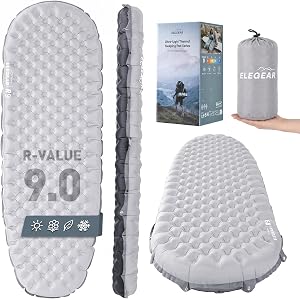
R-Value: 9
Thickness: 4 inches
Weight: 2.2 lbs.
Certification: SGS tested, ASTM F3340-22
The Elegear CumbreX pad claims a striking R-value of 9, backed by SGS and ASTM certification, positioning it as a serious contender for extreme cold-weather use down to -40°C. Its 9-layer insulation system and 4-inch thickness aim to eliminate ground chill while keeping the sleeper elevated on uneven terrain.
Built from 20D ripstop nylon with a TPU coating, the pad is designed to resist punctures and moisture across repeated seasons of use. It includes a pump sack for quick inflation, and at 2.2 lbs it stays reasonably packable despite its high warmth rating and rugged construction.
Pros:
- Very high R-value for extreme cold
- Thick, supportive cushioning
- Durable, puncture-resistant fabric
Cons:
- No built-in pump
- Heavier than premium ultralight pads
7. OGERY Sleeping Pad

R-Value: 9.0
Thickness: 4.7 inches
Construction: 40D nylon, TPU coating
Inflation: Pump bag included
The OGERY pad targets serious winter and alpine users with an R-value of 9.0 achieved through a multi-layer reflective insulation structure. At 4.7 inches thick, it’s among the plushest air cell designs available, offering strong support for side and back sleepers on rough or frozen ground.
Its airtight valve system pairs with an included pump bag for fast, low-moisture inflation, helping preserve insulation performance over time. The 40D nylon shell with TPU coating adds durability for repeated trips across hiking, bikepacking, and mountaineering conditions where reliability matters most.
Pros:
- Extra-thick, supportive design
- Strong cold-weather insulation
- Includes pump bag for quick setup
Cons:
- Bulkier than slimmer ultralight pads
- Lesser-known brand with limited track record
8. Big Agnes Divide Insulated

R-Value: 4
Thickness: 3.5 inches
Shape: Rectangular
Weight: 1 lb. 7 oz. (Regular)
The Big Agnes Divide Insulated pad emphasizes stability and comfort over minimal weight. Its larger outer tubes cradle the sleeper, reducing the chance of rolling off during the night, which makes it a great option for restless sleepers or those new to air pads.
With an R-value of 4, it suits mild three-season conditions rather than deep cold. The rectangular shape and 3.5-inch thickness provide a smooth, stable surface, and options for petite, wide, and even double sizes make it adaptable for solo campers or couples sharing a tent.
Pros:
- Very stable, cradled sleep surface
- Available in multiple sizes, including double
- Comfortable rectangular shape
Cons:
- Lower R-value limits cold-weather use
- Heavier than mummy-style pads
9. Big Agnes Rapide SL Insulated

R-Value: 4.8
Thickness: 4.25 inches
Shape: Rectangular
Weight: 1 lb. 2 oz. (Regular)
The Rapide SL Insulated improves on earlier Big Agnes designs with better insulation, a lower overall weight, and a smaller packed size. Its 4.8 R-value makes it a solid three-season performer, while the 4.25-inch thickness delivers noticeably plush cushioning compared to thinner competitors.
The rectangular shape offers generous shoulder and hip room, and multiple size options, including petite, long, and double wide, allow campers to dial in the right fit. It’s a well-rounded pad for those who want extra comfort without straying too far into heavier territory.
Pros:
- Extra-thick, plush cushioning
- Improved warmth and reduced weight
- Wide range of size options
Cons:
- Not ideal for winter conditions
- Bulkier packed size than mummy pads
10. REI Co-op Traverse Insulated

R-Value: 4.3
Thickness: 3.5 inches
Shape: Rectangular
Weight: 1 lb. 5 oz. (Medium)
The REI Co-op Traverse Insulated pad aims to balance light weight with everyday comfort, making it a dependable choice for backpackers who don’t want to overspend on premium brands. Its 4.3 R-value provides solid warmth for most three-season trips without adding excessive bulk to a pack.
Synthetic insulation and a 3.5-inch thick rectangular design give a stable, comfortable sleeping surface, while the included repair kit and stuff sack add practical value. With multiple width and length options, it’s an accessible, well-rounded pad for general backpacking use.
Pros:
- Good value for the price
- Reliable three-season warmth
- Multiple size options available
Cons:
- Not suited for extreme cold
- Slightly heavier than premium ultralight pads
How to Choose 4-Season Sleeping Pads: A Complete Guide
Camping in winter is a completely different beast than summer camping. When temperatures drop below freezing, the ground becomes a giant heat sink that sucks warmth right out of your body. A standard summer sleeping pad simply won’t cut it. You need a dedicated 4-season sleeping pad designed to handle extreme cold, rough terrain, and heavy use. But with so many options on the market, how do you pick the right one? This guide breaks down everything you need to know to choose a four-season sleeping pad that keeps you warm, comfortable, and safe all year long.
What Makes a Sleeping Pad “4-Season”?
Not all sleeping pads are created equal. A 4-season pad is specifically engineered for cold-weather camping, winter backpacking, and alpine expeditions. Here are the key features that set them apart:
- High R-Value: This measures insulation. Four-season pads have an R-value of 4.0 or higher, often reaching 6.0 or more.
- Thicker Construction: They are usually 3 to 4 inches thick to provide extra cushioning and distance from the cold ground.
- Durable Materials: Built with tougher fabrics like 70D nylon to resist punctures from ice, rocks, and frozen twigs.
- Internal Insulation: Many use synthetic fill, reflective layers, or baffled air chambers to trap heat.
- Reliable Valves: High-quality valves that won’t freeze or fail in sub-zero temperatures.
Understanding R-Value: The Most Important Number
R-value is the standard measurement of a sleeping pad’s thermal resistance. Simply put, it tells you how well the pad stops heat from escaping into the ground. The higher the number, the warmer you stay. Here is a quick breakdown:
- Summer use (R-Value 1.0 – 2.0): Minimal insulation, fine for hot nights.
- 3-Season use (R-Value 2.0 – 3.9): Good for spring through fall, but not enough for freezing temps.
- 4-Season / Winter use (R-Value 4.0 – 5.5): Suitable for most winter camping and light snow.
- Extreme winter use (R-Value 5.5+): Designed for deep snow, arctic conditions, and mountaineering.
For a true 4-season pad, we recommend an R-value of at least 4.5. If you camp on snow or ice regularly, look for R-values of 6.0 or higher. Remember, the ground can be as cold as the air, and without proper insulation, you risk hypothermia even in a good sleeping bag.
Types of 4-Season Sleeping Pads
Air Pads (Inflatable)
These pads are made of airtight materials that you inflate with your breath or a pump. They offer excellent comfort and can be very lightweight. However, not all air pads are good for winter. Look for those with internal baffles or insulation (like synthetic fibers or reflective films) to trap heat. The downside is they can puncture, and your breath introduces moisture that can freeze inside the pad, damaging it over time.
Self-Inflating Pads
These contain open-cell foam inside an airtight shell. When you open the valve, the foam expands and draws in air. They offer a good balance of comfort, insulation, and durability. The foam provides built-in R-value, so even if the pad gets a small puncture, it still offers some insulation. They are heavier than pure air pads but more reliable for harsh conditions.
Closed-Cell Foam Pads (CCF)
These are the classic “blue foam” pads made of dense polyethylene foam. They are virtually indestructible, incredibly lightweight, and provide consistent insulation even if punctured or wet. They have the highest reliability in extreme cold. The downsides? They are bulky (must be carried outside your pack) and not as comfortable as inflatable pads. They are often used in combination with another pad for maximum warmth.
Key Features to Look For
Thickness and Comfort
Winter camping often means spending more hours lying down. A thicker pad (3 to 4 inches) provides better cushioning against hard, frozen ground. Side sleepers should pay special attention to thickness, as you need enough loft to keep your hips and shoulders from touching the cold floor. Remember that a pad that is too thin will compress under your weight, reducing its insulating ability.
Weight and Packability
Winter gear is generally heavier, but you still need to carry everything on your back. Air pads are the lightest and pack down smallest. Self-inflating pads are heavier but more durable. Closed-cell foam pads are light but bulky. Consider your trip type: for short winter hikes, weight might not matter as much. For multi-day expeditions, every ounce counts.
Durability and Fabric
Winter campsites are covered in snow, ice, and sharp rocks. A pad with a thin 20D nylon shell might tear easily. Look for fabrics like 70D or even 100D nylon. These are thicker and more abrasion-resistant. Some pads also come with reinforced bottom layers for extra protection. If you camp in rocky areas, consider a pad with a rugged outer shell.
Valve System
Cold weather can make plastic valves brittle and hard to operate. Look for large, simple valves that are easy to open and close with gloves on. Some pads feature dual valves – one for fast inflation and one for fine-tuning firmness. Also, consider whether the valve is recessed to prevent damage if you drop the pad.
Noise Level
Some insulated air pads use reflective layers that crinkle loudly with every movement. If you are a restless sleeper, this can be annoying for you and your tentmates. Many newer models use quieter materials, so read reviews or test them in person if possible.
Insulation Technologies Explained
Different brands use various methods to keep you warm. Here are the most common technologies you will encounter:
- Synthetic Fiber Fill: Similar to a puffy jacket, these pads use polyester fibers to trap air and retain heat. They are warm and quiet but take up more pack space.
- Reflective Film (like ThermaCapture or Heat Reflective): These pads use a metallic layer inside that reflects your body heat back to you. They are lightweight and pack down small, but can be noisy.
- Baffled Air Chambers: Instead of one large air pocket, these pads have multiple chambers that prevent air from moving around, which reduces heat loss through convection.
- Hybrid Systems: Many premium pads combine reflective layers with synthetic fill for the best warmth-to-weight ratio.
Size Matters: Length and Width
Most sleeping pads come in regular (72 inches) and long (78 inches) sizes. If you are over 6 feet tall, definitely go for a long pad. Width is equally important. Standard pads are 20 inches wide, but wide versions (25 inches) offer more room to move without falling off. In winter, you wear bulkier clothing and may toss and turn more, so a wider pad can make a huge difference in sleep quality.
How to Combine Pads for Extreme Cold
If you are camping in truly frigid conditions (below -10°F), even the best single pad might not be enough. Many experienced winter campers use a two-pad system:
- Bottom Layer: A closed-cell foam pad provides a durable, puncture-proof base and adds 2.0 to 2.5 R-value.
- Top Layer: An insulated air pad with an R-value of 4.0 or higher sits on top for comfort and extra insulation.
This combination can give you a total R-value of 6.0 or more, which is perfect for deep snow. Plus, if your air pad fails, you still have the foam pad to keep you off the ground.
Comparing 4-Season Pads: A Quick Reference Table
| Pad Type | R-Value Range | Weight | Durability | Comfort | Best For |
|---|---|---|---|---|---|
| Air Pad (Insulated) | 4.0 – 6.5 | Light (15-25 oz) | Moderate | High | Backpackers who prioritize weight and comfort |
| Self-Inflating Pad | 4.0 – 5.5 | Medium (25-40 oz) | High | High | Car campers and winter trekkers who want reliability |
| Closed-Cell Foam Pad | 2.0 – 2.5 (use as base) | Light (10-16 oz) | Extremely High | Low | Ultralight purists or as a secondary pad |
Common Mistakes to Avoid
Buying a Pad with Too Low R-Value
This is the number one mistake. Many people use their summer pad in winter and suffer through freezing nights. Always check the R-value and choose one rated for at least 4.0 for any trip where temperatures might dip below freezing.
Ignoring the Inflation Method
Blowing up a large air pad with your mouth at 20°F introduces moisture into the pad. That moisture can freeze, block the valve, or damage the internal insulation. Consider using a pump sack or mini pump to inflate your pad in winter.
Forgetting About Ground Conditions
Snow is soft but hides rocks and branches. Always clear your tent site thoroughly and use a footprint. A pad with a tough bottom fabric will save you from midnight deflations.
Overlooking Storage
Never store your sleeping pad compressed. This damages the insulation over time. When you get home, roll it loosely or store it flat with the valve open.
Budget Considerations
Four-season pads are more expensive than summer pads because of the advanced materials and insulation. Expect to pay between $150 and $300 for a good quality model. If you are on a budget, consider these options:
- Buy a closed-cell foam pad (around $40) and combine it with a less expensive 3-season air pad (R-value 3.0). The total R-value will be around 5.0, which is winter-worthy.
- Look for previous year’s models on sale – the technology doesn’t change dramatically each year.
- Consider self-inflating pads, which are often cheaper than premium air pads and still offer great insulation.
Maintenance Tips for Longevity
A quality 4-season pad is an investment. Here is how to make it last:
- Clean regularly: Wipe down with mild soap and water after each trip. Dirt can abrade the fabric.
- Check for leaks: Submerge in water or use soapy water to find punctures. Patch them immediately.
- Store properly: Keep it unrolled and valve open in a cool, dry place.
- Avoid sharp objects: Even with tough fabric, be careful when placing your pad on bare ground.
Final Thoughts: Which One Should You Choose?
Choosing a 4-season sleeping pad comes down to your specific needs. Ask yourself these questions:
- Where will you camp? Deep snow or just cold, dry ground?
- How do you travel? Backpacking (weight matters) or car camping (weight doesn’t matter)?
- Are you a side sleeper? Then go for a thicker pad with more loft.
- What is your budget? Can you invest in one high-end pad, or do you prefer a two-pad system?
For most winter campers, an insulated air pad with an R-value of 4.5 to 5.5 and a durable 70D fabric offers the best balance of weight, comfort, and warmth. If you are heading into extreme conditions, add a closed-cell foam pad underneath for insurance. Remember, a warm night’s sleep is not just about comfort – it is about safety. A good 4-season sleeping pad keeps your core temperature stable, prevents hypothermia, and ensures you wake up rested and ready for adventure. Do your research, invest wisely, and enjoy camping in every season.