Best Budget Backpacking Tents of 2026
Looking for a reliable tent that won’t break the bank? You don’t need to spend a fortune to get solid shelter on the trail. The best budget backpacking tents balance weight, durability, and weather protection at a fair price. In this article, we’ve rounded top affordable options that keep your pack light and your wallet happy—without sacrificing quality for your next outdoor adventure.
1. REI Co-op Trailmade 2

- Sleeping Capacity: 2-person
- Minimum Trail Weight: 4 lbs. 10 oz.
- Floor Dimensions: 88 x 52 inches
- Pole Material: Aluminum
The REI Co-op Trailmade 2 is a fantastic entry-level option for those looking to start their backpacking journey without breaking the bank. It features a straightforward two-pole freestanding design that makes setup incredibly intuitive even for beginners. The internal living space is generous enough for two hikers to sit up comfortably, and the dual doors ensure you don’t have to climb over your partner for midnight exits.
Durability is a standout feature for this model as it includes a custom-fit footprint at no extra cost, protecting the floor from sharp rocks and moisture. The 75-denier polyester materials are robust enough to withstand several seasons of use. While it is not the lightest tent in its class, its reliability and value make it a top contender for weekend warriors and casual explorers.
Pros: Includes footprint, easy setup, durable fabrics.
Cons: Slightly heavy for long-distance treks.
See the REI Co-op Trailmade 2 See the REI Co-op Trailmade 1
2. Night Cat Backpacking Tent

- Capacity: 1 Person
- Weight: 4.4 lbs (2kg)
- Waterproof Rating: PU 3000mm
- Pole Type: Protected Fiberglass
The Night Cat Backpacking Tent is a specialized solo shelter designed with a focus on safety and affordability. One of its most unique features is the upgraded fiberglass poles which are fully encased in a protection sleeve to prevent painful splinters during assembly. It is an ideal choice for boy scouts or solo hikers who need a compact, weather-ready shelter that fits easily into a standard backpack.
Despite its small footprint, the tent offers excellent rain protection with its PU 3000mm coating and factory-taped seams. The ventilation system utilizes a large mesh door and a roof window to keep air flowing and reduce condensation. It provides enough interior length to store your gear at your feet, making it a functional choice for short-duration trips or backyard camping adventures.
Pros: Safe-touch poles, high waterproof rating, very affordable.
Cons: Fiberglass poles are heavier than aluminum.
See the Night Cat Backpacking Tent
3. The North Face Stormbreak 2

- Peak Height: 43 inches
- Floor Area: 30.56 square feet
- Number of Poles: 4
- Fabric: 75D Polyester Taffeta
The North Face Stormbreak 2 is built for hikers who prioritize headroom and accessibility. With a peak height of 43 inches and a unique four-pole configuration, the walls are pulled nearly vertical, creating a much more spacious interior feel than traditional dome tents. The large D-shaped doors offer panoramic views of the backcountry while making it effortless to move gear in and out of the shelter.
This tent is engineered to handle various weather conditions with high-quality DAC aluminum poles and a fully seam-taped rainfly. While it sits on the heavier side of the backpacking spectrum at over five pounds, the added durability and comfort are worth the trade-off for many campers. It serves as a reliable three-season haven that balances rugged construction with the legendary aesthetics of a premier outdoor brand.
Pros: Exceptional headroom, vertical walls, high-quality poles.
Cons: Footprint sold separately, relatively bulky packed size.
See The North Face Stormbreak 2 See The North Face Stormbreak 3
4. Kelty Grand Mesa 2

- Packed Weight: 4 lbs. 12 oz.
- Pole Material: DAC Pressfit Aluminum
- Design: Freestanding
- Packed Size: 16 x 7 x 7 inches
The Kelty Grand Mesa 2 has long been a staple in the backpacking community for its blend of simplicity and lightweight performance. The latest version features Kelty Quick Corners, which allow the pole ends to snap into place securely during solo setup. This makes it one of the easiest tents to pitch, even when you arrive at camp after sundown or in windy conditions.
Storage is handled efficiently by the EZ-Zip vestibule and the “Shark Mouth” carry bag, which simplifies the process of stuffing the tent away in the morning. The 68D polyester construction ensures a lightweight trail experience without sacrificing the weather resistance needed for three-season backpacking. It is a no-nonsense, reliable shelter that performs consistently across various terrains and climates for weight-conscious hikers.
Pros: Very lightweight, easy Quick Corner setup, compact pack size.
Cons: Only one door and one vestibule.
5. Forceatt Backpacking Tent

- Waterproof Index: 3000mm
- Poles: 7001 Series Aluminum
- Weight: 5.5 lbs
- Interior Height: 43.3 inches
The Forceatt Backpacking Tent is a professional-grade shelter designed to tackle challenging weather. It utilizes 7001 series aluminum poles which provide a high strength-to-weight ratio, ensuring the structure remains stable during high winds. The welded floor design is a smart addition, lifting the seams off the ground to prevent water seepage during heavy downpours or when camping on saturated turf.
Ventilation is a primary focus here, featuring micro-mesh fabric and dual ceiling vents that significantly reduce condensation buildup overnight. The inclusion of reflective guylines adds a layer of safety for nighttime navigation around the campsite. This tent offers a great balance of height and width, providing a comfortable interior for two people while remaining easy enough for a single person to assemble in under three minutes.
Pros: Highly waterproof, excellent ventilation, sturdy aluminum poles.
Cons: Zippers can be finicky if fabric is not taut.
See the Forceatt Backpacking Tent
6. BISINNA 2/4 Person Tent
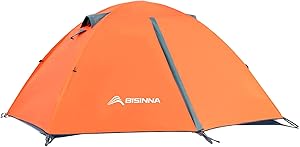
- Packed Size: 16.9 x 5.9 inches
- Water Resistance: PU 2000mm
- Poles: 7001 Space Aluminum
- Doors: 2 D-shaped doors
The BISINNA tent is a versatile double-layer shelter that excels in providing airflow and stability. Constructed with B3 no-see-um mesh and 190T polyester taffeta, it is designed to keep insects out while allowing for a cool breeze during summer expeditions. The two-pole freestanding design is so simple that even children can assist with the setup, making it a great choice for family hiking trips.
It comes as a complete kit including aluminum stakes and wind ropes to ensure it stays anchored in inclement weather. The dual-door design is particularly helpful for couples, as it provides independent access and separate vestibule space for gear storage. With its compact packed size, it fits easily into most standard hiking packs or kayak hatches, offering a reliable home away from home for various outdoor activities.
Pros: Dual-layer design, lightweight aluminum components, very portable.
Cons: PU2000mm rating is lower than some competitors.
See the BISINNA 2/4 Person Tent
7. Clostnature Lightweight Tent

- Weight: 5.29 lbs Total
- Waterproof Rating: PU 5000mm
- Floor Size: 7’3″ x 4’11”
- Material: 210T Polyester
Clostnature has developed a tent that prioritizes extreme weather protection without the premium price tag. The standout specification is the PU 5000mm waterproof coating on the rainfly and floor, which is significantly higher than most tents in this category. Combined with factory-sealed seams, this shelter is designed to keep you dry in persistent storms and heavy rain throughout all three seasons.
The interior features full mesh walls for maximum breathability, which is essential for preventing interior dampness. It also includes thoughtful additions like a pole emergency repair kit, giving hikers peace of mind on remote treks. Whether you are a scout on a weekend trip or a mountaineer looking for an affordable backup, the Clostnature offers a spacious and incredibly dry environment for two people and their gear.
Pros: Exceptional waterproof rating, includes repair kit, spacious floor.
Cons: Heavier than specialized ultralight models.
See the Clostnature Lightweight Tent
8. ALPS Mountaineering Lynx 2

- Center Height: 3’10”
- Vestibule Area: 20 sq. ft.
- Zippers: Large #8
- Pole Series: 7000 Aluminum
The ALPS Mountaineering Lynx 2 is a rugged, time-tested favorite for backpackers who value organization and durability. It features oversized #8 zippers that are built to withstand the rigors of frequent use without snagging or breaking. The tent provides an impressive 20 square feet of vestibule space, allowing two campers to store large packs and muddy boots completely protected from the elements outside the main cabin.
Inside, the tent is equipped with a gear loft and mesh storage pockets to keep small essentials like headlamps and maps within reach. The half-mesh walls work in tandem with the rainfly vents to create a chimney effect for superior air circulation. This combination of heavy-duty materials and thoughtful internal storage makes the Lynx 2 a dependable workhorse for everything from casual car camping to multi-day backcountry loops.
Pros: Huge vestibule space, very durable zippers, included gear loft.
Cons: Packed length of 22 inches is relatively long.
See the ALPS Mountaineering Lynx 2
9. Camppal 1 Person Tent

- Weight: 3.75 lbs
- Inner Length: 8.2 ft
- Water Resistance: 3500-4000mm
- Standards: CPAI-84 Fire Retardant
The Camppal 1 Person Tent is a specialized solution for solo travelers, especially those who are taller and often find standard tents too short. With an extended length of 8.2 feet, it provides ample room for a tall adult to stretch out fully while still having space for luggage and shoes inside the shelter. The single ridge pole design simplifies the structure, allowing for a remarkably fast three-minute setup.
Despite its light weight, it does not compromise on protection, featuring rip-stop fabric and a high waterproof rating of up to 4000mm. The tent is designed to be aerodynamic, helping it shed wind and rain effectively during storms. For the solo hiker looking for a blend of privacy, weather resistance, and extra-long living space, this tent offers a unique and high-performing configuration that is easy to carry.
Pros: Extra-long for tall hikers, very lightweight, fire retardant fabric.
Cons: Narrow width might feel cramped for some.
10. CAMEL CROWN Tent
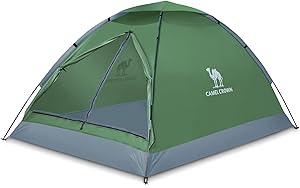
- Bracket Material: 8.5mm Glass Fiber
- Base Fabric: 150D Oxford PU2000
- Accessories: 8 Iron Ground Stakes
- Design: Dome
The CAMEL CROWN Tent is a versatile dome-style shelter designed for a variety of outdoor occasions, from fishing trips to family field trips. It features a double-layer dual-purpose design that allows the outer shell to be used independently in some configurations. The internal space is well-ventilated thanks to external mosquito-proof screens that ensure you can enjoy the view without the nuisance of bugs.
Equipped with 150D Oxford cloth in the base, the tent provides a thicker floor than many ultralight models, offering better resistance to abrasion. While the glass fiber poles and iron stakes make it heavier than high-end aluminum alternatives, they provide a sturdy frame for casual camping. This is an excellent budget-friendly choice for those who need a reliable shelter for general outdoor recreation and light hiking in fair to moderate weather.
Pros: Versatile dual-layer design, durable floor fabric, very affordable.
Cons: Fiber glass poles and iron stakes increase weight.
Mastering the Wilderness Without Breaking the Bank: How to Choose a Budget Backpacking Tent
For many aspiring adventurers, the barrier to entry for backpacking isn’t the physical demand or the navigation skills—it is the daunting price tag of the gear. Among the “big three” essentials (tent, sleeping system, and pack), the tent is often the most expensive. However, the modern outdoor market has seen a surge in high-quality, budget-friendly options that challenge the dominance of thousand-dollar ultralight brands. Choosing a cheap backpacking tent requires a nuanced understanding of trade-offs. You aren’t just looking for the lowest price; you are looking for the best balance of weight, durability, and livability that fits within your financial constraints.
Defining the “Budget” Category
In the world of backpacking, “budget” typically refers to tents ranging from $100 to $250. While you can find tents for under $50 at big-box retailers, these are usually designed for backyard camping or music festivals. They often lack the waterproof ratings, aluminum poles, and wind resistance necessary for backcountry survival. A true inexpensive backpacking tent is one that is light enough to carry for miles but rugged enough to withstand an unexpected thunderstorm on a ridgeline.
The Weight vs. Cost Trade-off
The most significant factor driving tent prices is weight. To make a tent lighter, manufacturers use expensive materials like Dyneema or high-denier silnylon and specialized ultra-thin aluminum or carbon fiber poles. When shopping on a budget, you must accept that your tent will likely be heavier than the premium models.
Setting Realistic Weight Expectations
A premium two-person backpacking tent often weighs between 2 and 3 pounds. In the budget category, you should aim for a “trail weight” of 4 to 5.5 pounds for a two-person model. While this extra couple of pounds might seem significant, it is a manageable trade-off for saving several hundred dollars. You can offset this weight by being more selective with other gear items or simply building up your trail fitness.
Capacity and Livability
One of the most common mistakes beginners make is buying a tent that is too small. Tent capacity ratings (1-person, 2-person, etc.) are based on “mummy-style” sleeping pads laid side-by-side with almost no room for gear or movement.
The “Plus One” Rule
If you are hiking solo, a 2-person budget tent is often the sweet spot. The weight penalty over a 1-person budget tent is usually negligible, but the increase in interior space allows you to bring your pack inside, change clothes comfortably, and wait out rain delays without feeling claustrophobic. If you are hiking with a partner, consider a 3-person tent unless you are both comfortable with very intimate quarters.
Interior Peak Height and Wall Geometry
Check the peak height. A tent with a peak height of at least 40 inches allows most adults to sit up straight. Furthermore, look for “pre-bent” poles or spreader bars at the top. These design features pull the tent walls outward, creating more vertical space and making the interior feel much larger than its square footage suggests.
Materials and Durability
Cheapest tents almost exclusively use polyester or nylon. Understanding the difference is key to long-term satisfaction.
Polyester vs. Nylon
Many budget tents are made of polyester because it is cheaper to manufacture. The advantage of polyester is that it doesn’t sag when wet and is more resistant to UV damage. Nylon, found in many mid-tier budget tents, is generally stronger for its weight but tends to stretch and sag when it gets damp, requiring you to re-tension the guylines in the middle of the night.
Denier (D) Ratings
Denier refers to the thickness of the fabric fibers. Budget tents often use 20D to 68D fabrics. A higher denier (like 68D) is heavier but much more durable and waterproof. A lower denier (20D) is lighter but requires more care to avoid punctures. For a budget buyer, a slightly higher denier floor (40D+) is preferable as it eliminates the absolute necessity of carrying a footprint, saving you both money and weight.
Tent Design: Freestanding vs. Trekking Pole Shelters
How the tent stands up is a major factor in both weight and ease of use.
Freestanding Tents
Most budget-friendly tents are freestanding, meaning they use a dedicated pole set to hold their shape. These are the easiest to set up, especially on rocky or wooden platforms where staking is difficult. They are beginner-friendly but the poles add weight and are a common point of failure.
Trekking Pole Tents
If you already hike with trekking poles, you can save significant weight by choosing a “non-freestanding” tent that uses your poles as the support structure. These are often the lightest budget options available. However, they require more practice to pitch correctly and must be staked out perfectly to stay upright.
Weather Protection and Ventilation
A tent’s primary job is to keep you dry and comfortable. In the budget realm, look closely at the rainfly and the floor construction.
Full-Coverage Rainfly
Avoid tents with “cap” style rainflies that only cover the very top. In a backpacking environment, you need a full-coverage rainfly that extends all the way to the ground to protect against wind-driven rain. Ensure the seams are “factory-taped,” which means a waterproof strip has been heat-applied over the stitching to prevent leaks.
Ventilation and Condensation
Double-wall tents (a mesh inner body with a separate waterproof rainfly) are the standard for budget backpacking. They provide excellent ventilation. Condensation occurs when warm breath hits a cold tent surface; a double-wall design allows moisture to pass through the mesh and collect on the fly, keeping you dry. Look for fly vents—small “windows” held open by a kickstand—to encourage airflow.
The Importance of Vestibules
A vestibule is the “porch” created by the rainfly extending beyond the tent body. In a budget tent, having two doors and two vestibules is a massive upgrade in livability. This allows two hikers to have their own exit and their own dedicated space to store muddy boots and wet packs without bringing the mess inside the sleeping area.
Where to Buy and What to Avoid
Buying a budget tent requires being a savvy consumer. Brand reputation matters because it dictates the quality of customer service and warranty support.
Reputable Budget Brands
Brands like Kelty, Alps Mountaineering, and Teton Sports have long been the kings of the budget category, offering “bombproof” (if slightly heavy) gear. In recent years, direct-to-consumer brands and certain highly-rated manufacturers on global marketplaces have introduced “ultralight budget” tents that use 20D silnylon and high-grade aluminum at a fraction of the cost of big-name brands.
Warning Signs
Be wary of tents that do not list a total weight or those that use fiberglass poles. Fiberglass is heavy and prone to shattering under tension, which can tear your tent fabric or leave you without shelter in the middle of a trip. Always opt for 7000-series aluminum poles if possible.
Conclusion
Choosing a affordable backpacking tent is an exercise in prioritization. If you prioritize price, you must be willing to carry a few extra pounds. If you prioritize weight, you may have to learn the art of pitching a trekking pole shelter. Regardless of the specific model, ensure the tent has a full-coverage rainfly, aluminum poles, and enough space for you to actually enjoy your time in the wilderness. By focusing on these core functional requirements rather than brand prestige, you can find a reliable shelter that protects you from the elements while leaving plenty of money in your pocket for the actual adventure.