Best Sleeping Bags for Hot Weather of 2026
A good night’s sleep is essential for a good camping and backpacking experience. Choosing a sleeping bag for cold is easy because you look for the warmest, bulkiest one you can find for the temperature at your camping site. But choosing a sleeping bag for warm weather is different. You have to find a sleeping bag that keeps you warm through the night but doesn’t overheat as well. Summer bags are single-season and lightweight. So, if you are looking for a sleeping bag for your hot weather adventures, then this guide can help.
1. REI Co-op Trailmade 25

- Temperature Rating: 25°F (-4°C)
- Insulation: 100% recycled polyester synthetic
- Shell Fabric: 30-denier recycled ripstop polyester
- Shape: Mummy
The REI Co-op Trailmade 25 is a versatile workhorse designed for both entry-level backpackers and car campers. Its synthetic insulation provides reliable warmth even in damp conditions, making it a safer bet for unpredictable climates compared to untreated down alternatives. The bag features a classic mummy shape that balances heat retention with enough room to prevent a claustrophobic feel during the night.
Durability is a standout feature here, as the 30-denier ripstop shell is treated with a PFAS-free DWR to shed light moisture. While it is heavier and bulkier than high-end down bags, its approachable price point and eco-friendly recycled materials make it an excellent choice for those prioritizing sustainability and value. It is a solid, dependable option for three-season adventures.
Pros: Affordable price, eco-friendly recycled materials, maintains warmth when damp.
Cons: Heavier than down options, larger compressed volume.
See the REI Co-op Trailmade 25
2. Naturehike Sleeping Bag
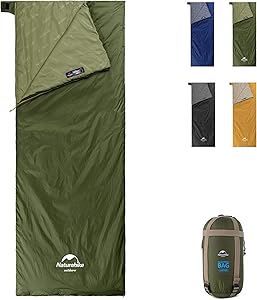
- Weight: 1.68 lbs (0.76 kg)
- Dimensions: 80.7″ L x 33.5″ W
- Fill: 80g/m² imitation silk cotton
- Compressed Size: 5 x 12 inches
This Naturehike Ultralight sleeping bag is tailored for travelers and hikers who need to save as much space as possible. Its rectangular design offers significantly more wiggle room than a traditional mummy bag, allowing for a more natural sleeping position. The imitation silk cotton filling provides a soft touch and sufficient insulation for summer nights or indoor use during transit.
The construction focuses on portability, featuring double-reinforced seams and a compact compression sack that reduces the bag to a very manageable size. While it is not intended for high-altitude or winter conditions, its durability and ease of washing make it a great companion for summer camps or weekend getaways. It serves as a lightweight, budget-friendly layer for mild weather.
Pros: Extremely lightweight, roomy rectangular shape, very affordable.
Cons: Limited to warm weather use, minimal insulation for cold nights.
See the Naturehike Sleeping Bag
3. Sea to Summit Spark 45

- Weight: 12.8 oz (Regular)
- Insulation: 850+ fill-power goose down
- Shell: 10-denier nylon
- Compressed Volume: 2.4 liters (Regular)
The Sea to Summit Spark 45 is a high-performance piece of gear built for the minimalist adventurer. Utilizing premium 850+ fill-power goose down, this bag offers an incredible warmth-to-weight ratio that few can match. The ultra-thin 10-denier shell and lining are designed to minimize bulk, allowing the entire bag to compress down to the size of a large water bottle.
Despite its featherweight build, it includes water-resistant down treatment to help maintain loft in humid conditions. The mummy shape is trim to maximize thermal efficiency, making it perfect for fast-and-light summer backpacking trips or as a liner for colder expeditions. It is the ultimate choice for those who view every gram of weight as a burden on the trail.
Pros: Exceptionally lightweight, premium down quality, tiny packed size.
Cons: Expensive, thin fabric requires careful handling.
See the Sea to Summit Spark 45 See the Sea to Summit Spark 30
4. QEZER Backpacking Sleeping Bag
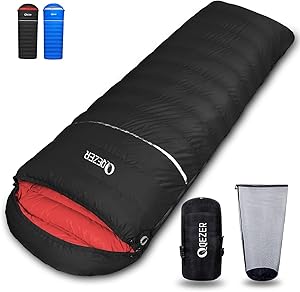
- Insulation: 600 FP duck down (1.1 lbs)
- Weight: 2.54 lbs
- Shell: 400T high-density nylon
- Shape: Semi-Rectangular
The QEZER Backpacking Sleeping Bag strikes a balance between the comfort of a rectangular bag and the warmth of a mummy bag. Filled with 600 fill-power duck down, it provides a cozy environment for temperatures down to 41°F. The semi-rectangular design is a highlight, offering extra space for the feet and shoulders, which is ideal for sleepers who feel restricted in traditional mummy bags.
A clever double-zipper system allows for targeted ventilation, while the 400T nylon shell ensures the bag is both moisture-proof and tear-resistant. It can also be zipped together with another unit to form a double bag, adding versatility for couples. This is a robust, mid-range down bag that delivers reliable performance for three-season hiking and camping without a massive price tag.
Pros: Spacious semi-rectangular cut, can be coupled with another bag, durable shell.
Cons: 600 FP down is bulkier than higher-grade down, slightly heavier for a down bag.
See the QEZER Backpacking Sleeping Bag
5. Naturehike Down Sleeping Bag

- Insulation: 650 fill power RDS duck down
- Weight: 2 lbs (910g)
- Shell: 400T 20D ripstop nylon
- Zippers: YKK
This Naturehike Down Sleeping Bag features an innovative hybrid design that combines a mummy-style upper for heat retention with an envelope-style lower for leg freedom. It uses RDS-certified 650 fill-power duck down, ensuring the insulation is ethically sourced while providing a comfort rating around 40°F. The 20D ripstop nylon shell is surprisingly durable and offers water resistance for outdoor use.
Portability is a key strength here, as the bag weighs just 2 lbs and includes both a storage bag and a compression sack. The inclusion of high-quality YKK zippers adds a level of reliability often missing in budget gear. This model is an excellent choice for backpackers looking for the benefits of down insulation—like compressibility and warmth—at a price point that remains very accessible.
Pros: Excellent value for down, ethical RDS certification, reliable YKK zippers.
Cons: Narrower upper body fit, not suitable for freezing temperatures.
See the Naturehike Down Sleeping Bag
6. NewDoar Ultralight Sleeping Bag

- Weight: 1.5 lbs
- Materials: 380T ripstop nylon / cotton lining
- Temp Range: 50°F to 70°F
- Pack Size: 11.8″ x 6.5″
The NewDoar Ultralight Sleeping Bag is a specialized solution for summer camping and indoor travel. Weighing only 1.5 lbs, it is built with a breathable cotton lining that prevents the “sticky” feeling common with full-synthetic bags in warm weather. Its spliceable design is a major perk, allowing users to create a large double bed or unzip the bag entirely to use as a flat summer blanket.
The anti-clip zipper and bottom ventilation design show a thoughtful focus on user comfort. While it lacks the insulation required for spring or fall nights, its ability to be machine washed makes it incredibly low-maintenance. It is the perfect gear for bike touring, hostels, or family summer camping where low weight and high breathability are the primary requirements for a good night’s sleep.
Pros: Very breathable cotton lining, machine washable, easy to pack.
Cons: Not suitable for cold weather, cotton lining adds weight without much warmth.
See the NewDoar Ultralight Sleeping Bag
7. SYWSKW Sleeping Bag

- Insulation: 680FP duck down
- Weight: 2.38 lbs to 2.99 lbs
- Features: Detachable 80g pillow
- Shoulder Width: 33.5 inches
The SYWSKW Sleeping Bag offers a comprehensive sleep system by integrating a detachable pillow and a wide-shoulder envelope design. Filled with 680 fill-power duck down, it is marketed as a 3-4 season bag, providing significant warmth through its baffle box construction which prevents cold spots. The extra width makes it a standout option for side sleepers or those who move frequently during the night.
Safety and convenience are addressed with reflective drawcords and an internal security pocket for valuables. The ability to zip different-colored bags together adds a fun and functional element for couples. Despite being slightly heavier than minimalist backpacking bags, its focus on comfort features like the pillow and extra internal space makes it a luxury choice for extended treks and winter camping expeditions.
Pros: Integrated pillow, very wide and comfortable, high fill power.
Cons: Heavier than specialized ultralight bags, requires time to loft after compression.
8. Exped Terra 30

- Temperature Rating: 30°F (0°C)
- Insulation: 650+ fill-power duck down
- Weight: 1 lb 9.5 oz (Medium)
- Materials: 100% recycled 20D ripstop polyester
The Exped Terra 30 is a premium 3-season bag that balances technical performance with environmental responsibility. Featuring RDS-certified 650+ fill-power duck down and OEKO-TEX certified recycled fabrics, it is designed for the eco-conscious backpacker. The mummy shape is optimized for efficiency, keeping the weight under 2 lbs while maintaining a comfort rating that can handle chilly mountain nights.
Exped has focused on high-quality construction, using a DWR-free lining and a durable 20-denier ripstop shell. The bag offers excellent compressibility, fitting into a 4-liter volume when packed. It is an ideal choice for hikers who want a reliable, lightweight down bag from a trusted brand, providing a great balance of packability, warmth, and ethical manufacturing standards for serious outdoor use.
Pros: Lightweight for its rating, recycled materials, high-quality certifications.
Cons: Higher price point, no hip girth data provided for sizing.
How to Choose Sleeping Bags for Hot Conditions?
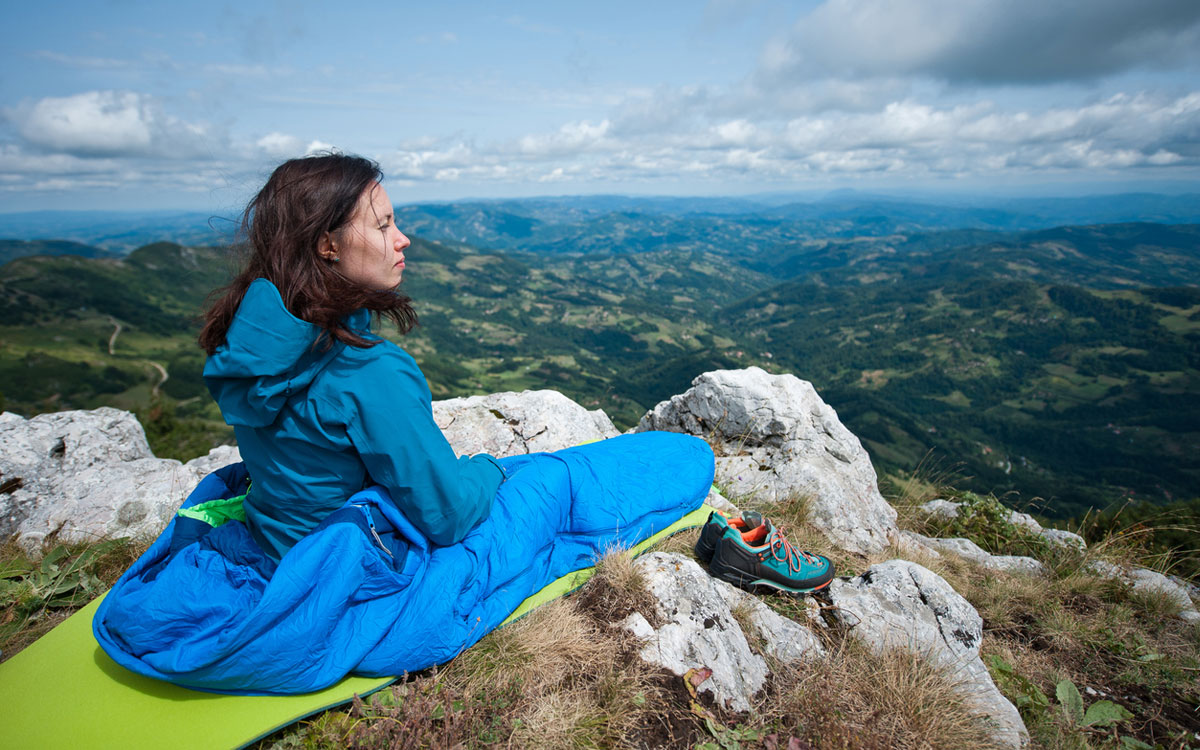
Summer camping is a fun activity and you don’t have to pack a lot as you do in winter. Heavy packing in hot weather can also get tiring quickly. It is best to pack light in the summer. Summer sleeping bags are single-season sleeping bags that are extremely lightweight in most cases due to less insulation. There are several choices on the market based on insulation, shape, and comfort. With the increase in options, choosing a bag has become a bit confusing. Choosing bags for the summer is different than a 3-season sleeping bag. But this guide is here to help you get through the sleeping bag choosing process.
Campground Knowledge
Knowing your campsite can give you an idea of how the bag will be used. This knowledge, in turn, also helps you choose your sleeping bag. You have to have a basic idea of the weather conditions you would be facing at the campsite.
Based on the knowledge that you have about the camping site, you can plan small things like sleeping outside or inside the camp, shelter planning, etc. Keep in mind the altitude when planning your camping trip. The weather is warm at a lower altitude. But things change at high altitudes. The weather becomes cold and the wind speed increases.
Temperature Rating
All sleeping bags for camping come with a temperature rating that is included in their description. Summer sleeping bags are rated 35°F and above. It is recommended that you buy a bag that is rated lower than the lowest temperature you are going to face on the camping site.
If the temperature rises, you can unzip the bag for some ventilation. But if the temperature drops, it becomes difficult to warm up a cold sleeping bag. That can be detrimental to a good night’s sleep.
Insulation
Sleeping bags come with two types of insulation; down fill and synthetic fill. Both have their advantages and disadvantages.
- Synthetic Fill: uses synthetic fibers – polyester, nylon, etc – for warmth. Synthetic fill is found in budget sleeping bags because it is easy and affordable to manufacture. But synthetic fill is heavier, and bulkier than down fill, and doesn’t last long. The only benefit of synthetic fill over down fill in terms of performance is that synthetic fill retains its insulation after getting wet.
- Down Fill: is made of goose feathers. It provides more warmth, is lightweight, and it is easy to compress. Being lightweight makes down-fill sleeping bags attractive for lightweight backpackers. Down fill also has a long life and can last a lifetime if taken care of. The only downside to down fill is that when it gets wet, it loses insulation, becomes heavy, and is hard to dry. Manufacturers use many water-resistant treatments on down fill to protect it from getting wet. Down fill is expensive and time taking to manufacture, and so, it is found in high-end sleeping bags.
Shapes
Sleeping bags come in different shapes for different types of people. Most bags have a rectangular shape because campers like more space. If you want to find a suitable shape for yourself, the only to find out is to use the bag.
The different shapes of sleeping bags are as follows:
- Rectangular – This is the most common shape for a sleeping bag. Rectangular sleeping bags have a lot of room for you to roll over and stretch your arms and legs. These bags can be unzipped completely to be used as comforters. They are most suited for summer.
- Semi-rectangular – This shape is also known as a barrel or modified mummy. This shape is a compromise between room and heat. Semi-rectangular bags are for those who find mummy-shaped bags too constricting.
- Mummy – This shape has a snug fit; you roll over with the bag rather than inside it. Mummy-shaped sleeping bags are the lightest and the warmest. It is suitable for cold temperatures. But this shape is not for people with claustrophobia.
Liners
Sleeping bag liners are layers that can be added to the inside of the sleeping bag a layer to make the sleeping bag warmer. Liners add versatility to the sleeping bag. They are great for campsites with varying temperatures or crowded campsites with varying altitudes. Liners come in all shapes of bags.