
Best Budget Rooftop Tents of 2026
Looking for a rooftop tent that won’t break the bank? You don’t need to spend a fortune to sleep under the stars in comfort. The best budget rooftop tents offer easy setup, solid weather protection, and a cozy bed off the ground—all for a fair price. In this article, we’ve rounded top affordable options that balance cost and quality, so you can hit the road ready to camp without emptying your wallet.
1. HEYFUN Adventurer Pro

- Material: 320g polyester and aircraft-grade aluminum hardshell
- Capacity: 2-3 persons (two adults and one child) with 660 lbs max load
- Open Dimensions: 83.86″ x 51.57″ x 62.99″
- Setup Time: 5-second hydraulic automatic opening and closing
The HEYFUN Adventurer Pro is an exceptional 4-season hardshell rooftop tent engineered directly by an industry-leading manufacturer. It features a rugged aircraft-grade aluminum shell combined with heavy-duty 320g polyester fabric, ensuring it easily repels harsh weather while maintaining great interior climate control. The built-in hydraulic gas struts completely eliminate camping setup hassle, allowing you to pop up or pack away the unit in just five seconds flat.
Inside, the tent offers a moisture-proof flocked floor lining, a thick non-deformable sleeping mat, and an advanced condensation mat to ensure a dry, comfortable night. Storage is highly optimized with 13 interior pockets, dedicated shoe bags, and an integrated LED light strip. With an attachable side awning included, this premium setup delivers unmatched value and utility for overlanding families and year-round outdoor adventurers.
Pros: Includes an attachable side awning, rapid 5-second setup, and extensive interior storage pouches.
Cons: Requires heavy-duty mounting crossbars rated for at least 165 lbs.
2. WildFinder Rooftop Tent

- Shell Material: 100% aircraft-grade aluminum alloy
- Weatherproof Ratings: 5000 mm rainproof and level 6 windproof
- Mattress: 5cm non-deforming mattress with condensation pad
- Included Ladder: 7.5 ft aluminum telescoping ladder
The WildFinder Rooftop Tent sets a high standard for durability by utilizing a 100% premium aircraft-grade aluminum alloy shell. Unlike traditional plastic alternatives that crack under intense UV exposure or freezing winter conditions, this robust metal structure resists thermal expansion and aging. Supported by heavy-duty stainless steel air pressure levers, the tent effortlessly opens up to reveal a comfortable, blackout-ready polyester fabric interior that optimizes privacy.
Comfort is a primary focus, featuring a recessed marine pad and specialized condensation layers designed to block moisture buildup from temperature fluctuations. The tent comes fully loaded with excellent accessories, including ten organizer bags, two shoe sleeves, an LED strip, and dual mattresses. It delivers incredible peace of mind by successfully withstanding level 6 winds and heavy snow protection.
Pros: All-aluminum build prevents cracking, outstanding 5000 mm rainproof rating, and rich accessory kit.
Cons: The required luggage crossbar is not included in the package.
See the WildFinder Rooftop Tent
3. SmittyBilt Overland GEN2
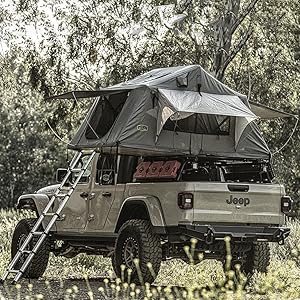
- Open Dimensions: 95″ W x 56″ L x 51″ H
- Bed Size: Full size, measuring 92″ x 55″
- Weight Capacity: 660 lbs (300 kg) maximum load rating
- Color Scheme: Gray tent body featuring a light gray rainfly
The SmittyBilt Overland GEN2 is a thoughtfully constructed rooftop tent designed to offer dependable comfort for off-road enthusiasts. Boasting a generous full-size footprint when deployed, it comfortably sleeps two to three adults without feeling cramped or restricted. The tent body features a clean, professional gray aesthetic paired with a light gray rainfly that assists with temperature regulation and sun deflection during hot summer trips.
Engineered for structural stability, this overlanding shelter supports a maximum weight capacity of 660 pounds, making it a reliable foundation for heavy-duty backcountry camping. Its wide dimensions allow users plenty of room to stretch out after an exhausting day on the trails. It integrates smoothly into standard rack configurations, making it a versatile option for various trucks and overlanding rigs.
Pros: Extra-long 95-inch open width, high weight capacity, and durable rainfly protection.
Cons: Technical fabric details and internal storage specifications are less documented compared to competitors.
See the SmittyBilt Overland GEN2
4. Sanhima Rooftop Tent

- Fabric Type: 420D double ripstop Oxford and 280GT poly-cotton
- Weight & Profile: 163.14 lbs weight and an ultra-slim 5.43 in packed height
- Mattress: 1.97 in memory foam mattress with 1.18 in raised base
- Lighting System: Tri-color LED strip (white, warm, and mosquito-repellent amber)
The Sanhima Hotham rooftop tent showcases an innovative, lightweight, and slimline profile that packs down to just 5.43 inches thick. This aerodynamic design slashes vehicle wind noise and preserves fuel efficiency while easily clearing low garage doors. Constructed with AquaShield technology, the tent utilizes heavy-duty 420D Oxford and 280GT poly-cotton fabrics to deliver an impressive 5,000mm waterproof rating and UV 50+ weather shielding.
Inside, the living area is 30% larger than its predecessor, providing plenty of room for three people on a contouring memory foam mattress. A beautiful starry skyview window allows for romantic night viewing, while the unique tri-color LED strip features an amber mode to repel insects. Integrated top crossbars add extra utility by carrying up to 220.5 lbs of adventure gear.
Pros: Extremely low-profile packed height, mosquito-repellent lighting mode, and integrated top gear crossbars.
Cons: At 163.14 lbs, it may still require two people for initial vehicle installation.
5. Naturnest Rooftop Tent

- Internal Space: Extended design providing 20% more living area
- Shell & Hardware: Aluminum hard shell with STABILUS gas struts and YKK zippers
- Fabric Technology: Dual-layer anti-condensation fabric and home-like blackout material
- Setup Speed: 30-second automatic pop-up mechanism
The Naturnest Rooftop Tent addresses common overlanding complaints with an engineered extension design that unlocks 20% more interior space. This extra head and shoulder room allows two adults to comfortably sit fully upright, change gear, or relax without feeling claustrophobic. Built for multi-decade longevity, it utilizes premium components including an insulating honeycomb aluminum shell, genuine STABILUS gas struts, and heavy-duty YKK zippers.
Sleeping comfort is drastically enhanced by premium blackout fabric that simulates a dark home bedroom environment for deep rest. Waking up to wet walls is avoided thanks to a highly innovative double-layer fabric that actively minimizes internal condensation. It also features built-in roof crossbars for sports gear and a dedicated climate port for connecting external heaters or coolers.
Pros: Increased sit-up headroom, specialized climate control vent, and exceptional YKK and Stabilus hardware components.
Cons: Smart fabric only minimizes condensation rather than eliminating it entirely.
See the Naturnest Rooftop Tent
6. JOYINRUTE Aluminum
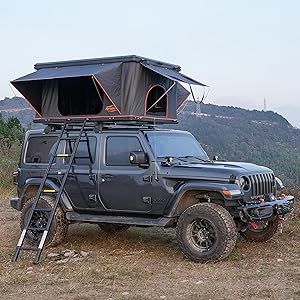
- Material & Shell: Aircraft-grade aluminum alloy with 4 hydraulic support rods
- Weatherproofing: 320G polyester fabric with 5000 mm water resistance
- Floor Treatment: Anti-condensation flocked lining tent floor
- Ventilation: 4 large windows with separate mesh and windproof layers
The JOYINRUTE Aluminum rooftop tent brings incredible durability to the campsite with its premium aircraft-grade aluminum alloy construction. Driven by a quad-hydraulic support rod system, this heavy-duty tent delivers incredibly stable, smooth, and rapid opening and closing actions. The main shelter fabric consists of a robust 320G polyester weave with an integrated blackout coating, providing a level 6 wind rating and protection against heavy rain.
This model excels in cold climates due to its fully removable winter thermal liner, making it a true 4-season option. Ventilation is highly adjustable via four large windows featuring independent mesh and windproof panels. The upgraded flocked floor lining effectively combats temperature differentials to ensure your mattress stays completely dry and comfortable throughout your trip.
Pros: Removable winter insulation liner, high-strength quad-hydraulic system, and excellent multi-layer window ventilation.
Cons: Additional hydraulic rods and thermal liners add extra steps during deep cleaning.
7. ARCTWONDER Rooftop Tent

- Solar System: Integrated 12V 216W fast-charging solar panel
- Construction: Aluminum base plate, top cover, and reinforced metal corners
- Dimensions: 85″ L × 52″ W × 59″ H (7-inch closed profile)
- Fabric Rating: 320g polyester with black rubber sun protection (W/R 5000)
The ARCTWONDER Rooftop Tent stands out from the competition by featuring an integrated 12V 216W solar panel mounted directly onto its hard shell. This innovative addition allows campers to rapidly charge power banks and electronic gear while camping off-grid. Structurally, the tent rejects plastic components entirely, using durable aluminum for the top, bottom, and all four corner joints to guarantee reliable sealing and eliminate deformation.
The tent opens seamlessly in under 10 seconds via integrated air pressure rods, and its ultra-low 7-inch closed profile minimizes overhead clearance worries. The interior accommodates a family with its large layout protected by 320g polyester and premium black rubber sun block technology. Three awning-shaded windows provide beautiful panoramic views while keeping harsh sunlight and rain at bay.
Pros: Built-in high-output solar panel, zero plastic corner pieces, and ultra-slim 7-inch travel height.
Cons: Solar electronics require careful handling during heavy off-road travel.
See the ARCTWONDER Rooftop Tent
8. Roofnest Meadowlark
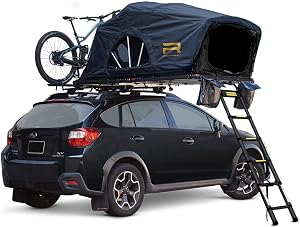
- Weight: Ultra-lightweight build weighing only 90 lbs
- Design Style: Compact, simple fold-out configuration
- Capacity: Comfortable 2-person camping layout
- Warranty: Segment-leading 2-year warranty on parts and workmanship
The Roofnest Meadowlark redefines rooftop camping mobility with an incredibly lightweight design that weighs a mere 90 pounds. This ultra-light footprint makes it universally compatible with compact SUVs, crossover vehicles, and small commuter cars without overloading roof capacities. Its user-friendly, fold-out engineering allows solo adventurers or couples to fully deploy the tent structure in under a single minute.
Though compact during travel, the smart design maximizes interior space efficiently to provide a cozy, protective shelter. The package arrives completely ready for the road, including a built-in foam mattress, a sturdy ladder, and integrated gear pockets. Fully waterproof, seam-taped fabrics ensure reliable 4-season protection against sudden changes in weather, making it perfect for weekend warriors.
Pros: Incredibly lightweight at 90 lbs, fits compact vehicles, and includes a strong 2-year warranty.
Cons: Lacks the automated hydraulic pop-up action found on heavier aluminum hardshell tents.
9. VEVOR Rooftop Tent

- Frame Type: Triangular design featuring inflatable poles
- Materials: 420D Oxford rainfly (2000MM) and poly-cotton body (1500MM)
- Support: Reinforced aluminum poles and a three-point support system
- Ladder Capacity: 7.5 FT telescoping ladder rated for 330 lbs
The VEVOR Rooftop Tent introduces a highly unique triangular hybrid architecture that utilizes inflatable structural poles for quick setup. This specialized design rapidly creates a spacious, tall interior that comfortably fits two adults and one child. Built for vehicles with a roof capacity of 600 lbs or more, the tent employs internal aluminum support structures to form a rigid, wind-resistant three-point support system.
The exterior utilizes a protective 420D Oxford rainfly with PU coatings for excellent UV insulation and daily weather resistance. Inside, campers are treated to a thick, non-deforming foam mattress, multiple ventilation panels, and a convenient integrated night light. When folded, heavy-duty Velcro security straps ensure the tent stays firmly locked down against highway crosswinds.
Pros: Fast inflatable pole setup, sturdy three-point wind resistance, and a heavy-duty 330 lb ladder rating.
Cons: Fabric waterproof ratings are lower than average; explicitly not recommended for extreme weather.
10. Nice C Inflatable Rooftop Tent

- Frame Structure: Fully inflatable frame for fast setup
- Dimensions: Generous 207 x 159 x 169 cm (81.5″ x 62.6″ x 66.5″)
- Bedding Included: Companion air mattress and supportive air cushion
- Ventilation: Double-layer mesh doors, panoramic windows, and awnings
The Nice C Inflatable Rooftop Tent completely swaps out heavy metal poles for an advanced, fully inflatable structural frame. Setting up camp is entirely effortless; users simply connect the included air pump and watch the system expand into shape within a matter of minutes. Its expanded dimensions create an incredibly spacious, vaulted living area that allows for excellent freedom of movement overhead.
This comprehensive kit includes vital camping gear right out of the box, featuring a repair kit, folding ladder, support brackets, and a cozy air mattress. Constructed from highly durable, all-weather waterproof materials, the tent keeps occupants perfectly dry. Double-layer mesh doors and panoramic windows with built-in awnings ensure refreshing airflow while maintaining solid protection against pests.
Pros: Completely inflatable hassle-free frame, exceptionally tall internal headroom, and full camping accessories included.
Cons: Relying on air pressure means users must carry a pump and keep track of the repair kit.
See the Nice C Inflatable Rooftop Tent
The Ultimate Guide to Choosing a Cheaper Rooftop Tent
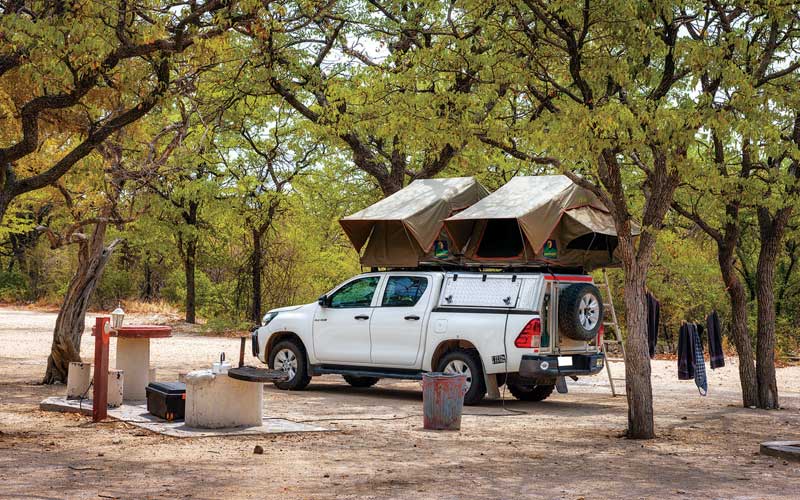
Rooftop tents have completely transformed the overlanding and car camping landscape. They elevate your sleeping quarters away from cold, uneven ground, rocky terrain, mud, and nocturnal critters, turning your daily driver into a mobile basecamp. However, premium hard-shell models frequently command staggering prices that can quickly drain your adventure fund before you even hit the road.
Fortunately, the outdoor gear market has evolved rapidly. Today, budget-conscious adventurers can find reliable, weather-resistant, and incredibly comfortable rooftop tents without breaking the bank. Choosing the right entry-level model requires a balanced understanding of materials, weight limits, vehicle compatibility, and design trade-offs. This guide outlines everything you need to consider to secure a high-quality, wallet-friendly shelter for your next journey.
1. Soft-Shell vs. Hard-Shell on a Budget
The first significant fork in the road when shopping for a rooftop tent is choosing between a classic soft-shell design and a rigid hard-shell structure. This choice drastically impacts both your initial financial investment and your daily camping routine.
Soft-Shell Tents: The Value Champions
If maximizing your budget is your absolute highest priority, soft-shell tents are usually the best place to look. These models fold in half like a massive book and are protected during travel by a heavy-duty, weather-resistant PVC cover. Because they open outward past the footprint of your vehicle roof, soft-shell tents generally offer significantly more interior floor space per dollar spent. They easily accommodate larger footprints, making them ideal for camping couples or small overlanding families who require a bit of breathing room without spending a fortune.
Hard-Shell Tents: Convenience at a Premium
Hard-shell models feature a rigid top cover manufactured from molded plastic, fiberglass, or rugged aluminum alloy. They utilize gas-charged hydraulic struts to automatically pop open or hinge upward in mere seconds. While historically restricted to premium price tiers, entry-level hard-shell models have become increasingly accessible. You sacrifice a small amount of floor space compared to a soft-shell of equivalent price, but you gain rapid setup times, improved aerodynamics while driving, and superior long-term durability against low-hanging branches.
2. Critical Weight Capacities and Vehicle Dynamics
Before pulling the trigger on any cheap rooftop tent, you must verify that your vehicle and rack system can structurally support the payload. This requires understanding the distinct definitions of dynamic and static weight limits.
Dynamic Weight Capacity
Dynamic weight refers to the total weight your vehicle roof and crossbars can safely support while the car is moving at highway speeds. Most inexpensive rooftop tents weigh anywhere between 90 and 160 pounds. You must cross-reference this product weight with your vehicle manufacturer’s owner’s manual and the specifications of your aftermarket roof rack. Ensure your dynamic rating comfortably exceeds the weight of the tent itself to prevent handling hazards or roof damage.
Static Weight Capacity
Static weight capacity represents the amount of structural load the system can support when the vehicle is securely parked at your campsite. This figure accounts for the weight of the tent, the aluminum ladder, your heavy sleeping gear, and all the adult occupants resting inside. Because stationary parked vehicles distribute weight down through the structural support pillars of the frame, static limits are significantly higher than dynamic limits and can easily support 600 pounds or more.
3. Evaluating Material Quality and Weather Protection
A budget price tag should never mean waking up to a leaking ceiling during a midnight downpour. Paying close attention to material specifications guarantees your shelter stands strong against changing seasonal elements.
Fabric Denier and Blends
When reviewing tent fabrics, look for durable polyester or polyester-cotton (poly-cotton) ripstop blends. Fabric thickness is typically rated by denier (D). A high denier number, such as 320g poly-cotton or 420D Oxford fabric, indicates a dense, heavy-duty weave that effectively resists tearing, wind flapping, and early UV degradation. Ensure the fabric features an internal polyurethane or rubberized coating to provide reliable UV protection and solid interior blackout capabilities for sleeping past sunrise.
Waterproof Ratings and Seam Sealing
Always check the manufacturer’s millimeter (mm) waterproof rating. A reputable entry-level tent should offer a waterproof rating of at least 1500mm to 3000mm, while exceptional budget models boast up to 5000mm of water resistance. Beyond the fabric rating itself, look for verified heat-taped seams and factory-applied waterproof glue along all major interior stitching points to stop stubborn water droplets from migrating inside.
4. Managing Condensation and Airflow
One of the most common challenges in budget-tier rooftop tents is interior humidity and moisture buildup. When warm breath meets a cold exterior tent wall overnight, condensation naturally forms, potentially leaving your mattress damp by morning.
Ventilation Port and Window Layout
To combat humidity, select a design that prioritizes cross-ventilation. Look for tents equipped with multiple large windows featuring independent dual-layer systems: a fine, bug-proof mesh layer for breezy summer nights, and a solid, windproof fabric layer that zips completely shut when temperatures plunge. Overhead skyview windows or integrated dedicated side ventilation ports are excellent additions that allow rising heat to escape cleanly.
Anti-Condensation Mats and Flooring
The flooring material plays a major role in keeping your bedding dry. Higher-quality budget tents often feature a moisture-proof flocked floor lining or an integrated anti-condensation mat positioned directly beneath the mattress. This mesh mat creates a crucial air gap that allows ventilation underneath your sleeping pad, preventing body heat from trapping moisture against the cold aluminum baseplate.
5. Included Accessories and Essential Comforts
A truly cost-effective purchase means you will not have to immediately buy dozens of expensive aftermarket accessories just to make your first camping trip manageable. Evaluate what comes included inside the box.
Mattress Quality
A built-in foam mattress is standard in most rooftop models, but thickness and density vary wildly. Look for a high-density, non-deforming foam or memory foam mattress that is at least 1.5 to 2 inches thick. If the included mattress feels too thin, you may need to factor in the added cost of a secondary inflatable camping pad or a foam topper.
Storage and Accessibility Solutions
Look for thoughtful interior details that make living in a confined space easier. Valuable budget inclusions include built-in interior ceiling pouches or sidewall storage pockets to keep your keys, phone, and flashlights organized. Exterior hanging shoe storage bags are another highly practical accessory, allowing you to leave muddy boots completely outside the tent shell while protecting them from rain overnight.
6. Summary Checklist for Smart Shopping
To ensure you make a smart investment, use this quick checklist when browsing budget options:
- Confirm the tent’s dry weight is safely below your vehicle’s dynamic roof rack limit.
- Look for a minimum of 320g poly-cotton or 420D Oxford fabric with taped seams.
- Prioritize models that include a telescoping ladder and mounting brackets in the total price.
- Check user reviews specifically highlighting the ease of setup and tear-down times.
- Ensure there are ample ventilation windows or included anti-condensation features.
By carefully balancing these essential structural and material factors against your personal camping style, you can easily discover a highly capable cheapest rooftop tent. Taking the time to select the right model rewards you with years of comfortable, elevated, and memorable outdoor adventures without overstretching your finances.