Best Down Jackets for Backpacking of 2026
When you’re backpacking, staying warm without carrying extra bulk is key, and a good down jacket is your best friend on the trail. It packs down tiny in your bag, weighs almost nothing, and offers incredible warmth for those chilly mornings or high-altitude camps. But not all down jackets are built for the rugged outdoors. The best ones balance weight, warmth, and weather resistance. In this guide, we break down the top picks to help you find the perfect layer for your next adventure.
1. Patagonia Down Sweater

- Insulation: 800-fill-power goose down
- Fabric: NetPlus 100% postconsumer recycled nylon
- Weight: 13 ounces
- Hood: No
The Patagonia Down Sweater is designed to keep you warm and comfortable during cold-weather outdoor activities. Filled with premium 800-fill-power goose down, this lightweight jacket effectively traps body heat while remaining windproof. Its highly packable design allows you to easily compress it into a backpack, making it a reliable companion for hiking, camping, or everyday wear when temperatures drop.
Constructed with durable recycled materials, this jacket offers an eco-friendly option without sacrificing performance. The hip-length cut provides optimal coverage, while the smooth nylon lining ensures effortless layering over sweaters or shirts. Whether you are navigating chilly city streets or setting up camp in the backcountry, this puffy jacket delivers consistent warmth and convenience.
Pros: Lightweight and packable design, windproof shell, excellent warmth-to-weight ratio.
Cons: Lacks a hood for extra head protection, higher price point compared to entry-level options.
See the Patagonia Down Sweater See the Women’s Down Sweater
2. REI Co-op 650 Down Jacket

- Insulation: 650-fill-power down (bluesign approved)
- Fabric: Recycled ripstop nylon (bluesign approved)
- Weight: 10.9 ounces
- Back Length: 28.5 inches
Bundle up for crisp morning walks and chilly evening commutes with the REI Co-op 650 Down Jacket. This reliable everyday layer combines comfort and functionality, utilizing bluesign-approved recycled ripstop nylon to support sustainable manufacturing. The 650-fill-power down provides dependable insulation, keeping you cozy when the autumn air turns brisk and the leaves start falling around you.
Designed with a slightly longer back length of 28.5 inches, this jacket ensures adequate coverage during active movement. Its lightweight feel prevents you from feeling weighed down, while the windproof construction blocks chilly gusts effectively. Ideal for casual outdoor adventures or daily errands, it balances everyday practicality with eco-conscious materials seamlessly.
Pros: Affordable price point, bluesign-approved sustainable materials, lightweight everyday comfort.
Cons: Lower fill power compared to premium alternatives, not ideal for extreme alpine conditions.
See the REI 650 Down Jacket See the Women’s 650 Down Jacket
3. Rab Neutrino Pro
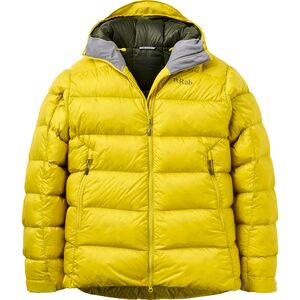
- Insulation: 800-fill European goose down
- Fabric: Pertex Quantum Pro shell
- Weight: 1 lb 3.9oz
- Hood: Helmet-compatible, adjustable
Conquer demanding mountain environments with the Rab Neutrino Pro, an alpine down hoody engineered for mountaineering, belays, and cold backcountry travel. Packed with premium 800-fill European goose down, it offers exceptional warmth-to-weight performance. The rugged Pertex Quantum Pro shell actively resists snow, wind, and light moisture, ensuring you stay protected in harsh weather conditions.
Practical features like a helmet-compatible hood, a two-way front zipper, and multiple secure pockets enhance its utility on technical climbs. Elasticated cuffs and an adjustable hem seal out drafts, while the internal stash pocket allows for compact travel packing. This jacket is built for serious adventurers who refuse to let severe cold compromise their expedition.
Pros: Superior warmth for extreme weather, highly weather-resistant shell, helmet-compatible hood.
Cons: Heavier and bulkier than minimalist jackets, higher investment suited primarily for technical use.
See the Rab Neutrino Pro See the Women’s Neutrino Pro
4. Mountain Hardwear Ghost Whisperer

- Insulation: 800-fill-power RDS-certified goose down
- Fabric: Whisperer 10D x 10D recycled ripstop nylon
- Weight: 8.8 ounces
- Hood: Yes
The Mountain Hardwear Ghost Whisperer Down Hoody is an ultralight marvel designed to deliver targeted warmth without adding unnecessary bulk to your pack. Stuffed with 800-fill-power RDS-certified goose down, it maintains critical loft and insulation efficiency even if it encounters moisture. The ultra-fine 10-denier ripstop shell keeps the overall weight down to a mere 8.8 ounces.
Ideal for backpackers and fast-and-light mountaineers, this hoody packs down into its own pocket for effortless transport. The fitted hood and hip-length cut offer secure coverage against chilly alpine winds. It provides an exceptional balance of featherlight construction and reliable thermal performance for serious trail enthusiasts.
Pros: Extremely lightweight and compact, moisture-resistant down insulation.
Cons: Thin face fabric requires careful handling around sharp rocks.
See the MH Ghost Whisperer See the Women’s Ghost Whisperer
5. Rab Mythic Alpine Light
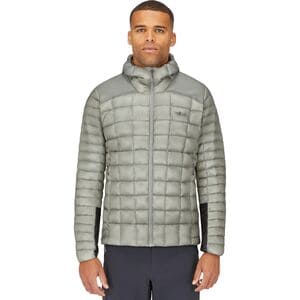
- Insulation: 900-fill down with PrimaLoft Gold
- Fabric: Ultralight 10D Pertex Quantum
- Weight: 8.8 ounces (medium)
- Hood: Fixed, part-elasticated
Engineered as a technical midlayer, the Rab Mythic Alpine Light provides high-performance insulation without sacrificing mobility or adding excess weight. It features a smart hybrid design combining ultra-lofty, water-resistant 900-fill down with strategically placed PrimaLoft Gold synthetic insulation in high-moisture zones. The 10D Pertex Quantum shell ensures durable weather repellency while remaining wonderfully soft.
Designed with a slim fit and articulated sleeves, this jacket maximizes your range of motion during dynamic activities like backcountry skiing and climbing. Stitch-through baffles secure the insulation while keeping the profile sleek and lightweight. Complete with a stuff sack, it is an essential piece for cold-weather alpine missions.
Pros: Exceptional 900-fill down warmth, hybrid synthetic mapping for wet zones, highly mobile slim fit.
Cons: Slim cut may feel restrictive for layering thick garments underneath, specialized athletic focus.
See the Rab Mythic Alpine Light See the Women’s Mythic Alpine Light
6. Patagonia Down Sweater Hoody

- Insulation: 800-fill-power goose down
- Fabric: 20 x 30-denier recycled ripstop polyester
- Weight: 14.8 ounces
- Hood: Yes
Don’t let freezing weather keep you indoors when you can wear the Patagonia Down Sweater Hoody. Building upon the classic design, this hooded version features durable 20 x 30-denier recycled ripstop polyester fabric that blocks wind and handles daily wear with ease. Filled with high-grade 800-fill-power goose down, it traps essential body heat to keep you warm during chilly outdoor adventures.
The integrated hood provides crucial extra coverage for your head and ears when icy gusts pick up. Weighing 14.8 ounces, it strikes a great balance between substantial warmth and packability for travel and camping. This jacket is a dependable cold-weather staple that ensures comfort wherever your travels lead.
Pros: Built-in hood for enhanced warmth, windproof recycled shell, comfortable hip-length cut.
Cons: Slightly heavier than non-hooded models, bulkier pack size compared to ultralight alternatives.
See the Patagonia Down Sweater Hoody See the Women’s Down Sweater Hoody
7. Fjallraven Expedition Pack Down Hoodie

- Insulation: Goose down and feather with recycled polyester
- Fabric: Recycled nylon
- Weight: 1 lb. 1.3 oz.
- Hood: Yes
Built explicitly for rugged winter activities, the Fjallraven Expedition Pack Down Hoodie functions effortlessly as a warm midlayer or a protective outer shell. It is crafted from durable recycled nylon and packed with responsibly sourced down, complemented by synthetic shoulder panels that resist compression from backpack straps. This thoughtful construction ensures dependable warmth in freezing temperatures.
When weather conditions improve, the jacket packs away easily into its own pocket or a backpack for convenient storage. The adjustable hood and secure pockets add functional value for winter hikers and campers. It is a robust, winter-ready garment designed to withstand harsh elements while maintaining classic outdoor style.
Pros: Versatile midlayer or shell design, synthetic shoulder panels resist pack compression.
Cons: Heavier weight profile, less suited for mild weather conditions.
See the Fjallraven Expedition See the Women’s Expedition
8. Outdoor Research Helium Down Hoodie

- Insulation: 800-fill-power responsibly sourced down
- Fabric: Pertex Quantum with Diamond Fuse technology
- Weight: 16.2 ounces
- Hood: Yes, waterproof Pertex Shield
Designed for high-alpine kits, the Outdoor Research Helium Down Hoodie delivers rugged warmth and exceptional weather resistance. It features a bluesign-approved Pertex Quantum shell with Diamond Fuse technology for enhanced durability, paired with waterproof Pertex Shield protection on the hood, shoulders, and upper sleeves where exposure is highest. This hybrid weatherproofing keeps you dry in wet snow and heavy mist.
Filled with 800-fill-power responsibly sourced down, it offers reliable thermal retention for demanding mountain excursions. Weighing 16.2 ounces, it provides heavy-duty defense against the elements while maintaining a comfortable hip-length fit. It is an ideal choice for mountaineers facing unpredictable alpine forecasts.
Pros: Waterproof panels on high-exposure zones, durable Diamond Fuse fabric, high-fill down warmth.
Cons: Heavier than standard ultralight down sweaters, premium price point.
See the Outdoor Research Helium See the Outdoor Research Helium
How to Choose Down Jackets for Backpacking
Picking the right down jacket for backpacking is about more than just grabbing the warmest or puffiest option on the shelf. When you are carrying everything on your back, every ounce counts, and your jacket needs to earn its place in your pack. A great backpacking down jacket should be lightweight, highly compressible, warm enough for your expected conditions, and durable enough to handle the rigours of the trail. With so many models on the market, it is easy to feel overwhelmed. This guide breaks down the key features you need to consider so you can find the perfect balance of warmth, weight, and practicality for your next adventure.
Fill Power: The Quality of the Down
Fill power is the standard measure of the quality and loft of the down insulation. It essentially tells you how many cubic inches one ounce of down occupies. The higher the fill power, the more air the down traps, and the more warmth it provides per ounce of weight. For backpacking, this is critical because higher fill power allows you to carry a jacket that is both lighter and more compressible.
- 550 – 650 fill power: Good for budget-friendly or casual jackets. They are heavier and bulkier, making them less ideal for serious backpacking unless weight is not a primary concern.
- 700 – 750 fill power: A solid sweet spot for most backpackers. These jackets offer excellent warmth-to-weight and pack down reasonably well without breaking the bank.
- 800 – 900+ fill power: Premium quality. These are the lightest and most compressible options. They are perfect for ultralight backpacking or alpine missions where pack space is at a premium and every gram matters.
Remember, higher fill power also usually comes with a higher price tag. For most three-season backpacking trips, 700 to 800 fill power is an excellent balance of performance and cost.
Fill Weight vs. Total Weight
Do not confuse fill power with fill weight. Fill weight is the actual amount of down (in grams or ounces) inside the jacket. A jacket with a lower fill power but a higher fill weight can sometimes be warmer than a high-fill-power jacket with very little down. Total jacket weight is also important—this is the weight of the entire jacket, including the shell fabric, zippers, and pockets. For backpacking, look for a jacket that balances all three: a decent fill weight for warmth, high fill power for compressibility, and a low total weight for easy carrying.
Shell Fabric: Durability and Weight
The outer fabric protects the down from tears, abrasion, and moisture. For backpacking, you want a shell that is lightweight yet tough enough to withstand branches, rocks, and pack straps.
- Ultralight fabrics (e.g., 7D to 10D nylon): Incredibly light and packable but less durable. Best for well-maintained trails or as a mid-layer under a hardshell.
- Mid-weight fabrics (e.g., 15D to 20D nylon): Offer a great balance of durability and weight. They resist snags better and are suitable for most backpacking conditions.
- Heavy fabrics (30D and above): Very durable but add noticeable weight and bulk. Better for winter expeditions or bushwhacking where abrasion is a constant threat.
Many jackets also use ripstop weaves to prevent small tears from spreading—a feature worth looking for.
Water Resistance and Treatment
Down loses its insulating power when it gets wet, and it takes a long time to dry on the trail. That is why water resistance is a huge factor for backpacking jackets.
- Hydrophobic down: Many modern jackets use down treated with a durable water-repellent (DWR) coating at the feather level. This helps the down resist moisture and dry faster if it does get damp. While it is not waterproof, it gives you extra peace of mind in humid or drizzly conditions.
- DWR shell coating: The outer fabric often has a DWR finish that causes light rain or snow to bead up and roll off. This is essential for shedding light precipitation, but it will not keep you dry in sustained rain.
- Waterproof/breathable shells: Some jackets combine down with a waterproof membrane. These are heavier and less compressible, so they are generally better for wet, cold environments rather than lightweight backpacking.
For most backpackers, a combination of hydrophobic down and a DWR-treated shell offers the best protection without sacrificing packability.
Warmth vs. Weight: Finding Your Sweet Spot
This is the central trade-off when choosing a down jacket. Warmer jackets usually have more down (higher fill weight) and heavier fabrics, which add weight and bulk. You need to match the jacket’s warmth to your intended use.
- Summer and mild three-season: A lightweight vest or a thin jacket with 2 to 3 ounces of down (800-fill) is plenty for cool evenings and high-altitude summer camps.
- Shoulder seasons (spring and fall): Look for jackets with 3.5 to 5 ounces of down. These provide reliable warmth for temperatures around freezing when you are static at camp.
- Winter or deep cold: You may need 6+ ounces of down. These jackets are heavier and bulkier but essential for sub-zero conditions. Some backpackers opt for a heavy parka and accept the weight penalty.
As a rule, if you run cold, lean towards a slightly warmer jacket. If you are an ultralight enthusiast, shave weight wherever you can.
Packability and Stuff Sack
One of the biggest advantages of down is its compressibility. A good backpacking jacket should stuff down into its own pocket or a small stuff sack, taking up minimal space in your pack. Before buying, check the packed size—some jackets compress to the size of a water bottle, while others are closer to a small melon. Many jackets come with a built-in stuff pocket, which is very convenient. Remember, repeatedly compressing down can reduce its loft over time, so store your jacket loosely when not on the trail.
Fit and Features for the Trail
A backpacking down jacket should fit comfortably over a base layer and a thin fleece, but still allow full arm movement. It should not be too baggy, as that wastes heat and adds unnecessary fabric weight.
- Hood: A down-filled hood adds significant warmth and is worth the extra weight for cold-weather trips. For milder conditions, a hoodless jacket saves a few ounces.
- Pockets: Zippered hand pockets are great for warming cold fingers. Chest pockets are useful for storing small items like a phone or map. Some jackets have internal drop pockets for extra storage or to hold a water bottle.
- Elastic cuffs and hem: Adjustable cuffs and a drawcord hem help seal in warmth and keep cold drafts out.
- Dual zippers: A two-way front zipper allows you to vent from the bottom while keeping the top closed—a useful feature when you are active.
Down vs. Synthetic: A Quick Comparison
While this guide focuses on down, it is worth knowing the alternatives. Down is warmer for its weight, lasts longer, and compresses smaller. Synthetic insulation performs better when wet, dries faster, and is usually cheaper. For dry, cold conditions, down is hard to beat. For wet, humid environments, or if you anticipate heavy sweating, a synthetic jacket might be the smarter choice. Some backpackers carry a lightweight down puffy for camp and a synthetic active layer for movement.
Ethical and Sustainable Down
Many outdoor brands now use down certified by the Responsible Down Standard (RDS) or similar programs. This ensures that the birds are not force-fed or live-plucked. If animal welfare is important to you, look for the RDS logo or recycled down options. It is a small detail that makes a big difference.
Comparison Table: Key Features at a Glance
The table below summarizes the main characteristics to consider when choosing a down jacket for backpacking.
| Feature | What to Look For (Backpacking) | Why It Matters |
|---|---|---|
| Fill Power | 700 – 800+ | Higher loft = better warmth-to-weight and compressibility |
| Fill Weight | 3 – 5 oz (for 3-season) | More down = warmer, but adds weight |
| Total Jacket Weight | Under 15 oz (ideally 10–12 oz) | Lighter is better for carrying long distances |
| Shell Fabric Denier | 10D – 20D ripstop | Balances durability with low weight |
| Water Treatment | Hydrophobic down + DWR shell | Resists light moisture and dries faster |
| Packability | Packs into own pocket or small sack | Saves critical pack space |
| Hood | Yes for cold trips; no for mild | Adds warmth but adds weight |
| Certification | RDS or recycled down | Ensures ethical sourcing |
Putting It All Together: Your Decision Flow
Start by defining your typical backpacking conditions: temperature range, trip duration, and expected weather. Then ask yourself these questions:
- Do I need this for summer evenings, shoulder seasons, or deep winter?
- Am I willing to spend more for lighter weight and better compressibility?
- Will I be in dry or wet climates?
- Do I prefer a hood or a lighter collar?
Once you answer these, use the table above to narrow down your options. Try on a few jackets if possible—fit and feel are just as important as specs. Remember, the best down jacket for backpacking is the one that keeps you warm when you stop, packs down small, and does not weigh you down on the trail. With the right choice, you will enjoy many comfortable camps and summit views for years to come.