Best Down Camping Blankets of 2026
When the sun goes down and the mountain air turns crisp, a good camping blanket becomes your best friend. It’s not just about staying warm; it’s about staying comfortable while you sit by the fire, stargaze, or sleep under the stars. The right blanket is lightweight, easy to pack, and tough enough for the outdoors. In this guide, we’ll help you find the best down camping blankets that keep you cozy without weighing down your backpack.
1. Get Out Gear Down Camping Blanket
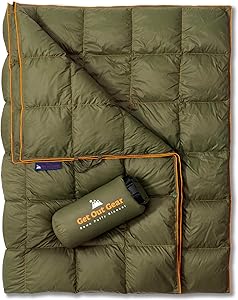
- Weight: 1.1 lbs
- Fill power: 650
- Shell fabric: 20D ripstop nylon with DWR coating
- Dimensions (unfolded): 80″ x 54″
This blanket is a fantastic choice if you value lightweight gear without sacrificing warmth. At just over a pound, it won’t weigh down your pack, yet the 650 fill power down keeps you surprisingly warm on chilly nights. The 20D ripstop nylon shell feels tough and resists light spills and moisture, so you can lay it on damp grass or sandy beaches without worry.
What makes it stand out is its clever snap system that turns it into a wearable poncho. You can walk around, tend the fire, or read a book while staying fully wrapped in warmth. It also packs into a small stuff sack with a sturdy clasp, making storage and carrying effortless. It’s a simple, reliable blanket that delivers exactly what most campers need.
Pros: Very lightweight and compact, wearable poncho design, durable ripstop shell.
Cons: Not warm enough for deep winter camping, stuff sack could be more compressible.
See the Get Out Gear Down Camping Blanket
2. HEST Down Comforter

- Available sizes: Single (88″ x 58″) and Double (88″ x 80″)
- Fill: 650-fill-power duck down (water-resistant)
- Fill weight: Single: 1 lb. 4.5 oz. | Double: 1 lb. 15 oz.
- Total weight: Single: 2 lb. 9.6 oz. | Double: 3 lb. 12.8 oz.
The HEST Down Comforter brings serious warmth to car camping and basecamp adventures. Its generous size—even the single is large enough to wrap around you fully—makes it feel like you’ve brought a piece of your bed into the wild. The 650-fill duck down is treated for water resistance, so it handles damp morning air or a little condensation inside your tent without losing its insulating ability.
The shell is soft polyester that feels cozy against your skin, and the blanket lofts up nicely to trap heat. It comes with a stuff sack that’s bigger than ultralight options, but that’s because this blanket is built for comfort over minimalism. If you’re driving to your campsite or setting up a basecamp, the extra weight and space are worth it for the plush, warm experience it provides.
Pros: Very spacious and comfortable, water-resistant down, great for car camping and basecamp.
Cons: Too heavy and bulky for backpacking, expensive compared to similar blankets.
3. ROSE FEATHER Down Blanket

- Fill: 90% goose down (fill weight: 1.1 lb / 500g)
- Shell fabric: 20D nylon with DWR coating
- Unfolded size: 55″ x 79″
- Packed size: 5.7″ x 9.8″
ROSE FEATHER has crafted a beautifully versatile blanket that shines in both outdoor and home settings. With 90% goose down and a total fill weight of 1.1 pounds, it offers reliable warmth for chilly evenings without being heavy. The 20D nylon shell repels splashes and light rain, and the windproof buckle lets you wear it hands-free like a poncho, keeping you cozy even when the breeze picks up.
What sets this blanket apart is its thoughtful extras: corner tie-down loops allow you to stake it to the ground like a picnic blanket, and the adjustable rope lock lets you turn it into a sleeping bag. The reversible AB design means you can switch colours or keep one side cleaner for longer. It’s a well-rounded, affordable option for campers who want flexibility and comfort without breaking the bank.
Pros: Affordable for goose down, multi-functional (poncho, sleeping bag, picnic blanket).
Cons: Width is narrower than some competitors, fill power isn’t specified.
See the ROSE FEATHER Down Blanket
4. REI Co-op Magma 30

- Fill: 850-fill-power water-resistant goose down
- Fill weight (Medium): 11.6 oz
- Total weight (Medium): 1 lb. 4.3 oz.
- Compressed volume (Medium): 3 liters
The REI Magma 30 is a backpacker’s dream. Built with premium 850-fill down that’s treated to resist moisture, it delivers incredible warmth for its featherlight weight. The 15-denier recycled ripstop nylon shell is both eco-friendly and durable, and the mummy shape with a cinchable footbox locks in heat efficiently. It’s designed to pack tiny—the medium size compresses to just 3 litres—leaving plenty of room in your backpack for other gear.
What makes this quilt special is its temperature rating: it’s comfort-rated down to 30°F, making it a true three-season workhorse. The footbox unzips completely so you can use it as an open quilt on milder nights. It also comes in multiple sizes, including wide options for side sleepers. This is a serious piece of gear for hikers who prioritize performance and packability above all else.
Pros: Excellent warmth-to-weight ratio, ultra-compressible, environmentally conscious materials.
Cons: Expensive, not as spacious as rectangular blankets, thin shell requires careful handling around sharp objects.
5. Wise Owl Outfitters Camping Blanket (Down Alternative)

- Fill: Synthetic down-alternative insulation
- Shell fabric: Ripstop nylon with water-resistant coating
- Unfolded size: 6.5′ x 4.5′ (78″ x 54″)
- Weight: 29.7 oz (1 lb 13.7 oz)
Wise Owl Outfitters offers a clever down-alternative blanket that performs brilliantly in damp or unpredictable weather. Unlike real down, the synthetic insulation retains warmth even when wet, making it a reliable companion for rainy trips or high-humidity environments. The ripstop nylon shell repels moisture and dirt, and the blanket unfolds to a generous 6.5 feet by 4.5 feet, providing full coverage for most adults.
It’s packed with thoughtful features: quick-snap clasps let you turn it into a poncho or sleeping bag, and the corner loops allow you to secure it to the ground or a hammock. It rolls into a compact 17″ x 6.5″ stuff sack and weighs under 30 ounces, so it’s still backpack-friendly. Plus, it’s machine washable—a huge bonus for family campers. It’s a versatile, budget-friendly alternative that doesn’t compromise on comfort.
Pros: Retains warmth when wet, machine washable, affordable, multi-functional with snaps and tie-down loops.
Cons: Bulkier and heavier than real down blankets, not as warm as high-fill-power down in extreme cold, synthetic fill may lose loft over time.
See the Wise Owl Outfitters Camping Blanket
How to Choose Down Camping Blankets: A Practical Guide
When you’re sleeping under the stars or sitting around a crackling campfire, a good down blanket can make all the difference. But with so many options on the market, picking the right one can feel overwhelming. This guide breaks down everything you need to know—from fill power to fabric, weight to weather—so you can choose a down camping blanket that keeps you warm, dry, and happy on every adventure. No jargon, no fuss—just practical advice for real outdoor lovers.
Why Choose Down for Camping?
Down is the soft layer of feathers found under a duck or goose’s outer feathers. It is nature’s best insulator. Unlike synthetic fills, down traps heat in tiny air pockets while still allowing moisture to escape. That means you stay warm without getting sweaty. Down is also incredibly lightweight and compresses into a small stuff sack, so it won’t hog space in your backpack. For campers who hike miles to their site, down is a game-changer.
Key Factors to Consider
Not all down blankets are created equal. Here are the most important features to look at before you buy.
1. Fill Power – The Warmth Indicator
Fill power measures how many cubic inches one ounce of down occupies. The higher the number, the better the quality and warmth-to-weight ratio.
- 400–500 fill power: Entry-level, bulky, and heavy. Fine for car camping but not for backpacking.
- 550–650 fill power: Good quality, decent warmth, moderate packability. Budget-friendly choice.
- 700–850 fill power: Premium down. Very warm, extremely lightweight, and packs down tiny. Ideal for backpacking and cold weather.
- 900+ fill power: Top-tier luxury. Incredible warmth for minimal weight. Expensive but worth it for hardcore adventurers.
For most campers, a fill power of 650 to 800 hits the sweet spot between performance and price.
2. Fill Weight – How Much Down Is Inside?
Fill power tells you quality, but fill weight tells you quantity. A blanket with 700 fill power but only 5 ounces of down will be less warm than one with 600 fill power and 10 ounces of down. Always check both numbers. For three-season camping (spring to fall), look for a total fill weight between 8 and 14 ounces. For winter, go heavier—15 ounces or more.
3. Shell Fabric – Durability and Feel
The outer fabric protects the down and touches your skin. Most blankets use nylon or polyester because they are light, strong, and dry quickly.
- Ripstop nylon: Tear-resistant and very lightweight. Great for backpacking.
- Polyester taffeta: Slightly softer and more affordable, but a bit heavier.
- Cotton blends: Cozy and quiet, but absorb moisture and take forever to dry—avoid for damp climates.
Look for a DWR (durable water-repellent) coating on the shell. It helps shed light rain or morning dew, keeping your down dry.
4. Water Resistance – Down’s Achilles Heel
Down loses almost all its insulating power when wet. That’s why water resistance is critical. Many brands now treat their down with a hydrophobic coating (like Nikwax or Downtek). This treated down resists moisture and dries faster than untreated down. If you camp in rainy or humid areas, spend the extra few dollars for water-resistant down. It could save your night.
5. Weight and Packed Size
Every ounce counts when you’re carrying your gear on your back. A good down camping blanket should weigh between 1 and 2.5 pounds. Packed size matters too—it should compress to about the size of a large grapefruit or a small loaf of bread. Check the product’s packed dimensions; if they don’t list them, ask. You don’t want a blanket that eats up half your backpack.
6. Temperature Rating – Know Your Conditions
Unlike sleeping bags, blankets rarely have a standard EN temperature rating. Instead, brands give a “comfort” estimate. Be skeptical of over-optimistic claims. A blanket that says “good to 30°F” might only keep you comfortable at 45°F if you’re a cold sleeper. Read reviews from real campers. As a rule of thumb:
- Summer (50°F+): Lightweight, low fill weight (under 10 oz).
- Three-season (30°F–50°F): Medium fill weight (10–15 oz) with 650+ fill power.
- Winter (below 30°F): Heavy fill weight (15+ oz) or pair with a sleeping bag liner.
7. Size and Shape – Do You Toss and Turn?
Camping blankets come in various sizes. Most are rectangular, but some have a foot box or a tapered shape to save weight.
- Standard (50″ x 70″): Good for one person or as a throw for two.
- Large (60″ x 80″): Great for couples or restless sleepers.
- Oversized (70″ x 90″): Luxury size for car camping or family use.
Think about how you sleep. If you roll around, get a wider blanket. If you’re tall, look for lengths over 78 inches.
8. Baffle Construction – No Cold Spots
Baffles are the internal walls that keep down from shifting. Cheap blankets have sewn-through baffles, where the top and bottom fabrics are stitched together. This creates thin spots where cold can sneak in. Better blankets use box baffles—small fabric boxes that allow the down to fully loft. Box baffles are warmer but heavier and more expensive. For camping, sewn-through is fine for mild weather; box baffles are best for freezing temps.
9. Clips, Snaps, and Foot Boxes – Extra Features
Some blankets come with handy extras:
- Corner loops / snaps: Let you attach the blanket to a sleeping pad or fold it into a hooded poncho.
- Integrated foot box: A sewn-in pocket at the bottom keeps your feet warm and stops the blanket from sliding off.
- Stuff sack with compression straps: Makes packing easier and reduces bulk.
These features add convenience but also add weight. Choose what matters most to your camping style.
10. Ethical Sourcing – Responsible Down
If animal welfare matters to you, look for blankets certified by the Responsible Down Standard (RDS) or Global Traceable Down Standard. These certifications ensure the birds are not force-fed or live-plucked. Many top brands now use only ethical down. It’s a small check that makes a big difference.
Quick Comparison Table
Use this table to compare different down blanket types side by side.
| Feature | Budget / Entry | Mid‑Range / Versatile | Premium / Backcountry |
|---|---|---|---|
| Fill power | 500–600 | 650–750 | 800+ |
| Fill weight (approx.) | 10–14 oz | 8–12 oz | 6–10 oz |
| Total weight | 2–2.5 lbs | 1.5–2 lbs | 1–1.5 lbs |
| Packed size | Large grapefruit | Small cantaloupe | Softball |
| Water resistance | Often none | DWR coating or treated down | Hydrophobic down + DWR |
| Best for | Car camping, mild weather | Backpacking, 3‑season use | Ultralight, cold & wet conditions |
Down vs. Synthetic – Which Is Better for Camping?
This is the oldest debate in camping gear. Down wins on warmth, weight, and packability. Synthetic insulates even when damp and costs less. For camping, down is the clear choice if you can keep it dry. Use a waterproof stuff sack or pack liner. Synthetic is a safer bet for kayaking or humid rainforests. But for most hikers and campers, modern treated down bridges the gap—offering the best of both worlds.
Caring for Your Down Blanket – Make It Last
Down is durable, but it needs proper care.
- Storage: Never store your blanket compressed in the stuff sack for long periods. Hang it or keep it in a large cotton storage bag to maintain loft.
- Washing: Use a down-specific cleaner (like Nikwax Down Wash). Wash in a front-loader on gentle cycle, and tumble dry on low with clean tennis balls to break up clumps. Never use fabric softener or bleach.
- Drying: Down takes forever to dry. Be patient—it can take 3–4 hours on low heat. Make sure it’s 100% dry before storing to prevent mildew.
Treat your blanket well, and it will keep you warm for decades.
Final Tips Before You Buy
- Read recent reviews – not just the product page, but from independent outdoor forums.
- Check the return policy – warmth is subjective, so buy from a store that allows returns if the blanket doesn’t suit you.
- Match your gear – if you have a sleeping pad with a low R‑value, even the best blanket won’t keep you warm from the ground. Invest in a good pad too.
- Don’t overpay for features you don’t need – a $300 blanket is overkill for summer car camping. Save your money for trips that demand it.
Putting It All Together
Choosing a down camping blanket comes down to your personal camping style. Ask yourself: Where will I camp? How cold does it get? Am I hiking or driving to the site? How much weight am I willing to carry? Once you answer these questions, the decisions become clearer. Aim for a balance between warmth, weight, and cost. A 700-fill blanket with a DWR shell, 10–12 ounces of down, and a weight under 2 pounds is a fantastic all-rounder for most campers.
Remember, the best blanket is the one that fits your adventures—not the one with the highest price tag. Take your time, compare options, and soon you’ll be enjoying toasty campfire nights and deep, warm sleep under the open sky. Happy camping!