Best Waterproof Winter Jackets of 2027
Winter weather can turn a pleasant outing into a miserable one when your jacket fails to keep out moisture and wind. A good waterproof winter jacket protects you from snow, sleet and rain while trapping body heat, whether you are skiing, commuting or working outdoors. This guide reviews seven options, covering their waterproof ratings, insulation, hoods and pockets. You will also find a practical buying guide that explains fabrics, seams, fit and layering, so you can choose the right jacket.
1. TACVASEN Ski Jacket

- Hood: Detachable, adjustable drawstring
- Zipper: Double, head on left
- Pockets: Four, including chest pocket
- Use: Skiing, hiking, cycling
The TACVASEN is a hooded ski jacket designed for cold, snowy days on the mountain. Its stitched color design looks sporty, while the soft interior feels warm and comfortable against the body. A double zipper makes it easy to adjust ventilation as your activity level changes, although the zipper head sits on the left side, which may take a moment to get used to.
Two concealed zipper pockets, a chest pocket and an internal pocket keep your essentials organized on the slopes or trail. The detachable hood has an adjustable drawstring, so you can tailor coverage to changing weather. It suits skiing, hiking and cycling, but the listing offers few waterproof details, so check the size chart and fabric information before buying.
Pros
- Detachable adjustable hood
- Secure concealed pockets
Cons
- Few waterproof specifics
- Left-side zipper head
2. Outdoor Ventures Softshell
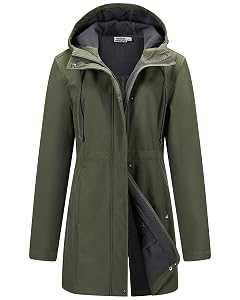
- Membrane: Waterproof mid-layer
- Lining: 144F micro fleece
- Hood: Fixed, with adjuster
- Pockets: Two outside zippered
This women’s softshell is a lightweight option for cool, wet days. A water-treated outer fabric, a waterproof membrane and a polyester lining work together to block rain while moving moisture away from the body. The micro fleece lining adds warmth without making the jacket bulky, which makes it practical for travel, walking and everyday wear.
A large adjustable hood, high collar and two-way front zip with interior storm flaps help block wind. The hideaway drawcord waist improves fit, and two roomy zippered pockets hold a phone, keys and passport securely. The brand notes that water may seep through the stitching in heavy rain, so this jacket suits light to moderate weather best, and the fixed hood cannot be removed.
Pros
- Warm but not bulky
- Roomy secure pockets
Cons
- Stitching may leak in heavy rain
- Hood is not removable
3. FREE SOLDIER Snow Jacket

- Waterproofing: 20K rating, taped seams
- Insulation: Fleece and cotton padding
- Pockets: Nine, including sleeve pass pocket
- Wind guard: Snow skirt, thumb-hole cuffs
The FREE SOLDIER jacket is a warm, insulated option for chairlift rides and cold commutes. Soft fleece lining and cotton padding retain body heat, and there is enough room for a thermal base layer underneath. The DWR-treated shell carries a 20K waterproof rating, and fully taped seams help block water at the stitching.
Wind protection is strong thanks to a snap-back snow skirt, drawcord hem, adjustable cuffs with thumb holes and a removable hood. Nine pockets, including a sleeve pass pocket, keep goggles, gloves and keys within reach. This is a warm insulated jacket rather than an ultralight shell, so choose your size based on the layers you plan to wear.
Pros
- High 20K waterproof rating
- Nine well-placed pockets
Cons
- Heavier than a shell
- Needs careful sizing
4. 33,000ft Rain Shell

- Waterproofing: 8000mm rating
- Breathability: 1000g/m²/24hr
- Layers: Softshell, TPU membrane, fleece
- Pockets: Five, including arm zip pocket
The 33,000ft jacket is a lightweight three-layer softshell made for changeable weather. The outer shell has a DWR finish that resists water, dirt and oil, while the TPU membrane and brushed fleece lining add protection and soft warmth. With an 8000mm waterproof rating, it handles rain and light snow well without feeling heavy.
Polyester blended with spandex gives a slight stretch, so it moves comfortably during hiking, running or cycling. The adjustable hood and hem and the ribbed cuffs block wind, and five pockets, including an arm zip pocket, store phones, wallets and gloves. It works best in spring and fall or as a mild winter layer, since the insulation is modest.
Pros
- Stretchy and lightweight
- Good breathability
Cons
- Modest insulation
- Lower waterproof rating
5. GEMYSE Ski Jacket

- Shell: Water-repellent, waterproof zippers
- Lining: Thick soft fleece
- Hood: Detachable storm hood
- Pockets: Five, with earphone fixture
The GEMYSE ski jacket combines a durable, wear-resistant shell with a thick fleece lining for cold-weather comfort. Waterproof zippers and pockets help keep moisture out, while the breathable fabric lets vapor escape during activity. Reinforced stitching suggests it can handle regular use for several seasons, and the relaxed fit allows unrestricted movement.
Wind protection comes from adjustable Velcro cuffs with thumb-hole gloves, a stand collar and a detachable storm hood with drawstring. Two hand pockets, a chest pocket and two internal pockets hold your phone, wallet and passport, and an earphone line fixture adds convenience. The listing calls the shell water-repellent rather than fully waterproof, so expect good but not extreme storm protection.
Pros
- Reinforced durable stitching
- Thoughtful pocket layout
Cons
- Water-repellent, not rated
- Relaxed fit may feel roomy
6. CAMEL CROWN Parka

- Waterproofing: 10,000mm index
- Zippers: Waterproof throughout
- Hood: Detachable
- Pockets: Five, waterproof chest zip
The CAMEL CROWN ski jacket offers a clear 10,000mm waterproof index, which suits resort skiing and wet snow. All zippers are waterproof, helping stop water from entering at common weak points. The fleece-lined parka design gives dependable warmth for cold mountain days, foggy mornings and wet commutes alike.
A detachable hood, adjustable hem and elastic cuffs seal openings against wind. The polymer blend shell resists scratches from rocks and branches, adding durability on rough trails. Five pockets, including a waterproof chest zip pocket and a large inner pocket, carry keys, a wallet and a phone. It is a solid mid-range performer, though it lacks the higher waterproof rating of some rivals.
Pros
- Waterproof zippers
- Scratch-resistant shell
Cons
- Mid-level waterproof rating
- Seam taping not mentioned
7. Yufawow Winter Jacket

- Weather: Windproof, water resistant
- Lining: Fleece body and collar
- Hood: Detachable, drawstring
- Pockets: Four zippered
The Yufawow jacket is aimed at people who need warmth for work, commuting and winter fun. A windproof shell with lotus-effect fabric repels light rain and snow, and a storm flap adds protection. The plush fleece lining and soft collar trap heat and keep cold wind away from your neck during long hours outdoors.
The 3D tailored cut allows free movement and creates a broad-shouldered silhouette, and the SBS zippers are tested for thousands of cycles. A removable hood with drawstrings adds flexible coverage, and four zippered pockets secure your phone, wallet and goggles. It is water resistant rather than fully waterproof, so it is better for light snow than heavy rain.
Pros
- Warm fleece collar
- Versatile for work and play
Cons
- Not fully waterproof
- Only four pockets
How to Choose a Waterproof Winter Jacket
Choosing the right jacket starts with knowing where and how you will wear it. A jacket for resort skiing differs from one for daily commuting or outdoor work. The seven jackets reviewed above cover different ratings, insulation levels and features, so understanding the basics will help you narrow down the best match for your needs and budget.
Understand Waterproof Ratings
Waterproof ratings are measured in millimeters and show how much water pressure the fabric can withstand before it leaks. A higher number means better protection, but it often comes with reduced breathability. Match the rating to the weather you expect rather than simply buying the highest number available.
Rating Guide
| Rating | Protection | Best For |
|---|---|---|
| 5,000–8,000mm | Light rain and dry snow | Commuting, spring and fall hikes |
| 10,000mm | Moderate rain and wet snow | Resort skiing, general winter use |
| 15,000–20,000mm | Heavy rain and wet snow | Long storms, demanding mountain days |
For example, the 33,000ft jacket has an 8000mm rating, the CAMEL CROWN offers 10,000mm and the FREE SOLDIER reaches 20K. These numbers make it easy to compare how each jacket is likely to handle wet conditions.
Seams and Zippers
Even a high-rated fabric can leak where it is stitched. Look for taped seams and waterproof zippers, as these are the most common weak points. Fully taped seams, like those on the FREE SOLDIER, add real protection in wet snow, while waterproof zippers, like those on the CAMEL CROWN, stop water from creeping through the closure.
- Taped or sealed seams
- Waterproof or covered zippers
- Storm flaps behind the main zipper
- Weather-resistant pocket zips
Water Resistant or Waterproof
Water-resistant fabric sheds light rain or snow but can soak through in sustained wet weather. The Yufawow and GEMYSE are examples of water-repellent designs that suit lighter conditions. If you ski in wet snow or face heavy rain, choose a jacket with a stated waterproof rating instead.
Insulation and Warmth
Fleece-Lined Jackets
Fleece lining is soft, breathable and light. It works well for active use such as hiking, cycling and skiing, where you generate your own body heat. The Outdoor Ventures and 33,000ft jackets use fleece to add warmth without bulk, which keeps movement easy.
Padded Jackets
Padded insulation, such as the cotton padding in the FREE SOLDIER, traps more heat for standing around in the cold. It suits chairlift rides, outdoor work and very cold climates, though the jacket will be heavier and bulkier than a fleece-lined shell.
Breathability
A jacket that traps sweat can leave you cold and damp. Check for a breathability rating, such as 1000g/m²/24hr, or fabrics designed to move moisture vapor outward. Breathability matters most for high-energy activities like hiking and cycling.
Fit and Layering
Fit affects both warmth and mobility. Allow room for a base layer and a midlayer, but avoid a size so large that cold air circulates inside the jacket. Always read the size chart, because insulated jackets can fit differently from lightweight shells.
- Check the size chart against your chest and shoulder measurements
- Test arm movement with your layers on
- Consider jacket length for extra hip and thigh coverage
- Leave space for thermal base layers
Wind Protection and Hoods
Hood Design
A detachable hood offers flexibility, as seen on the TACVASEN, GEMYSE, CAMEL CROWN and Yufawow. A fixed hood, like the one on the Outdoor Ventures, stays in place and often pairs with a higher collar. Whichever you choose, adjustable drawstrings help seal out wind and snow.
Cuffs, Hem and Snow Skirt
Adjustable cuffs, drawcord hems and snow skirts stop cold air and snow from entering. Thumb holes add extra wrist coverage under gloves. These details matter most for skiing and snowboarding, where falls and fast descents expose gaps in the jacket.
Pockets and Practical Features
Secure pockets matter on the slopes, where items can fall out easily. The FREE SOLDIER offers nine pockets, while the 33,000ft keeps things simpler with five. Think about what you carry daily and choose a layout that suits it.
- Zippered hand pockets for warmth and security
- Chest pocket for a phone or lift pass
- Internal pockets for wallets and passports
- Mesh pocket for goggles or gloves
Match the Jacket to Your Activity
| Activity | Key Features | Good Match |
|---|---|---|
| Resort skiing | High waterproof rating, snow skirt, taped seams | FREE SOLDIER, CAMEL CROWN |
| Hiking and trails | Breathable, lightweight, stretch | 33,000ft, Outdoor Ventures |
| Daily commuting | Wind protection, warm lining, secure pockets | GEMYSE, Yufawow |
| Casual snow days | Comfort, detachable hood, simple design | TACVASEN |
Care and Durability
Proper care keeps waterproof fabric performing season after season. Dirt and body oils can reduce water repellency, so regular cleaning helps. Follow the label instructions and refresh the water-repellent finish when water stops beading on the surface.
- Wash with a gentle technical detergent
- Avoid fabric softener, which clogs the fabric
- Reapply a DWR treatment when needed
- Dry according to the care label
Final Checklist
- Pick a waterproof rating that matches your weather
- Look for taped seams and waterproof zippers
- Choose fleece for active use and padding for static cold
- Confirm the hood style suits your needs
- Check pocket count and placement
- Size up carefully to fit your layers