Best Budget Winter Sleeping Bags of 2026
A sleeping bag is a huge financial investment for outdoor adventures, so getting a good bag at a fair price is important. Your bag should keep you warm, and cozy, and provide essential features for sleeping in the backcountry because nothing can beat a good night’s sleep under the stars. Also, your bag is one of the three major weight-saving choices in your backpack. A typical mummy bag can weigh around 3 to 5 pounds while lightweight bags weigh less than 2 pounds. You can also get a lightweight bag and increase the warmth by bringing a lightweight liner or wearing a jacket and long johns while you sleep.
1. Kelty Cosmic

- Shell: Nylon outer
- Temp Rating: 0°F (Regular)
- Weight: Total 4 lbs 6 oz; fill 55 oz
- Pack Size: 17 x 11 in (non-compressed), integrated compression sack
The Kelty Cosmic balances solid cold-weather performance with trail-friendly features. The Cirroloft synthetic insulation lofts well when damp, so it’s a practical choice if you expect wet nights or mixed conditions. The natural-fit footbox and length options make it surprisingly comfortable for restless sleepers who want a bit more room than a tight mummy bag, and the exterior stash pocket is a thoughtful touch for small overnight essentials.
On the trail the Cosmic packs down better than many synthetics thanks to the integrated compression sack, and the listed trail weights (varying by temp rating) show Kelty tuned this bag for backpacking as well as car camping. Build quality is solid — zippers, baffling and materials feel durable without adding needless bulk. If you want a dependable, easier-to-care-for winter bag that won’t choke on dampness, the Kelty Cosmic is a strong, no-nonsense option.
Pros: Reliable synthetic loft when wet; roomy footbox; integrated compression sack; durable build.
Cons: Heavier than down options; non-compressed size larger than ultralight bags.
2. Marmot Trestles Elite Eco

- Insulation: ElixR Eco synthetic, 100% recycled
- Temp Rating: 0°F (Tested Lower Limit ISO)
- Shell/Lining: 100% postconsumer recycled polyester
- Packing: Compression stuff sack; compressed volume ~20–21 L
The Marmot Trestles Elite Eco blends ethical materials with dependable cold-weather performance. The recycled ElixR Eco fill delivers high loft and a soft feel while still compressing reasonably for backpacking. Marmot’s dual-zipper layout (full-length left plus short right for ventilation) and the combination of wave- and blanket-construction make it versatile for side sleepers and those who like more room on top without losing insulation underneath.
ISO testing gives confidence in the 0°F rating and the included internal stash pocket and antisnag sliders are useful details. The bag is a touch heavier than minimalist options, but that weight buys durability, recycled fabrics, and a plush sleep experience. If you want a warm, eco-conscious 0°F bag that performs consistently in damp or cold conditions, the Trestles Elite Eco is a thoughtful pick.
Pros: Fully recycled materials; reliable ISO-tested rating; comfy loft and ventilation options.
Cons: Heavier than down alternatives; larger compressed volume than ultralights.
See the Marmot Trestles Elite Eco
3. Klymit Wild Aspen
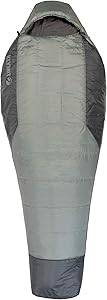
- Shell: Water- and abrasion-resistant micro polyester
- Temp Rating: Rated to 20°F (three-season/cold-weather)
- Insulation: Dual-layer Thermapro synthetic fill
- Pack Size: Compression sack to ~15 x 8 x 8 in
The Klymit Wild Aspen is a capable three-season bag that leans into durability and practical features. The water- and abrasion-resistant shell holds up on rough trails and in damp conditions, while the dual-layer Thermapro fill gives even warmth without big cold spots. It’s a sensible choice for campers who want a durable, budget-friendly bag for shoulder seasons and mild winter nights.
The adjustable deep-pocket hood and zipper draft tube do a good job keeping drafts at bay, and the included compression sack makes stowing straightforward. It won’t replace a heavy-duty 0°F mountaineering bag, but for backpackers who need dependable performance down to about 20°F, the Wild Aspen offers a balanced mix of comfort, protection, and packability at a fair price.
Pros: Durable shell; good wet-weather performance; adjustable hood; compact sack.
Cons: Not designed for extreme cold; heavier than ultralight options for same warmth.
4. Coleman North Rim
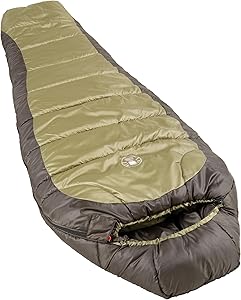
- Temp Rating: 0°F (-18°C) cold-weather rating
- Fit: Big & Tall up to 6 ft. 2 in
- Insulation: Coletherm hollow polyester fill with Thermolock draft tube
- Shape: Mummy with adjustable hood and no-snag zipper
The Coleman North Rim is a classic, budget-friendly cold-weather mummy bag built for big-and-tall campers. Its Thermolock draft tube and Coletherm hollow-fiber fill hold heat effectively, and the adjustable hood lets you dial warmth and ventilation. For car campers, hunters, or weekend adventurers who need a reliable, roomy bag that won’t break the bank, it hits the mark.
Construction feels practical rather than premium — zippers and materials are built for regular use and predictable performance. It’s heavier and bulkier than lightweight backpacking bags, but that’s expected for its price and intended audience. If you want a straightforward, warm sleeping bag for very cold conditions without paying for ultralight performance, the North Rim is a sensible, comfortable option.
Pros: Affordable; roomy for tall sleepers; effective draft control; durable for car camping.
Cons: Heavy for backpacking; bulkier compressed size.
5. rioyalo Winter Sleeping Bag
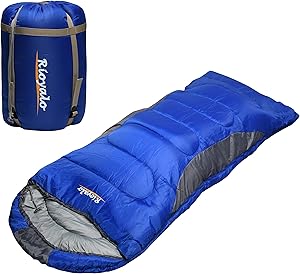
- Material: 100% microfiber shell and 190T Pongee lining
- Temp Range: Rated 5°F–32°F (Comfort 32°F, Extreme 5°F)
- Weight & Pack: 5 lbs; packed ~15.6 x 7.6 in
- Fit: Extra-long up to 6’10” (7.2 ft) and wide 30.7 in
The rioyalo Winter Sleeping Bag is a roomy, all-season utility bag that prioritizes comfort and size. Its 450GSM microfiber fill and soft pongee lining make it feel plush and hotel-like — ideal for taller users or campers who value space over minimalist weight. The bag’s machine-washable construction and included compression sack add everyday practicality for travel and family camping trips.
Temperature claims span a wide range and will depend on individual tolerance, but the heavy fill and ripstop shell do provide reassuring insulation for colder nights. It’s heavy for backpacking but shines as a warm, spacious choice for car camping, festivals, or indoor sleepovers where comfort and easy care matter most.
Pros: Very spacious and long; machine-washable; warm and cozy fill; durable ripstop shell.
Cons: Heavy for backpacking; compresses less than technical bags.
See the rioyalo Winter Sleeping Bag
6. TETON Sports Deer Hunter

- Shell: Heavy-duty canvas shell (Teton Tough)
- Insulation: Double-layer fiber fill with draft tubes
- Lining: Soft poly-flannel interior for comfort
- Access: Zippers on each side for temp control
The TETON Sports Deer Hunter is built like a field-ready workhorse: thick canvas shell, cozy flannel lining, and a durable double-layer construction that stands up to heavy use. It’s one of those bags you pick for reliability in basecamp, hunting camps, and rugged outdoor work where longevity and warmth matter more than minimal weight.
Warmth is consistent thanks to the fiber fill and draft control, and the half-circle mummy hood plus side zippers give flexible ventilation and access. It’s not a backpacking bag — it’s intentionally heavy — but if you want a comfortable, warm, and very durable sleeping bag that will last seasons of rough handling, the Deer Hunter is a trustworthy pick.
Pros: Extremely durable canvas shell; warm flannel lining; robust construction; good draft control.
Cons: Heavy and bulky; not suited for backpacking.
See the TETON Sports Deer Hunter
7. Bessport Mummy Sleeping Bag

- Material: 210T ripstop polyester shell, polyester taffeta liner
- Fit: Fits adults ~6’1″–6’6″ (shoulder girth ~63″)
- Weight & Pack: ~1.62 kg / 3.6 lbs; packed ~14.5 x 11 in
- Features: Drawstring hood, insulated footbox, SBS double zippers
The Bessport Mummy offers a tidy balance of warmth, weight, and affordability for car campers and casual backpackers. The ripstop shell provides water resistance and abrasion protection, while the quilted construction and insulated footbox help retain heat where you need it most. The drawstring hood and double zippers make temperature control simple and effective.
It’s lightweight enough to toss into a weekend pack for those who don’t obsess over grams, and the included stuff sack makes storage convenient. For cooler three-season use or as a budget winter option in milder climates, the Bessport is a practical, user-friendly bag that performs reliably without frills.
Pros: Good value; water-repellent ripstop shell; comfortable fit for tall users; lightweight for warmth offered.
Cons: Not for extreme cold; materials feel budget-grade compared to premium bags.
See the Bessport Mummy Sleeping Bag
8. Teton Sports Celsius

- Lining: Soft poly-flannel interior
- Insulation: Innovative fiber fill with double-layer construction
- Packing: Durable compression sack included
- Shape: Half-circle mummy-style hood for warmth
The Teton Sports Celsius is aimed at campers who prize comfort and roominess over ultralight specs. The plush poly-flannel lining feels like sleeping on a soft sheet and the double-layer fiber fill with draft tubes does a solid job keeping warmth trapped. The half-circle hood and roomy cut make it a comfortable night’s sleep for side and back sleepers alike.
It packs down respectably given its construction, and the included compression sack keeps trips tidy. This bag is a favorite for family camping, cold-weather car camping, and anyone who wants a warm, forgiving sleep system without the fuss of high-end technical insulation.
Pros: Very comfortable flannel lining; reliable warmth; easy to pack; good value.
Cons: Bulkier than technical bags; heavier for backpacking use.
How to Choose Budget Winter Sleeping Bags
Choosing a winter sleeping bag on a budget can be tricky, especially when you’re balancing warmth, comfort, and price. The right sleeping bag can make the difference between a restful night under the stars and a cold, sleepless ordeal. Fortunately, with careful consideration of key factors like insulation, shape, materials, and packability, you can find an affordable bag that still performs well in cold conditions. This guide walks you through everything you need to know about choosing a cheap winter sleeping bag without compromising on warmth or reliability.
Understanding Temperature Ratings
Temperature ratings are your first clue to how warm a sleeping bag will keep you. Most winter bags are rated for 0°F (-18°C) or lower. Budget bags might not always have official ISO or EN testing, so it’s wise to read user reviews or err on the side of caution by choosing a lower rating than you think you need. For instance, if you expect lows of 15°F, opt for a bag rated to 0°F. Remember that ratings are based on an average person wearing base layers and using an insulated pad — your personal comfort level may vary depending on metabolism, weather, and clothing.
Comfort vs. Limit Ratings
Some bags list multiple ratings such as “comfort,” “limit,” and “extreme.” The comfort rating is the temperature at which an average sleeper can rest comfortably, while the limit rating indicates the lowest temperature an average person can tolerate without shivering. The extreme rating, often 10–15°F lower, represents survival conditions rather than comfort. For most budget-conscious buyers, focusing on the comfort and limit ratings will give a realistic picture of warmth.
Choosing the Right Insulation Type
The two main insulation types are down and synthetic. Each has distinct advantages, and your choice will depend on how you prioritize cost, weight, and moisture resistance.
Down Insulation
Down is known for its excellent warmth-to-weight ratio and compressibility. However, high-quality down bags can be expensive, and down loses insulating power when wet. If you camp mostly in dry, cold conditions and can afford a mid-range model, down may still be worthwhile. But for most budget buyers, synthetic insulation offers better value and versatility.
Synthetic Insulation
Synthetic fills, like polyester or proprietary blends such as Kelty’s Cirroloft or Marmot’s ElixR Eco, retain warmth even when damp and are easier to care for. They dry faster, cost less, and still provide reliable warmth for most winter conditions. While synthetic bags are typically bulkier and heavier, modern versions have improved packability and thermal efficiency. If you camp in wet or unpredictable weather, synthetic insulation is the smarter budget choice.
Material and Construction
The outer shell and inner lining materials significantly affect durability, comfort, and water resistance. Affordable sleeping bags usually use polyester shells, sometimes with ripstop weaves for added toughness. A durable water-repellent (DWR) coating can help prevent light moisture from soaking through, though it won’t replace a waterproof bivy or tent.
Outer Shell
Look for polyester or nylon shells with at least 190T or higher denier counts for durability. Ripstop fabrics resist tearing, making them ideal for repeated use in rough conditions. Avoid overly thin materials if you plan to use the bag directly on hard or rocky ground.
Lining
The lining determines how the bag feels against your skin. Soft polyester taffeta or pongee linings offer smooth comfort, while flannel linings feel warmer and cozier, especially in car-camping setups. Though flannel adds weight, it’s ideal for those prioritizing comfort over packability.
Shape and Fit
The shape of a sleeping bag influences both warmth and comfort. Winter bags typically come in three main shapes: mummy, semi-rectangular, and rectangular.
Mummy Bags
Mummy bags are designed to minimize heat loss by hugging your body closely. They feature a tapered design with a snug footbox and an insulated hood, making them the warmest and most efficient choice for winter camping. However, they can feel restrictive for side sleepers or those who like to move around.
Semi-Rectangular and Rectangular Bags
Semi-rectangular or hybrid designs offer a balance between warmth and comfort. They give a bit more space to move without allowing too much cold air circulation. Rectangular bags provide the most room but are less efficient in retaining heat, making them more suitable for milder winter nights or indoor use.
Weight and Packability
For backpackers, weight and pack size are major considerations. Down bags pack smaller but cost more, while synthetic bags take up more space but are affordable and resilient. Check the “stuff size” or “compressed volume” in product details — inexpensive winter bags typically pack down to about 15–20 liters. Compression sacks help minimize bulk, though stuffing rather than rolling your bag preserves insulation longevity.
Trail Weight vs. Total Weight
Manufacturers sometimes list both total weight and trail weight. Total weight includes stuff sacks and accessories, while trail weight refers to the bag itself. When comparing models, make sure you’re using the same measurement type to avoid confusion.
Important Features to Look For
Even cheaper sleeping bags can include useful features that enhance comfort and performance. Knowing which ones matter can help you get the best value for your money.
Draft Tubes and Collars
Draft tubes run alongside the zippers to prevent heat from escaping through gaps. Some bags also include draft collars around the neck area to block cold air from entering. These small details can make a noticeable difference in subfreezing temperatures.
Adjustable Hood
A well-fitted hood traps heat effectively around your head, one of the body’s most significant heat-loss areas. Look for bags with adjustable drawstrings or contoured hoods to keep warmth in without feeling suffocated.
Two-Way Zippers
Two-way zippers allow better ventilation and make it easier to get in and out of the bag. Some models even feature zippers on both sides for added flexibility. A snag-free or anti-snag design helps prevent fabric from catching during use.
Stash Pockets
Interior or exterior stash pockets let you store small essentials like a phone, headlamp, or hand warmers close at hand. It’s a minor feature but one that adds noticeable convenience during cold nights.
Durability and Maintenance
Sleeping bags need to last through multiple seasons of use. Look for reinforced stitching and robust zippers like SBS or YKK. Synthetic bags are easier to clean — many are even machine-washable on gentle cycles. After each trip, air your bag thoroughly and store it loosely in a large sack or hung up to preserve loft.
Matching the Bag to Your Use
Think about where and how you’ll use your sleeping bag most often. For car camping, weight and bulk don’t matter as much, so comfort and space can take priority. In contrast, for backpacking or alpine trips, packability and insulation performance become more critical.
Car Camping and Festivals
If you camp near your vehicle or use your bag for occasional winter getaways, comfort and affordability should guide your choice. Flannel-lined or extra-wide models like the Teton Sports Celsius are excellent value picks for this use case.
Backpacking and Hiking
When hiking in cold environments, a lightweight synthetic mummy bag is the best balance between warmth and portability. Look for models that include compression sacks and weigh under 5 lbs to keep your load manageable.
Price and Value
Affordable winter sleeping bags generally range between $60 and $150. Spending closer to the higher end often gets you improved stitching, higher-quality insulation, and longer lifespan. However, many affordable models from brands like Kelty, Coleman, or Teton Sports offer excellent warmth for the money. Don’t just buy based on the lowest price — consider warmth, comfort, and durability together to find the best long-term value.
Final Thoughts
Choosing the cheapest winter sleeping bag doesn’t mean settling for poor quality. By focusing on practical insulation, reliable temperature ratings, and thoughtful design features, you can stay warm and comfortable without spending a fortune. Synthetic insulation remains the most cost-effective choice for cold, damp environments, while durable materials and smart construction can stretch your investment across many seasons. Whether you’re camping in the backcountry or setting up near your car, the right bag will ensure every winter night outdoors feels cozy, secure, and well worth the trip.