
Best Snowshoeing Pants of 2027
Finding the right pants for snowshoeing can make your winter adventure much more fun. You need pants that keep you warm and dry but don’t make you too hot. The best snowshoeing pants are comfortable, flexible, and made for cold weather. In this article, we will look at the best snowshoeing pants to help you choose the perfect pair for your next trip into the snow.
1. Wespornow Men’s Fleece-Lined Hiking Pants

- Pockets: 4, including slant, back zipper and thigh
- Outer Fabric: water-resistant, scratch-resistant polyester
- Inner Layer: heat-storing softshell
- Knees: articulated design
These Wespornow pants are built for cold outdoor days. A water-repellent outer shell is paired with a softshell inner that stores heat well. The polyester face resists scratches and pilling, so the pants hold up on trails and slopes, while the coating sheds rain and snow and cuts the wind without hurting breathability.
Four pockets, including a reinforced right thigh pocket, keep essentials secure. The articulated knees give a flexible, comfortable fit through wide movements. They suit skiing, snowboarding, hiking and general adventure use, though the water resistance is meant for light wet weather rather than heavy downpours.
- Pros: warm softshell interior, windproof, durable fabric, flexible knees
- Cons: water resistant rather than fully waterproof, only four pockets
2. Toomett Men’s Hiking Snow Pants

- Shell: 94% nylon, 6% spandex
- Lining: 100% polyester polar fleece
- Pockets: 5 zippered pockets
- Knees: articulated stretch design
The Toomett men’s snow pants use a stretchy nylon and spandex softshell with a soft polar fleece lining. The water-resistant finish sheds rain and snow and reduces wind chill, while the fleece wicks moisture and holds warmth. The result is a comfortable layer that stays breathable during active winter outings.
Five zippered pockets hold a phone, wallet, keys and small gear securely. Articulated knees and the stretch fabric allow free movement when climbing, kneeling or skiing. These pants suit hunting, camping, hiking, cycling and snowboarding, but the finish is water repellent, so they are not ideal for prolonged soaking rain.
- Pros: stretchy fabric, plenty of zippered storage, warm fleece lining, wind resistant
- Cons: not fully waterproof, may feel warm in mild weather
3. Wespornow Women’s Fleece-Lined Hiking Pants

- Lining: soft premium fleece
- Outer Layer: water-repellent, windproof coating
- Pockets: front slant, back zipper, large zipped thigh
- Knees: special flexible design
The Wespornow women’s pants combine a soft fleece lining with a water-repellent, windproof outer layer. The fleece feels gentle on the skin and traps heat effectively. The fabric also stays light, so it doesn’t feel clingy or heavy when you sweat, which helps during active winter days.
Large, secure pockets keep small items safe, including a roomy zipped thigh pocket. The knee design allows full mobility without bunching, so the pants fit comfortably when walking, bending or climbing. They work well for hiking, skiing and snowboarding, although the coating handles light rain and snow better than a heavy storm.
- Pros: soft warm fleece, breathable, roomy pockets, comfortable knee fit
- Cons: water resistant only, limited details on insulation weight
4. Toomett Women’s Snow Pants

- Outer Shell: stretch spandex softshell
- Lining: soft polar fleece
- Pockets: 3 secured zipper pockets
- Knees: articulated for flexibility
These Toomett women’s snow pants pair a stretchy softshell exterior with a skin-friendly polar fleece lining. The coated surface repels rain and snow and blocks wind, while the fleece wicks moisture and keeps warmth in. The combination keeps you comfortable and fairly dry through cold-weather activities.
Three zippered pockets keep a phone, wallet and keys secure while you move. Articulated knees and the spandex stretch give plenty of flexibility for hiking, climbing, cycling or skiing. They are a practical winter option for travel and camping, though the three pockets offer less storage than some competing pairs.
- Pros: warm fleece interior, stretchy fit, windproof surface, secure zippers
- Cons: only three pockets, water repellent rather than fully waterproof
5. BenBoy Women’s Snow Pants

- Material: 92% polyester, 8% spandex
- Fit: slim fit with adjustable waistband and belt
- Pockets: multiple zippers, including thigh cargo pockets
- Knees: patchwork with steric darts
The BenBoy women’s hiking pants use a polyester and spandex blend with a fleece lining. The fabric is described as windproof, abrasion resistant and non-pilling, and the water-repellent finish helps you stay warm and dry in cold, breezy conditions. The slim cut gives a stylish look without feeling restrictive.
Multiple zippered pockets, including cargo pockets on the thighs, keep your phone, keys and cards secure. The adjustable waistband with a belt lets you fine-tune the fit, and the patchwork knees with darts support movement. They suit hiking, camping, skiing and ice sports, though the slim fit may feel snug over thick base layers.
- Pros: stylish slim cut, adjustable waist with belt, secure zipper pockets, fleece warmth
- Cons: slim fit may limit layering, water repellent rather than fully waterproof
6. TACVASEN Men’s Winter Hiking Pants

- Fabric: polyester softshell with fleece lining
- Pockets: 6 zippered pockets
- Cut: 3D cut with side-adjustable waistband
- Closure: zipper fly with metal button
The TACVASEN winter hiking pants use a polyester softshell with a fleece lining that locks in heat and wicks moisture. The windproof design blocks cold air, and the waterproof-coated surface keeps rain and snow from soaking through. That makes them a dependable choice for low temperatures and wintry outings.
Six zippered pockets give you generous, secure storage, with two hand pockets, two thigh pockets and two rear pockets. The 3D cut supports free movement, while the side-adjustable waistband and metal button closure make for a secure, durable fit. They suit hiking, skiing, snowmobiling, hunting and work, though the fleece may be too warm for milder days.
- Pros: six secure pockets, windproof, adjustable waist, durable closure
- Cons: can run warm, coating is not a true waterproof membrane
7. FREE SOLDIER Men’s Softshell Pants

- Shell: 94% polyester, 6% spandex
- Lining: 100% polyester polar fleece
- Pockets: 4, two zippered and two hook-and-loop
- Zipper: self-locking YKK with metal closure
The FREE SOLDIER softshell pants pair a windproof outer shell with a warm polar fleece lining for dependable cold-weather comfort. The surface is water repellent and features seam-sealed construction, while the fabric stays breathable and moves moisture away during strenuous activity. The stretchy polyester blend supports bends and squats.
Four cargo pockets keep a phone, wallet, keys and small tools within reach, and the elastic waistband gives a snug yet relaxed fit. The scratch and tear-resistant fabric holds up to heavy-duty work as well as skiing, hiking and hunting. The regular fit leaves room for layers, but the pockets are fewer than on some rivals.
- Pros: seam-sealed build, YKK zipper, stretchy durable fabric, warm lining
- Cons: only four pockets, fleece may feel heavy in mild weather
8. Gash Hao Men’s Snow Pants

- Exterior: waterproof, windproof quick-drying softshell
- Lining: granule fleece
- Leg Openings: zippered bottoms to fit over boots
- Pockets: zippered front, rear and two large side pockets
The Gash Hao pants have a quick-drying softshell exterior and a granule fleece lining that adds warmth. Zippers at the bottom of each leg let you fit the pants over boots and keep snow and cold out, which is a useful touch for skiing and hiking. A special film at the knees blocks wind and water.
The adjustable stretchy waist offers a comfortable fit, and the zippered front, rear and large side pockets keep valuables secure, with plush inner fabric to avoid cold from the metal zipper. The seller notes they can keep you dry in rain for roughly 10 to 15 minutes, so they suit snow and light wet weather better than prolonged downpours.
- Pros: zippered leg bottoms, wind-blocking knees, plenty of pockets, warm fleece
- Cons: limited time in rain, waterproof claim is modest
9. TBMPOY Men’s Snow Hiking Pants
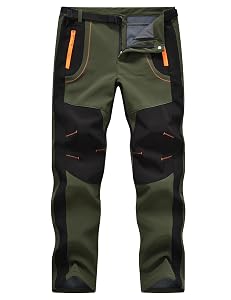
- Material: 92% polyester, 8% spandex
- Waist: adjustable with included belt
- Knees: flexible 2D cut
- Lining: fleece for warmth
The TBMPOY snow pants are made from a polyester and spandex blend that is water resistant and windproof in cold, drizzly weather. The fleece lining keeps you warm, and there is room to add another layer for extra insulation. According to the seller, the fabric can keep you dry for about 10 to 15 minutes in light rain.
An included belt and adjustable waistband let you set the fit freely, while the 2D knee cut allows stretchy movement without restriction. Multiple zipper pockets hold a phone, keys and cards safely while skiing or biking. These pants suit snow fishing, hunting, camping and everyday winter wear, though they are best for light moisture rather than heavy rain.
- Pros: belt included, fleece warmth, stretchy knees, secure zipper pockets
- Cons: limited rain protection, pocket count not specified
10. Heathyoga Snow Pants Women’s

- Construction: 3-layer waterproof, windproof fabric
- Interior: soft fleece for warmth without bulk
- Pockets: 3, two side and one leg, with YKK zippers
- Ankles: zipper openings with scratch-resistant Oxford cloth
The Heathyoga ski pants use a three-layer structure that is waterproof, windproof and heat retaining, with a buttery-soft fleece interior that adds warmth without bulk. A semi-sealed build helps keep out snow, wind and water. Ankle zipper openings make boots easy to wear, and an inner foot windproof layer helps block snow and cold.
Two large side pockets and a leg pocket with durable YKK zippers store essentials securely. The 3D-cut mid-waist, elastic belt and reinforced knee fabric give a snug fit that does not feel tight during stretches. They are well suited to downhill skiing, snowboarding, mountaineering and hiking, though three pockets is on the lower side for a ski-focused pair.
- Pros: three-layer weather protection, boot-friendly ankle zips, durable YKK zippers, not bulky
- Cons: only three pockets, may be too warm for milder conditions
11. MAGCOMSEN Men’s Fleece Lined Winter Pants

- Lining: upgraded fleece
- Outer Layer: water-repellent finish
- Pockets: 3, two side zippers and one back zipper
- Waist: elastic with inner drawstring
The MAGCOMSEN winter pants blend sweatpant comfort with cold-weather function. The upgraded fleece lining keeps you cozy through winter, spring and fall, while the water-repellent outer layer repels light rain, snow and moisture. The soft, stretchy fabric supports free movement and feels comfortable all day, whether you are active or relaxing.
Two side zipper pockets and one back zipper pocket protect valuables during exercise, and the elastic waistband with inner drawstring offers a customizable fit. These pants are a good match for cold-weather running, workouts, hiking, jogging and dog walks. Because they are closer to sweatpants than technical snow gear, they are less suited to deep snow or heavy wet conditions.
- Pros: soft stretchy fabric, secure zipper pockets, adjustable waist, versatile daily wear
- Cons: only light water repellency, not true snow pants
12. TACVASEN Women’s Fleece Lined Hiking Pants

- Fabric: 92% polyester, 8% spandex
- Closure: button
- Rise: mid rise
- Leg Style: straight
The TACVASEN women’s hiking pants are designed for cold-weather outings, with a fleece-lined interior and a windproof softshell exterior. The polyester and spandex blend adds stretch for comfortable movement, while the fleece helps trap body heat on chilly days. They are aimed at winter hiking, snow activities and everyday outdoor use.
The mid-rise waist and straight leg give a classic, easy-to-style silhouette that works over base layers, and the button closure keeps the waist secure. Zipper pockets provide safe storage for small items while you are on the move. The listing offers limited detail on waterproofing and pocket count, so check the full product page if those matter most to you.
- Pros: fleece warmth, windproof softshell, stretchy blend, zipper pockets
- Cons: limited product detail, waterproof performance not specified
How to Choose Snowshoeing Pants
Snowshoeing is a wonderfully accessible winter activity, but it presents a unique clothing challenge. Unlike downhill skiing, which involves periods of intense exertion followed by freezing chairlift rides, snowshoeing is a steady, aerobic pursuit. You will generate a significant amount of body heat as you break trail or ascend a snowy slope, yet you are still surrounded by freezing temperatures and deep snow. Choosing the right pants is a balancing act between protection from the elements and the critical need for breathability. The wrong pair can leave you soaked in sweat and dangerously cold, while the right pair will keep you comfortable and dry all day long.
To help you navigate the options, this guide breaks down the essential factors to consider, from fabric technology to fit and features, ensuring your next winter outing is a comfortable one.
Understand the Core Dilemma: Breathability vs. Waterproofing
The most common mistake snowshoers make is assuming they need the same heavy, fully waterproof pants they might wear for a rainy day or a resort ski day. While waterproof fabric blocks external moisture (like snow), it can also trap internal moisture (your sweat). Because snowshoeing is highly aerobic, you are far more likely to get wet from the inside out than from the outside in.
Therefore, the ideal snowshoeing pant strikes a balance. You need enough weather resistance to handle brushing against snowy branches or a sudden flurry, but you also need enough breathability to let your body’s heat escape. For most conditions, a softshell pant with a Durable Water Repellent (DWR) finish is a superior choice to a fully waterproof hard shell. Softshell fabrics are naturally more breathable and stretchy, moving with you as you hike. If you run exceptionally cold or plan to snowshoe in wet, coastal snow, a lightweight waterproof/breathable shell pant can work, but you must be diligent about managing your layers underneath.
Key Features to Look For
Beyond the fabric, the construction details of a pant make a significant difference in your comfort on the trail. When evaluating a pair of pants, pay close attention to the following features.
Gaiters and Cuffs
Snowshoes kick up a lot of snow, and without proper protection, that snow will end up in your boots. Most purpose-built snowshoeing and ski pants include integrated internal gaiters—an elasticized cuff that fits snugly over your boot to seal out snow. Additionally, look for reinforced cuffs or “scuff guards” on the inside of the lower leg. These durable patches protect the pant fabric from abrasion caused by your snowshoes, crampons, or boot buckles. Some pants also feature a gusseted, zippered ankle that allows you to expand the leg opening to fit over bulky winter boots easily.
Ventilation
Because snowshoeing generates so much heat, ventilation is not a luxury—it is a necessity. Look for pants with zippered vents, typically located on the inner or outer thigh. These vents allow you to dump excess heat quickly during a steep climb without having to stop and remove layers. Even a small vent can make a significant difference in regulating your core temperature.
Articulation and Fit
You will be lifting your knees high to step over snow and breaking trail, so your pants need to move with you. Look for pants with articulated knees—a design where the fabric is cut and sewn to mimic the natural bend of your leg. This prevents the fabric from pulling tight across your kneecap when you step up. The overall fit should be athletic but not restrictive. You want enough room to wear a base layer underneath comfortably, but not so baggy that the fabric bunches up or gets caught in your snowshoe bindings. A gusseted crotch is another feature that enhances mobility and durability.
Insulation: To Insulate or Not to Insulate?
This is perhaps the most personal decision you will make. Your choice depends entirely on how cold you run, the intensity of your planned hike, and the expected temperatures.
| Pant Type | Best For | Pros | Cons |
|---|---|---|---|
| Uninsulated Softshell | Active snowshoers who run warm; mild to moderate winter temperatures (20°F to 35°F). | Maximum breathability, versatile (can add layers), excellent mobility. | Insufficient warmth for very cold, stationary, or low-exertion days. |
| Lightly Insulated | Those who chill easily; cold winter temperatures (0°F to 20°F); moderate exertion. | Good balance of warmth and breathability; comfortable without extra layers. | Can be too warm during intense climbs; less versatile than shells. |
| Heavily Insulated | Extremely cold conditions (below 0°F); very low-exertion activities; those who always feel cold. | Maximum warmth; ideal for standing around or very slow paced activities. | Often too hot for active snowshoeing; bulky and restrictive; poor breathability. |
If you are new to the sport, an uninsulated or very lightly insulated softshell is the most versatile starting point. You can always add a warm base layer (like merino wool long underwear) on colder days. If you tend to run cold or plan to do more stopping and wildlife watching than trail breaking, a lightly insulated pant is a sensible choice. Heavily insulated “resort” ski pants are generally overkill for snowshoeing and will likely leave you overheated and clammy.
Fabric and Durability
Snowshoeing can take you through varied terrain, from groomed trails to dense forests with snagging branches. Your pants need to withstand abrasion. Nylon and polyester blends with a bit of spandex (for stretch) are the standard for winter activewear. These synthetic fabrics are durable, dry quickly, and resist pilling. Avoid cotton at all costs; as the saying goes, “cotton kills.” It absorbs moisture and loses all insulating value when wet, which can be dangerous in a winter environment.
Higher-end pants may feature tougher fabrics at the cuffs and knees. For example, some brands use Cordura or ballistic nylon reinforcements in high-wear areas to prevent premature wear from crampons or rocky scrambles. While these features add cost, they significantly extend the life of the pant if you are hard on your gear.
Pockets and Other Details
While not as critical as fabric or fit, thoughtful details can improve your experience. Zippered hand pockets are essential for securely storing small items like a map, a snack, or a phone. Note that if you plan to use your phone in cold weather, keeping it in an interior pocket close to your body will preserve battery life. Some pants also offer thigh pockets, which are convenient for items you need to access quickly without unzipping your jacket. A built-in belt or adjustable waist tabs allow you to fine-tune the fit, which is especially useful if you are layering or if you lose a bit of weight on the trail.
Summary Checklist for Choosing Snowshoeing Pants
- Prioritize Breathability: Choose a softshell with a DWR finish over a fully waterproof hard shell unless you expect constant wet snow.
- Check for Gaiters: Integrated internal gaiters are non-negotiable for keeping snow out of your boots.
- Look for Ventilation: Thigh vents are essential for dumping heat during the aerobic climbs.
- Ensure Mobility: Articulated knees and a gusseted crotch allow you to step high and move freely.
- Choose Insulation Wisely: Uninsulated or lightly insulated is best for active snowshoeing; add a base layer for warmth.
- Verify the Fit: You need room for a base layer but not so much that the pants are baggy; try them on with your winter boots.
- Avoid Cotton: Stick to synthetic or wool fabrics that manage moisture.
Ultimately, the best snowshoeing pants are the ones that keep you dry, comfortable, and moving freely. By focusing on breathability, smart features like gaiters and vents, and a fit that accommodates your layers and your movement, you can invest in a pair that will make your winter adventures on the snow far more enjoyable.