Best Waterproof Backpacking Tents of 2026
When you’re hiking and camping, a sudden rainstorm can ruin your trip fast. That’s why picking the right waterproof tent matters. This article reviews the best waterproof backpacking tents that keep you dry without adding too much weight to your pack. From heavy downpours to wet ground, these tents are built to handle it all. Read on to find a simple, reliable shelter for your next outdoor adventure.
1. REI Co-op Trailmade 2

- Sleeping Capacity: 2-person
- Minimum Trail Weight: 4 lbs. 10 oz.
- Floor Dimensions: 88 x 52 inches
- Peak Height: 40 inches
The REI Co-op Trailmade 2 is an excellent entry point for those looking to start their backpacking journey without breaking the bank. Its freestanding design and two-pole aluminum architecture make the setup process incredibly intuitive, even for beginners. The inclusion of a footprint is a significant value add, ensuring the floor fabric is protected from abrasions and moisture right out of the box.
Inside, the tent provides a comfortable living space with a 40-inch peak height and dual doors, which eliminate the need to crawl over a partner during the night. The 75-denier polyester construction offers reliable durability against the elements. While it is not the lightest option in its class, its reliability and complete package make it a solid 3-season companion for weekend warriors and casual hikers alike.
Pros: Includes footprint, durable materials, easy freestanding setup.
Cons: Slightly heavier packaged weight, limited peak height for tall users.
See the REI Co-op Trailmade 2 See the REI Co-op Trailmade 1
2. Night Cat Backpacking Tent

- Weight: 4.4 lbs.
- Interior Size: 7.0 x 3.8 x 3.6 ft
- Waterproof Rating: PU 3000mm
- Pole Material: Upgraded Fiberglass
The Night Cat backpacking tent stands out for its unique focus on safety and moisture protection. The upgraded fiberglass poles are encased in a protection sleeve, preventing the common issue of fiber splinters during assembly. This makes it a great choice for younger campers or scouts who are learning to pitch their own gear. The 3000mm waterproof rating and sealed seams provide surprising weather resistance for its price point.
While marketed primarily as a 1-person tent, the interior is wide enough to accommodate an adult and a child or provide extra room for gear storage. The compact pack size makes it easy to strap to a motorcycle or bicycle. Ventilation is handled well through a mesh door and roof window, though the fiberglass poles are heavier and less flexible than aluminum alternatives found on higher-end models.
Pros: High waterproof rating, splinter-protected poles, very affordable.
Cons: Fiberglass poles are less durable than aluminum, snug for two adults.
See the Night Cat Backpacking Tent
3. The North Face Stormbreak 2

- Packaged Weight: 5 lbs. 14.2 oz.
- Floor Area: 30.56 square feet
- Peak Height: 43 inches
- Pole Material: DAC Aluminum
The North Face Stormbreak 2 is a classic 3-season tent designed for those who prioritize headroom and ease of access. With a 43-inch peak height, it is one of the more spacious feeling tents in its category, allowing for comfortable sitting and changing. The four-pole design creates vertical walls that maximize the usable interior floor space, making it feel less cramped when shared by two people.
The dual vestibules offer nearly 10 square feet of storage on each side, ensuring that muddy boots and packs stay out of the sleeping area. High-quality DAC aluminum poles provide a sturdy frame that holds up well in windy backcountry conditions. Although it does not include a footprint and has a longer packed size, its combination of durability and interior volume makes it a favorite for scenic camping trips.
Pros: Excellent peak height, high-quality DAC poles, dual doors and vestibules.
Cons: Footprint sold separately, relatively long packed size.
See The North Face Stormbreak 2 See The North Face Stormbreak 3
4. Kelty Grand Mesa 2

- Packed Weight: 4 lbs. 12 oz.
- Floor Area: 30 square feet
- Pole Material: DAC Pressfit Aluminum
- Packed Size: 16 x 7 x 7 inches
The Kelty Grand Mesa 2 is a reliable workhorse that focuses on simplicity and weight efficiency. Recently updated with Kelty Quick Corners, this tent allows the poles to be snapped into place rapidly, which is a lifesaver when trying to beat an incoming storm. The use of DAC Pressfit aluminum poles ensures the frame is both lightweight and strong enough to handle moderate 3-season weather without sagging.
At under 5 pounds, it is a great choice for hikers looking to trim their pack weight without moving into the expensive ultralight category. The “Shark Mouth” carry bag is an underrated feature that makes stuffing the tent back into its sack much less of a struggle. While it only features one door and one vestibule, the simplified design reduces weight and setup complexity, making it an ideal choice for solo hikers or minimalist duos.
Pros: Lightweight for the price, Quick Corner setup, easy-stuff carry bag.
Cons: Single door and vestibule, slightly less ventilation than dual-door models.
5. Forceatt Backpacking Tent

- Waterproof Index: 3000mm
- Weight: 5.5 lbs.
- Pole Material: 7001 Aluminum
- Internal Height: 43.3 inches
The Forceatt Backpacking Tent is engineered for weather protection and rapid deployment. Its waterproof rating of 3000mm is complemented by a welded floor design, which lifts the seams off the ground to prevent moisture seepage during heavy rain. The 7001 series aluminum poles offer a great strength-to-weight ratio, ensuring the tent remains stable even when the wind picks up in exposed camping areas.
Inside, the tent features two D-shaped doors, allowing both occupants to enter and exit freely. The upper portion is dominated by micro-mesh fabric, which is excellent for preventing condensation and allowing for stargazing on clear nights. While the 5.5-pound weight is average for its class, the inclusion of reflective guylines and snag-free zippers shows a thoughtful attention to detail that enhances the overall user experience during late-night setups.
Pros: Great waterproof floor design, reflective guylines, high interior ceiling.
Cons: Zippers can be loud, weight is slightly high for long-distance treks.
See the Forceatt Backpacking Tent
6. BISINNA 2/4 Person Tent
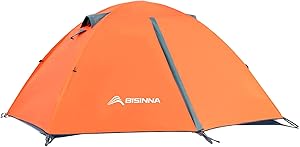
- Packed Size: 16.9 x 5.9 x 5.9 inches
- Waterproof Rating: PU 2000mm
- Pole Material: 7001 Space Aluminum
- Total Weight: Approx. 5 lbs.
The BISINNA 2-person tent is a versatile 3-season option that balances affordability with functional design. It features a double-layer construction that is particularly effective at managing airflow and reducing internal moisture. The inner tent is made of a mix of polyester taffeta and no-see-um mesh, providing privacy while still allowing for a breeze. The two-pole freestanding design is simple enough that even children can assist with the setup.
One of its standout features is the compact packed size, which makes it an excellent choice for bikepacking or kayaking where storage space is at a premium. The aluminum stakes and wind ropes included in the kit provide enough stability for most standard camping conditions. While it may not be suited for extreme alpine storms, it is a spacious and reliable shelter for car camping or light backpacking trips with a partner.
Pros: Very compact when packed, easy for beginners to pitch, good ventilation.
Cons: PU 2000mm rating is lower than some competitors, limited vestibule space.
See the BISINNA 2/4 Person Tent
7. Clostnature Lightweight Tent

- Waterproof Rating: PU 5000mm
- Minimum Trail Weight: 4.52 lbs.
- Floor Dimensions: 7’3″ x 4’11”
- Pole Material: Aluminum
The Clostnature Lightweight Tent is built for those who refuse to let bad weather ruin their trip. Boasting an impressive PU 5000mm waterproof coating on both the rainfly and the groundsheet, it offers some of the best moisture protection in its price bracket. The factory-sealed seams and bathtub floor design ensure that even during a sustained downpour, the interior remains dry and comfortable for both occupants.
Despite its heavy-duty waterproof features, the tent remains relatively light, with a minimum trail weight of 4.52 pounds. The interior walls are almost entirely mesh, which provides exceptional ventilation and helps to combat the condensation issues often found in highly waterproof tents. The inclusion of an emergency pole repair kit is a thoughtful addition, providing peace of mind for those heading deep into the backcountry.
Pros: Exceptional waterproof rating, includes pole repair kit, lightweight.
Cons: Stakes can bend in hard ground, mesh is delicate.
See the Clostnature Lightweight Tent
8. ALPS Mountaineering Lynx 2

- Total Weight: 5 lbs. 13 oz.
- Center Height: 3’10”
- Vestibule Area: 20 sq. ft. total
- Zippers: #8 Zippers
The ALPS Mountaineering Lynx 2 is a robust and spacious 3-season tent that excels in organization and durability. It features two doors and two large vestibules, providing a combined 20 square feet of external storage space for gear. This makes it one of the best options for campers who carry a lot of equipment. The interior is further enhanced by mesh pockets and a gear loft, keeping small essentials off the floor.
Construction-wise, the Lynx 2 uses 7000 series aluminum poles and oversized #8 zippers, which are designed to withstand frequent use and tension. The half-mesh walls and rainfly vents work together to maintain airflow, preventing the “stuffy” feeling common in smaller tents. While it is on the heavier side for a backpacking tent, its rugged build and massive storage capacity make it a dependable choice for those who value longevity.
Pros: Massive vestibule space, very durable zippers and poles, great internal storage.
Cons: Heavier than many 2-person rivals, packed size is somewhat bulky.
See the ALPS Mountaineering Lynx 2
9. Camppal 1 Person Tent

- Weight: 3.75 lbs.
- Length: 8.2 feet
- Water Resistance: 3500mm – 4000mm
- Setup Time: 3 minutes
The Camppal 1 Person Tent is a specialized solo shelter that solves the common problem of cramped quarters for taller hikers. With an extended length of 8.2 feet, it allows users to stretch out fully without touching the tent walls, while still leaving room for a backpack at the foot or head. The single-pole ridge design makes the tent incredibly fast to pitch, often taking less than three minutes from bag to base.
Weather protection is a high priority for this model, featuring a high waterproof rating and anti-tearing rip-stop fabric. This makes it a formidable shield against high winds and heavy storms that might buffet a solo traveler. While the low profile means you cannot stand up inside, the design is highly aerodynamic and stable. It is an excellent choice for solo adventurers who need a lightweight, storm-proof, and extra-long sleeping space.
Pros: Extra-long for tall users, very light, high storm resistance.
Cons: Very low ceiling height, narrow interior width.
10. CAMEL CROWN Tent
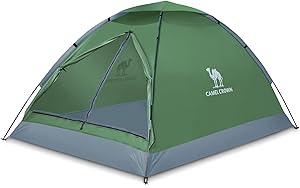
- Pole Material: 8.5mm Glass Fiber
- Floor Fabric: 150D Oxford PU2000
- Accessories: 8 Iron Stakes, 4 Ropes
- Design Type: Dome Tent
The CAMEL CROWN Tent is a multi-purpose dome shelter designed for a variety of outdoor activities from hiking to family BBQs. It utilizes 150D Oxford cloth for the base, which provides a thicker and more puncture-resistant floor than standard polyester taffeta. The dual-layer design includes an external mosquito-proof screen on the top, ensuring that you can enjoy the breeze and the view without worrying about insects.
While the fiberglass poles and iron stakes make it slightly less sophisticated than dedicated aluminum-pole backpacking tents, it offers a sturdy and reliable frame for general outdoor use. The assembly is straightforward, and the lightweight portable carrying bag makes it easy to transport. This tent is best suited for those who need a versatile, budget-friendly dome tent for casual camping trips and weekend adventures where weight is not the primary concern.
Pros: Puncture-resistant floor, good bug protection, versatile for many occasions.
Cons: Fiberglass poles are heavier, iron stakes are prone to rusting if not dried.
How to Choose the Ultimate Waterproof Backpacking Tent
For any backpacker, the tent is more than just a piece of gear; it is a sanctuary. After a grueling day of ascending switchbacks or navigating ridgelines, your tent is the only thing standing between you and the elements. When the sky turns leaden and the wind begins to howl, the “waterproof” rating of your shelter ceases to be a technical specification and becomes a matter of safety and survival. Choosing the right waterproof backpacking tent requires a deep understanding of materials, construction techniques, and the specific environments you intend to explore.
Understanding Waterproof Ratings and the Hydrostatic Head
The most common metric used to measure a tent’s water resistance is the Hydrostatic Head (HH) rating, usually measured in millimeters (mm). This number represents the height of a column of water that the fabric can withstand before moisture begins to seep through.
What the Numbers Mean
A rating of 1,000mm is generally considered the entry point for “waterproof” gear. However, for backpacking in unpredictable climates, you should aim higher. Most high-quality rainflys range between 1,200mm and 3,000mm. You might wonder why a tent floor often has a higher rating (sometimes 5,000mm or more) than the fly. This is because your body weight creates pressure when you sit or kneel, forcing water through the fabric if the rating is too low. A higher HH on the floor ensures that damp ground doesn’t result in a soaked sleeping bag.
Fabric Materials: Nylon vs. Polyester
The two titans of the backpacking world are Nylon and Polyester. Each has distinct characteristics regarding how they handle moisture and tension.
Nylon and Silnylon
Nylon is prized for its high strength-to-weight ratio. Most premium lightweight tents use “Silnylon,” which is nylon impregnated with silicone. Silicone is naturally hydrophobic and strengthens the fabric. However, nylon has a notable drawback: it stretches when wet. If you set up a nylon tent in the afternoon and it rains overnight, you may wake up to a sagging rainfly that touches the inner tent body, leading to condensation transfer.
Polyester and Silpoly
Polyester has gained massive popularity in recent years, particularly in the form of “Silpoly.” Unlike nylon, polyester does not absorb water and does not sag when wet. This means your pitch stays taut throughout a storm. While traditionally slightly heavier than nylon for the same strength, modern manufacturing has closed that gap significantly, making polyester a favorite for those who prioritize a low-maintenance pitch in rainy weather.
The Importance of Tent Construction and Geometry
A fabric can be 100% waterproof, but if the tent is poorly designed, water will still find its way inside. The shape of your tent dictates how well it sheds rain and resists the “pooling” of water.
Steep Walls and Runoff
Tents with steep, aerodynamic profiles allow rain to slide off immediately. Flat spots on the roof are the enemy; they allow water to collect, adding weight to the structure and eventually forcing water through the fabric or seams. Dome and tunnel shapes are generally the most effective at shedding water from all angles.
The Double-Wall vs. Single-Wall Debate
Most waterproof tents are “double-wall,” consisting of a breathable inner mesh body and a waterproof outer rainfly. This design is superior for managing condensation. Single-wall tents use a breathable-waterproof fabric (similar to a rain jacket). While lighter, they often struggle with internal moisture buildup in humid, rainy conditions. For most backpackers, a double-wall tent is the safer bet for staying truly dry.
Seams and Zippers: The Vulnerable Points
Water rarely enters through the center of a fabric panel; it enters through the holes made by sewing needles during construction.
Factory Seam Taping
Ensure your chosen tent comes “factory seam taped.” This involves a waterproof tape being heat-welded over the seams. Without this, you would have to manually apply seam sealer—a messy and time-consuming process. Check the floor seams specifically, as “bathtub floors” (where the waterproof floor material wraps several inches up the sides) should have minimal seams to reduce leak points.
Storm Flaps and Water-Resistant Zippers
Zippers are essentially long rows of holes. A truly waterproof tent will feature storm flaps—strips of fabric that fold over the zipper—or highly water-resistant (urethane-coated) zippers. When inspecting a tent, ensure the vestibule zippers are well-protected, as this is where you will likely be storing your pack and boots.
Ventilation: Staying Dry from the Inside Out
A common mistake is blaming a “leak” on the fabric when the culprit is actually condensation. In a rainstorm, the air is humid, and your breath releases moisture. If that moisture cannot escape, it hits the cold rainfly, turns into liquid, and drips back onto you.
Mechanical Vents
Look for tents with “high-low” ventilation or kickstand vents at the top of the rainfly. These allow warm air to exit while maintaining waterproof integrity. Even in a downpour, you need airflow. A tent that seals up like a plastic bag will leave you soaked in your own perspiration by morning.
The Role of the Vestibule
The vestibule is the “mudroom” of your tent. When choosing a waterproof shelter, consider the size and shape of the vestibule. It should be large enough to allow you to peel off wet rain gear without bringing water into the sleeping area. Furthermore, the “drip line” is crucial. When you unzip the vestibule door to get out, does the rain fall directly into the inner tent? A well-designed waterproof tent will have a doorway geometry that keeps the interior protected even when the fly is open.
Durability and Denier
Fabric thickness is measured in Denier (D). Lower denier (e.g., 7D or 10D) is ultralight but more prone to punctures and “misting”—where high-velocity raindrops create a fine spray through the thin fabric. For a balance of weight and waterproof reliability, a 20D to 30D fly is standard. If you frequently camp on rough, wet terrain, look for a 40D or higher floor to ensure long-term waterproof integrity against abrasion.
Testing and Maintenance
Finally, a waterproof tent is only effective if it is maintained. Over years of use, the Durable Water Repellent (DWR) coating on the outside of the fly can wear off, causing the fabric to “wet out” (absorb water rather than bead it). You can test this at home with a garden hose. If water doesn’t bead and roll off, it’s time to apply a technical wash or spray-on DWR treatment.
Conclusion
Choosing a waterproof backpacking tent is a balancing act between weight, cost, and protection. By prioritizing a high hydrostatic head rating, choosing the right fabric for your stretching tolerance, and ensuring the tent has excellent ventilation and seam construction, you can head into the wilderness with confidence. Remember, the best time to find out if your tent is truly waterproof is not during a midnight deluge in the backcountry; it is through careful research and selection before you ever leave the trailhead. Invest in quality, and your tent will reward you with a dry, warm place to dream, no matter what the weather decides to do.