
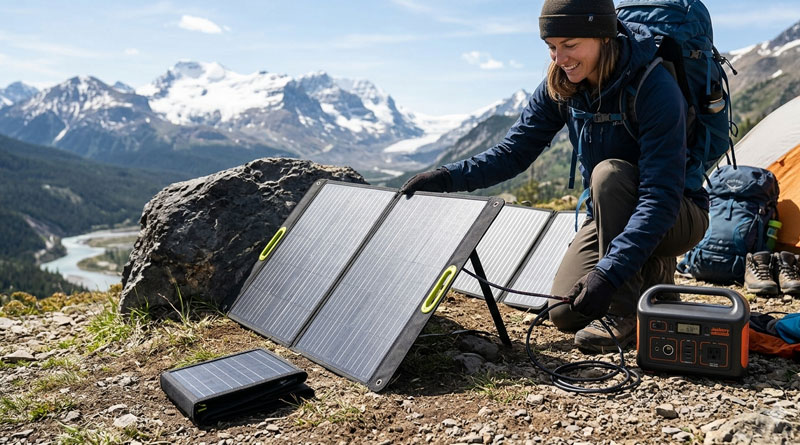
Best Folding Solar Panels of 2026
If you love camping, hiking, or just spending time outdoors, keeping your devices charged can be a real problem. That’s where folding solar panels come in. They are lightweight, easy to carry, and use the sun’s energy to power your phone, tablet, or battery pack. In this article, we’ll show you the best folding solar panels that are tough, efficient, and perfect for your next adventure.
1. SOLUPUP Solar Panel
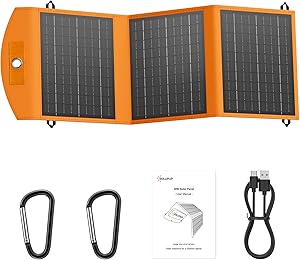
- Wattage & Efficiency: 30W with 23%+ monocrystalline silicon conversion rate
- Output Ports: USB-A and USB-C dual output (5V/3A, 15W max each)
- Weather Resistance: IPX5 waterproof and dustproof rated
- Weight & Size: 2.4 lbs, folds to 10.63 inches
The SOLUPUP 30W Foldable Solar Panel is a solid performer for outdoor enthusiasts who need dependable off-grid charging. Its high-efficiency monocrystalline silicon cells deliver a 23%+ conversion rate, meaningfully outpacing multi-crystalline alternatives at the same wattage. The built-in smart chip identifies connected devices and maximizes charging speed while protecting against overcurrent, overvoltage, and short circuits. It also auto-reconnects when sunlight is restored after an interruption, which is a thoughtful touch for unpredictable weather conditions.
Portability is one of this panel’s strongest suits. At just 2.4 lbs and folding down to a compact 10.63 inches, it slips easily into any backpack. The included carabiners let you clip it to your pack and charge on the move, while the adjustable stand keeps it stable when you set up camp. IPX5 waterproofing adds peace of mind in light rain or dusty trails. The dual USB-A and USB-C ports allow two simultaneous charges, making it versatile enough for phones, tablets, and power banks alike.
- Pros: High 23%+ efficiency, auto-reconnect feature, dual output ports, lightweight and packable
- Cons: Only IPX5 rated (not fully submersible), actual output varies with weather and angle
2. FlexSolar Solar Charger
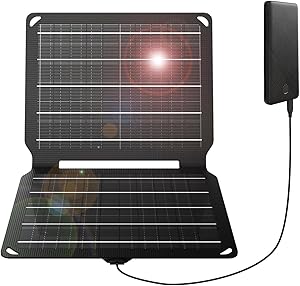
- Wattage & Efficiency: 10W max output with 24% monocrystalline A+ cell efficiency
- Output Ports: Single USB-A port (5V/2A max)
- Weather Resistance: IP67-rated (junction box excluded)
- Weight & Size: 0.66 lbs; folds to 7.6 x 8.8 x 0.7 inches
The FlexSolar Solar Charger is purpose-built for ultralight adventurers who prioritize portability above all else. At just 0.66 lbs, it’s among the lightest panels in its class, and its tri-fold design packs down to a slim profile that barely registers in a daypack. The ETFE film lamination over monocrystalline A+ cells achieves a 24% conversion rate, which is impressive for such a compact unit. Smart IC technology identifies connected devices to optimize charging efficiency, while LED indicators give real-time status at a glance.
Built-in protections against overcurrent, overheating, and short circuits ensure safe charging across smartphones, tablets, small power banks, and USB accessories. The IP67 rating (excluding the junction box) makes it resilient in rain and dusty conditions. The two included carabiners make backpack attachment effortless. The main limitation is its single USB-A port, which restricts simultaneous charging, and the 10W cap means it’s better suited for phones and small devices than power-hungry gadgets.
- Pros: Extremely lightweight, 24% efficiency, IP67 rated, smart IC chip
- Cons: Single port only, 10W max limits device compatibility, junction box not waterproof
See the FlexSolar Solar Charger
3. Griplier Foldable Solar Panel

- Wattage & Efficiency: 30W with 23% Class A monocrystalline cell efficiency
- Output Ports: USB-A, USB-C, and DC port for multi-device charging
- Weather Resistance: IP65 waterproof and dustproof with ETFE protective film
- Weight & Size: 1.54 lbs; folds to 8.46 x 8.9 x 0.7 inches
The Griplier 30W Foldable Solar Panel impresses with its combination of light weight and robust output. At just 1.54 lbs, it’s one of the lightest 30W panels available, and its four-fold design compresses to a remarkably compact footprint for the wattage. The ETFE protective film enhances light transmittance while shielding the Class A monocrystalline cells from environmental damage, and the panel’s 23% efficiency holds up well even in low-light conditions, making it a reliable choice across varying weather.
What sets Griplier apart from many competitors is its three-port output: USB-A, USB-C, and a DC port, covering a broader range of devices including cameras, iPads, and even some portable power stations. Four pre-drilled mounting holes add flexibility for RV, tent, and backpack setups. The IP65 rating provides solid protection against rain and dust. It’s an excellent all-rounder for campers and hikers who need versatile charging without carrying extra weight.
- Pros: Lightest in 30W class, three output ports including DC, compact four-fold design, IP65 rated
- Cons: No smart chip mentioned, limited warranty details provided
See the Griplier Foldable Solar Panel
4. BigBlue Solar Panel Charger

- Wattage & Efficiency: 28W with 25.4% N-type solar cell efficiency
- Output Ports: Dual USB-C and one USB-A (5V/3A each; 5V/4.8A combined)
- Weather Resistance: IP44 rated with special polymer surface (junction box excluded)
- Weight & Size: 1.5 lbs; folds to 11 x 6 x 1.4 inches
BigBlue’s 28W Solar Panel Charger stands out with its shadow-free surface design, which eliminates the metal grid lines found on conventional panels and allows more sunlight to reach the cells. Combined with advanced N-type solar cell technology, this approach delivers an industry-leading 25.4% conversion efficiency along with superior low-light performance. The triple-port configuration — two USB-C and one USB-A — makes it easy to charge multiple devices simultaneously, and the intelligent safety charging system ensures fast, protected power delivery in direct sunlight.
Folding down to just 11 x 6 x 1.4 inches and weighing 1.5 lbs, it’s compact enough for tight backpacks and doubles as an emergency kit essential for hurricane preparedness. Four included carabiners allow easy attachment to bags or tents. The IP44 rating provides reasonable protection against splashes and light rain, though the USB junction box is not waterproof. Note that Apple device cables are not included, and like all direct-charge panels, it has no internal battery storage.
- Pros: Industry-leading 25.4% efficiency, shadow-free design, triple output ports, superior low-light performance
- Cons: Only IP44 rated, Apple cable not included, junction box not waterproof
See the BigBlue Solar Panel Charger
5. BigBlue Ultra-Light
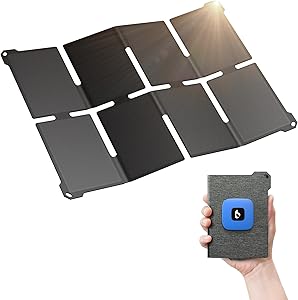
- Wattage & Efficiency: 25W with 25.4% N-type solar cell efficiency
- Output Ports: USB-A (5V/2.4A) and USB-C (5V/3A) dual output
- Weather Resistance: IP68 water and dust resistant
- Weight & Size: 0.84 lbs; folds to 4.65 x 6.42 x 1.38 inches (iPad-sized)
The BigBlue Ultra-Light 25W earns its name: at just 0.84 lbs and folding to iPad dimensions, it’s one of the most travel-friendly panels on this list. Despite its compact size, it doesn’t compromise on performance. N-type solar cells without front metal lines capture more sunlight, run cooler, and maintain a 25.4% conversion efficiency — the same figure as BigBlue’s larger 28W model. Dual USB-A and USB-C ports allow simultaneous charging of two devices, and built-in smart charging technology optimizes power delivery safely.
Where this panel truly differentiates itself is its IP68 rating, the highest waterproofing level on this list, offering reliable protection against splashes, spills, and light rain. A combination of ETFE coating, UV-resistant EVA, and a solid baseplate resists hidden cracks and extends panel lifespan significantly. It’s also well-suited as a home emergency backup for power outages caused by hurricanes or wildfires. The package includes a USB-C cable, two carabiners, and an elastic strap for versatile carrying options.
- Pros: IP68 rated, ultra-lightweight, 25.4% efficiency, iPad-sized form factor
- Cons: Lower wattage (25W) than some competitors, no DC port for power stations
6. BLAVOR Portable Solar Charger
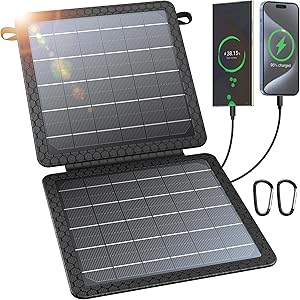
- Wattage & Efficiency: 10W with 24% ETFE-enhanced conversion rate
- Output Ports: Dual USB-A outputs for simultaneous charging
- Weather Resistance: Dust and water resistant via ETFE polymer surface and Oxford cloth
- Weight & Size: 0.81 lbs; folds to 7.4 x 7.5 x 1 inches
The BLAVOR 10W Portable Solar Charger is a budget-friendly entry point for casual outdoor users who want solar charging without the bulk or price of higher-wattage panels. Its ETFE high light transmission film helps achieve a 24% conversion rate, which is competitive at this power level. Dual USB-A outputs allow two devices to charge simultaneously — a useful feature for those carrying a phone and earbuds or a smartwatch. The panel is wrapped in wear-resistant Oxford cloth, providing decent dust and water resistance for everyday trail conditions.
Weighing just 0.81 lbs and folding to a near-square 7.4 x 7.5 inches, this panel is among the most packable options available. The included carabiner makes backpack attachment simple. That said, the 10W output cap means charging times will be longer compared to 30W panels, and it lacks an IP rating, making it less suited for heavy rain exposure. It’s best positioned as a lightweight, supplemental charger for shorter day trips rather than extended expeditions.
- Pros: Very lightweight, dual USB ports, affordable, compact square form factor
- Cons: Only 10W output, no formal IP waterproof rating, slower charging than higher-wattage options
See the BLAVOR Portable Solar Charger
7. Ecosonique Solar Panel Charger
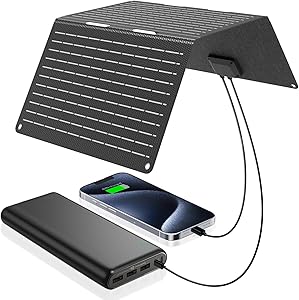
- Wattage & Efficiency: 30W with 23.5% monocrystalline cell conversion rate
- Output Ports: USB-C and USB-A (5V/3A each)
- Weather Resistance: IP67 waterproof rated
- Weight & Size: 2 lbs with tri-fold design
The Ecosonique 30W Solar Panel Charger positions itself as a premium option for backpackers, coming in 15% lighter than most comparable 30W panels at just 2 lbs. Its tri-fold build and carabiner-compatible grommet holes make hands-free, on-the-go charging genuinely practical. Advanced ETFE lamination with seamless bonding technology achieves 95% light transmittance while resisting scratches, oxidation, and dust. The 23.5% monocrystalline cell efficiency ensures strong sunlight capture, and the panel reportedly performs reliably even on partly cloudy days.
The intelligent chip safeguards connected devices against overcurrent, overvoltage, and short circuits, and broad compatibility covers Apple, Samsung, Google Pixel, and more. Both USB-C and USB-A ports deliver up to 5V/3A each for fast simultaneous charging. The IP67 waterproof rating — one of the stronger certifications in this segment — allows it to handle rain and brief splashes with confidence. Backed by a 12-month warranty and 24-hour support response, it’s a well-rounded choice for serious outdoor use.
- Pros: IP67 rated, 15% lighter than competitors, 95% light transmittance ETFE, broad device compatibility
- Cons: Only 12-month warranty, no DC port for power stations, carabiner setup required for mounting
See the Ecosonique Solar Panel Charger
8. Dongindar Foldable Solar Panel
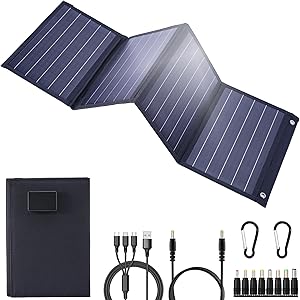
- Wattage & Efficiency: Up to 40W DC output with 25% N-type monocrystalline efficiency
- Output Ports: QC3.0 USB-A (27W max), PD2.0 USB-C (18W max), 12V DC port (40W max)
- Weather Resistance: IP67 dustproof and waterproof (junction box excluded)
- Weight & Size: 1.65 lbs; folds to 7.8 x 10.9 inches
The Dongindar Foldable Solar Panel is the most technologically advanced option on this list, offering fast-charging protocols rarely found in portable solar panels. The QC3.0 USB-A and PD2.0 USB-C ports enable rapid charging of phones and laptops, while the 12V DC port (up to 40W) broadens compatibility with portable power stations. The Maximum Power Point Tracking chip achieves up to 99% tracking efficiency and 98% peak conversion efficiency, reportedly improving power utilization by around 30% versus competing products — a meaningful real-world advantage.
Built around 25% efficient N-type monocrystalline cells with ETFE lamination and an IP67-rated body (excluding the junction box), this panel is engineered for durability across demanding environments. At 1.65 lbs and folding to a compact 7.8 x 10.9 inches, it balances portability and output well. Two reinforced metal hanging holes support backpack, tent, and vehicle mounting. The 24-month warranty — double that of most competitors — adds meaningful long-term confidence. Fully charging a phone typically takes around 1.5 to 2 hours in direct sun with a fast-charge cable.
- Pros: QC3.0 + PD2.0 fast charging, MPPT chip, 25% N-type efficiency, 24-month warranty
- Cons: Junction box not waterproof, performance dependent on clear weather, higher price point
See the Dongindar Foldable Solar Panel
9. ELECOM NESTOUT Portable Solar Panel
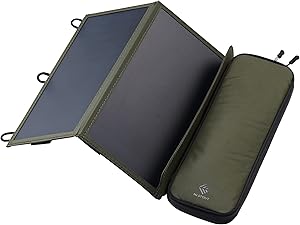
- Wattage & Efficiency: SunPower MAXEON cells with up to 24% efficiency gain over standard cells
- Output Ports: Dual USB-A ports
- Weather Resistance: Water-resistant ripstop nylon exterior
- Special Feature: Built-in LED current checker display and dual adjustable stands
The ELECOM NESTOUT is the most design-forward panel on this list, having earned the prestigious iF Design Gold Award for its innovative form factor. Inspired by vintage fuel bottles, its aesthetic bridges nostalgic outdoor gear and modern clean energy — a thoughtful concept executed with care. Under the hood, SunPower MAXEON cells deliver up to 24% greater efficiency compared to conventional solar cells, a technology with over three decades of industry pedigree. The built-in LED current checker is a standout practical feature, letting users monitor power generation in real time without guesswork.
Two built-in adjustable stands allow precise angle optimization for maximum sun capture, while three exterior loops enable hanging from tents, trees, or cables. The integrated ripstop nylon bag includes two mesh storage pouches for cables and small accessories — a level of organizational thought rarely seen in this category. Dual USB-A ports cover most devices, though the absence of USB-C is a notable limitation for modern users. The 1-year warranty and dedicated support through ELECOM’s website round out a premium, design-led package.
- Pros: iF Design Gold Award, SunPower MAXEON cells, built-in current checker, integrated storage bag
- Cons: No USB-C port, water-resistant only (not IP-rated), no wattage specified
See the ELECOM NESTOUT Portable Solar Panel
10. MARBERO Portable Solar Panel

- Wattage & Efficiency: 30W with 21.5–23.5% conversion rate; 15W–20W output on cloudy days
- Output Ports: USB-A (5V/3A), QC3.0 USB-A, and USB-C (up to 20V/3.3A) plus 18V DC with 10-in-1 adapters
- Weather Resistance: IP65 waterproof, dustproof, and high-temperature resistant Oxford cloth
- Weight & Size: 2.7 lbs; folds to 13.9 x 9.8 inches (laptop-bag profile)
The MARBERO 30W Portable Solar Panel is the most versatile option on this list, designed explicitly for users who want to power not just USB devices but also portable power stations and DC appliances. Its standout feature is the 10-in-1 DC adapter set, covering MC4, 5.5mm, 8mm, and other connector types compatible with EcoFlow, Bluetti, Jackery, Flashfish, and MARBERO’s own power stations. The 18V DC output can even run car refrigerators and air pumps — capabilities no other panel here can match.
Three USB output ports, including a QC3.0 and a high-output USB-C (up to 20V/3.3A), allow fast simultaneous charging across multiple device types. Performance in low light is above average, providing 15W–20W on overcast days. The panel folds to a 14-inch laptop bag profile, making it recognizable and easy to pack. IP65 waterproofing and durable Oxford cloth handle outdoor conditions reliably. At 2.7 lbs it’s the heaviest option here, but the breadth of compatibility and accessories justifies the extra weight for power-hungry adventurers.
- Pros: 10-in-1 DC adapters, three USB ports with QC3.0, strong cloudy-day output, broadest device compatibility
- Cons: Heaviest panel on this list at 2.7 lbs, only IP65 rated, larger folded footprint
See the MARBERO Portable Solar Panel
The Comprehensive Guide to Folding Solar Panels: Portability Meets Power
In the evolving landscape of renewable energy, the demand for portable, efficient, and durable power sources has skyrocketed. Whether you are an avid camper, a digital nomad working from a remote van, or someone preparing for emergency power outages, folding solar panels have emerged as a premier solution. These devices bridge the gap between heavy, stationary solar installations and the need for on-the-go energy. This article explores the mechanics, benefits, selection criteria, and maintenance of folding solar panels, providing a deep dive into why they are becoming an essential tool for modern adventurers.
Understanding the Mechanics of Folding Solar Panels
Folding solar panels, often referred to as “solar blankets” or “briefcase panels,” are designed with segmented photovoltaic cells. Unlike traditional rigid panels that are encased in heavy aluminum frames and thick glass, folding panels use lightweight materials like ETFE (Ethylene Tetrafluoroethylene) or PET (Polyethylene Terephthalate) to protect the cells while allowing for flexibility at the joints.
Monocrystalline vs. Polycrystalline Cells
The efficiency of a folding solar panel is largely determined by the type of silicon cells used. Monocrystalline cells are cut from a single crystal of silicon, making them highly efficient and space-saving. They typically have a darker, uniform look. Polycrystalline cells, made from fragments of silicon melted together, are generally less efficient but more cost-effective. For folding panels, where surface area is limited by portability, monocrystalline cells are the industry standard because they generate more power per square inch.
The Role of the Laminate and Backing
Because these panels are meant to be folded and unfolded repeatedly, the laminate is crucial. High-end folding panels utilize ETFE, a fluorine-based plastic that is highly resistant to corrosion and stains, has high light transparency, and possesses a long lifespan. The backing is usually made of heavy-duty canvas or Oxford cloth, providing the structural integrity needed to support the cells when the kit is spread out under the sun.
Key Benefits of Portable Folding Solar Technology
The primary appeal of folding solar panels lies in their versatility. Traditional solar setups require mounting hardware and a permanent location, but folding panels offer a “plug-and-play” experience that fits into a backpack or a vehicle’s trunk.
Portability and Space Optimization
The most obvious advantage is the footprint. A 100-watt rigid solar panel is a cumbersome piece of equipment. In contrast, a 100-watt folding panel can collapse down to the size of a large laptop bag. This makes it ideal for hikers and travelers who need to maximize every inch of storage space. The lightweight nature of these panels also means they can be moved throughout the day to follow the sun’s trajectory, ensuring maximum energy harvest.
Ease of Installation
Folding solar panels generally come with integrated kickstands and pre-wired controllers. There is no need for drilling holes or complex electrical wiring. Most units feature MC4 connectors or DC outputs that plug directly into a portable power station (solar generator). This accessibility lowers the barrier to entry for individuals who are not technically inclined but want to utilize green energy.
Choosing the Right Folding Solar Panel for Your Needs
Not all folding panels are created equal. Selecting the right one requires a balance between power requirements, weight, and environmental conditions.
Determining Power Output
Solar panels are rated by wattage. Small panels (5W to 21W) are suitable for charging phones and power banks directly via USB ports. Medium-sized panels (60W to 100W) are the “sweet spot” for most campers, capable of charging laptops and small portable power stations. Large folding panels (200W to 400W) are designed for heavy users who need to power refrigerators, lights, and medical devices in off-grid scenarios.
Weight vs. Durability
There is often a trade-off between how light a panel is and how much abuse it can take. Ultralight panels might use thinner fabrics and PET laminates, which are prone to scratching and degradation over time. Heavier “briefcase” styles often include a built-in charge controller and sturdier handles, making them more durable for long-term vehicle-based travel but less suitable for long-distance backpacking.
Weather Resistance and IP Ratings
Since these panels are used outdoors, check the IP (Ingress Protection) rating. A rating of IP65 or higher indicates that the panel is protected against dust and low-pressure water jets. While most folding panels can handle a light sprinkle, they are generally not designed to be left out in heavy rain for extended periods, as the fabric backing can soak up moisture and the USB/DC ports may be vulnerable.
Operational Best Practices: Maximizing Efficiency
To get the most out of a folding solar panel, users must understand the factors that influence energy production. Solar panels rarely produce their “rated” wattage due to atmospheric conditions and positioning.
The Importance of Tilt and Orientation
For maximum efficiency, solar panels should be perpendicular to the sun’s rays. Many folding panels include built-in kickstands that allow the user to angle the panel at 30 to 45 degrees. Adjusting this angle three to four times a day as the sun moves across the sky can increase total energy yield by up to 30% compared to laying the panel flat on the ground.
Temperature Management
It is a common misconception that solar panels work better when they are hot. In reality, photovoltaic cells become less efficient as their temperature rises. Folding panels placed on hot surfaces like a car hood or directly on dry sand may underperform. Elevating the panel using its kickstands allows for airflow behind the cells, helping to keep them cool and maintaining higher voltage output.
Avoiding Shading
Even a small amount of shade on a single corner of a panel can significantly drop the power output of the entire unit. This is due to the way cells are wired in series. When one cell is shaded, it creates resistance that affects the flow of electricity from the other cells. Always ensure the entire surface of the folding panel is clear of shadows from trees, tents, or vehicles.
Maintenance and Long-Term Care
While folding solar panels are designed for the rigors of the outdoors, they require basic maintenance to ensure they last for years.
Cleaning the Surface
Dust, bird droppings, and pollen can block sunlight and reduce efficiency. Clean the panels regularly with a soft, damp cloth and water. Avoid using abrasive cleaners or harsh chemicals that could scratch the ETFE or PET coating. Always dry the panels before folding them up to prevent mildew on the fabric backing.
Storage and Transportation
When not in use, store the panels in a cool, dry place. The primary point of failure for folding panels is the wiring at the hinges. When folding the unit, ensure that no cables are pinched and that the cells are not being forced against sharp objects. Most high-quality panels come with a protective carrying case; utilizing this will prevent accidental punctures during transit.
Conclusion
Folding solar panels represent a significant leap forward in making renewable energy accessible to everyone. By combining the high efficiency of monocrystalline silicon with innovative, lightweight materials, these panels provide a reliable power solution that moves with the user. Understanding the technical specifications, from cell type to IP ratings, and following best practices for positioning and maintenance will ensure that your investment provides clean, free energy for many years. As battery technology continues to improve, the pairing of folding solar panels with portable power stations will likely become the standard for off-grid living and outdoor recreation worldwide.